

Short answer: choose greenhouse insect netting from the pest and life stage that must be excluded, the manufacturer's measured aperture and airflow data, the greenhouse ventilation design, and the way every opening will be sealed. Mesh count alone cannot define performance. A finer screen may block a smaller pest, but it also adds resistance that can reduce natural or fan-driven airflow.
Define the exclusion target before asking for mesh
Start with the crop-protection plan. List the pest species, relevant life stage, local pressure, season and any insect-vectored diseases. The crop adviser should state which pests need physical exclusion and which will still require monitoring, sanitation or biological controls. A screen is one part of integrated pest management, not proof that a greenhouse will remain pest free.
Ask bidders for the opening dimensions, thread diameter, material, weave, porosity and test method. Two products sold under the same mesh count can have different aperture geometry and resistance. Require a sample and a traceable product data sheet. If the supplier claims a specific exclusion efficiency, request the test organism, air speed, sample condition and independent report.
| Buyer decision | Evidence to provide | Bidder return |
|---|---|---|
| Pest exclusion | Pest species, life stage and crop-protection plan | Aperture, weave, test basis and limitations |
| Ventilation | Weather, vent geometry, fan curves and design airflow | Clean and loaded resistance plus required screen area |
| Installation | Every vent, door, drain, cable and service penetration | Sections, seals, access and replacement method |
| Operation | Cleaning resources, alarms and maintenance interval | Inspection points, allowable resistance and spare panels |
Treat airflow resistance as a design input
Insect screens create a pressure loss that changes with material, area, air speed and contamination. For fan ventilation, place the selected screen resistance on the fan curve together with shutters, pads, louvers and other system losses. A fan's free-air rating does not describe installed airflow. For natural ventilation, the designer must consider roof and side opening geometry, wind, temperature difference, screen resistance and crop blockage.
A finer product may need a larger installed area to keep pressure loss within the ventilation budget. That can require a framed screen box or a larger vent, not simply a piece of net fixed over the existing opening. Ask the ventilation designer to show clean-screen and loaded-screen cases. The commercial greenhouse ventilation guide covers fan curves, inlets and installed resistance.
Close the paths insects actually use
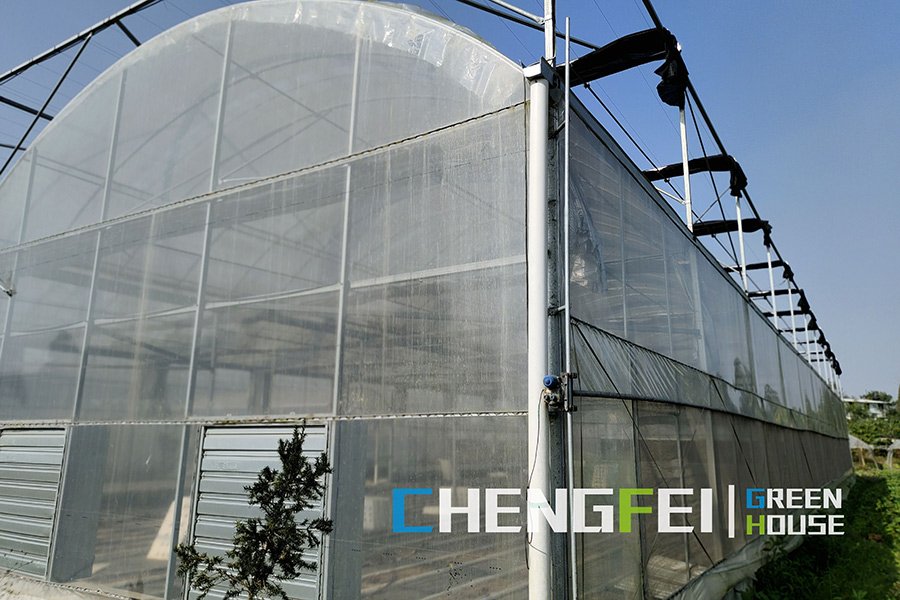
Draw each roof vent, side vent, fan opening, pad opening, doorway, drain, cable entry and material-transfer route. The netting detail must remain continuous at rails, corners and moving parts. Door strategy matters because workers, carts, plants and packaging can bypass a well-screened vent. If a vestibule or paired door is proposed, define its clear dimensions and how the doors are interlocked or managed.
Moving vents and roll-up sides need enough slack and support to travel without tearing, folding into mechanisms or opening edge gaps. Provide service access to clips, fasteners and motors. Check chemical compatibility with cleaners and crop-protection products. The commercial project planning guide shows where this interface belongs in the wider design and handover register.
Coordinate the net with climate control
The ventilation sequence should know when screened openings are available and whether a screen is becoming restricted. High temperature, high humidity, low wind, rain closure and fan failure need defined responses. If the selected net reduces natural ventilation beyond the crop limit, the project may need more opening area, mechanical ventilation, shade or another climate strategy.
Do not credit the net with yield, quality, pesticide or certification outcomes. Those results depend on pest pressure, monitoring, sanitation, crop practice and many other variables. Use the greenhouse automation guide to define monitoring, alarms and manual recovery around the installed system.
Commission and maintain the installed system
Before handover, inspect continuity, tension, edge seals, doors and penetrations. Confirm that every vent completes its travel without rubbing or tearing the net. For a fan system, record airflow or static pressure at agreed points with clean screens. For natural ventilation, record opening positions, weather and representative inside conditions. Keep the instrument, test condition and acceptance limit with each result.
Dust, pollen and crop debris can increase resistance. Define how pressure, airflow or climate response will trigger cleaning rather than relying on a calendar alone. Cleaning must not enlarge apertures or damage UV protection. The maintenance plan should include safe access, repair materials, spare panels, inspection after storms and a record of replacements.
RFQ inputs for greenhouse insect netting
- Site, crop, production calendar and greenhouse dimensions
- Target pest species, life stage and disease-vector concern
- Required aperture, weave, porosity and independent test evidence
- Material, UV treatment, chemical compatibility and expected inspection basis
- Roof, side, fan, pad, door and service-opening geometry
- Weather data, design airflow, fan curves and allowable pressure budget
- Clean and loaded screen resistance plus required installed area
- Edge, corner, door, drain, cable and moving-vent details
- Cleaning access, trigger, repair method and spare-panel quantity
- Inspection, airflow or pressure tests, training and as-built records
Technical references
Coraline Liao is CEO and Greenhouse Technical Director at CFGET. Her review here is limited to procurement and greenhouse system interfaces.
- University of Connecticut: insect screening as a pest-management tool
- University of Arizona CEAC: greenhouse ventilation and screening
- University of Connecticut: natural ventilation in greenhouses
Send the pest brief, vent schedule, fan data and maintenance plan through the CFGET contact page. Require each bidder to return the same screen and ventilation evidence.
Post time: Jul-01-2025



 Click to Chat