
Short answer: plan a climate-controlled greenhouse around crop setpoints, local hourly weather and the operating sequence of ventilation, shading, cooling, heating, humidity control and irrigation. Buying separate devices first often creates control conflicts and leaves the buyer without a clear capacity calculation.
Define the climate brief before choosing equipment
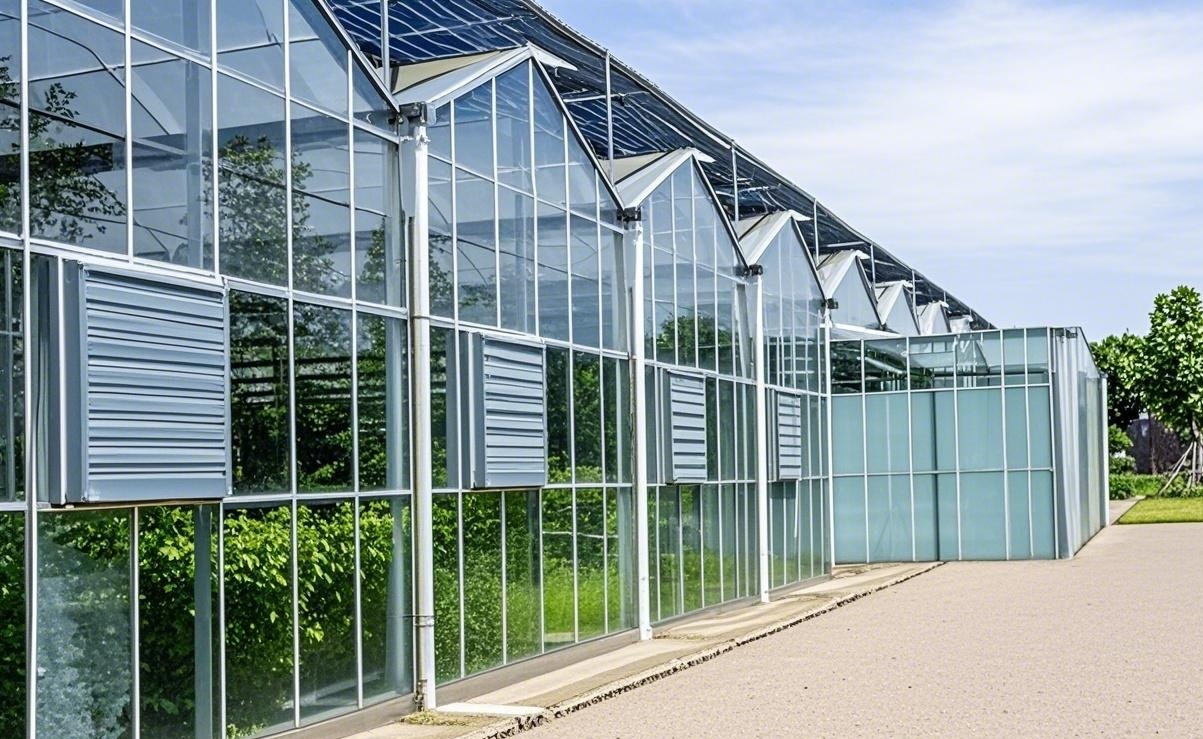
A supplier needs more than a target indoor temperature. Give the crop, growth stage, day and night setpoints, acceptable humidity range, light target, production months and tolerance for short excursions. Add the site's outdoor design temperatures, solar radiation, humidity, wind, elevation and water quality. These inputs determine whether natural ventilation is enough and when mechanical cooling or heating must take over.
The University of Alaska Fairbanks notes that temperature, light and humidity controls overlap. Venting warm air can also remove humidity, while shading lowers solar gain and changes heating demand. Treating each device as a separate shopping item misses those interactions.
Match each load to a system
| Function | Typical components | Design question |
|---|---|---|
| Heat removal | Roof and side vents, exhaust fans, circulation fans, shade and evaporative cooling where climate permits | What is the peak sensible heat load, and which outdoor humidity conditions limit evaporation? |
| Heating | Boiler or unit heaters, distribution pipe or ducts, thermal screens and perimeter insulation | What indoor setpoint must be held at the local design temperature? |
| Humidity management | Ventilation, heating, air movement, irrigation timing and active dehumidification when justified | How will the system remove moisture without causing a damaging temperature drop? |
| Light management | Shade screens, blackout systems, supplemental lighting and glazing selection | What daily light target does the crop need during each production period? |
| Water delivery | Storage, filtration, dosing, irrigation zones, drainage and recirculation where used | What peak flow, pressure and water quality does the crop system require? |
Write the control sequence in plain language
A climate computer is useful only when the sensor layout, equipment stages and failure behavior are defined. For each zone, list what opens or starts first, the delay before the next stage, the conditions that reverse the action and the alarm threshold. Roof vents may open before fans; a rain or high-wind signal may limit that opening; heating may need a deadband so it does not operate against ventilation.
Place sensors where they represent the crop, not beside a heater, wet wall, open door or sunlit steel column. Specify how the readings will be checked, how calibration is recorded and what operators can override. The University of Florida's greenhouse ventilation guidance describes ventilation as a control for temperature, humidity, air movement and gas concentration, which is why a single temperature sensor is not a complete climate plan.
When the greenhouse is too hot, check the operating sequence before changing the setpoint
A lower temperature setpoint does not create more cooling capacity. When the crop zone is warmer than intended, first establish whether the reading is representative, whether the equipment followed its command, and whether the installed system can meet the crop brief under the recorded weather.
Start with one time-stamped observation. Record the crop zone, crop stage, outside conditions, sensor location and operating mode. Compare the controller reading with a suitably maintained reference instrument at a comparable position. A sensor near a wet pad and one near the far end of the crop describe different locations; disagreement alone does not prove that either instrument is faulty.
Then follow the observation through the system:
| Observation | Next check | What to record for the responsible person |
|---|---|---|
| Displayed temperature differs from the reference | Position, shielding, instrument condition and calibration procedure | Both readings, locations, time and instrument identity |
| A vent or fan is commanded but does not operate as expected | Actual actuator travel, fan state, shutters and controller feedback | Command, observed response and the equipment reference |
| Equipment operates, but a crop zone remains warmer | Outside conditions, solar exposure, crop layout and airflow route | Where the warm zone occurs and which operating mode is active |
| Heating and cooling repeatedly reverse or overlap | The documented staging, delays, humidity objective and interlocks | A trend covering the transitions, not just the highest reading |
| An alarm recurs after an apparent recovery | Whether the underlying fault was resolved and the response assigned | Alarm time, acknowledgement, action and repeat-check result |
Circulating air inside the house and exchanging air with outdoors are different functions. The University of Alaska Fairbanks' environmental-control guide explains their relationship; its regional examples should not be transferred directly into another project's design. A circulating fan running normally does not establish that the intended outside-air exchange is happening.
UF/IFAS ventilation guidance describes how ventilation, shading and the outside air affect summer heat removal. Compare the observation with the system's design conditions. If the design basis was exceeded, repeatedly lowering the setpoint can leave the same physical limitation unresolved.
Use the approved control sequence for the installed house. Natural ventilation, fan-and-pad cooling, shading and humidity control can require different opening positions and priorities. There is no universal instruction to open every vent, close every screen or run all equipment together. Record any temporary override, its reason, the person responsible and the condition for returning to normal control. Urgent crop protection should follow the site's agreed response plan.
The useful outcome is a specific next action: verify a sensor, repair an actuator, investigate airflow, review a control transition or ask the designer to reassess the weather case. Keep the observation with the existing commissioning record instead of creating a second, conflicting settings list. If the same problem appears during handover, use the acceptance procedure already agreed for the project.
For a new project, carry these unresolved questions back into the production brief and control narrative earlier in this article. For an existing house, give the service team the recorded conditions and equipment response before requesting a replacement component. This makes the next discussion testable even if no new equipment is purchased.
A practical design and procurement sequence
- Confirm the site survey, drainage, utilities and local structural loads.
- Write crop setpoints and the annual operating calendar.
- Select the structure, covering and vent geometry.
- Calculate peak heating, ventilation and cooling requirements.
- Divide the greenhouse into zones based on crop and exposure.
- Prepare the sensor schedule, control sequence and alarm list.
- Compare supplier quotations against one equipment and responsibility matrix.
- Commission each stage and record the accepted setpoints.
What the quotation should state
Request equipment capacities, power demand, control-panel scope, included sensors, cable and pipe boundaries, communications protocol, spare parts, training and commissioning. Ask which calculations support the fan, pad, boiler, pump and vent sizes. A component list without design conditions is difficult to evaluate.
For a broader procurement sequence, use the commercial greenhouse project planning guide. If passive roof ventilation is being considered, the sawtooth greenhouse guide explains the site and wind questions that affect its performance.
Technical references
- University of Alaska Fairbanks: Controlling the Greenhouse Environment
- University of Florida IFAS: Greenhouse Ventilation
- Washington State University: Greenhouse Construction and Management
- University of Georgia: Greenhouse Heating, Cooling and Ventilation
Need a climate-control scope rather than a device list? Send CFGET the location, crop, indoor setpoints, production calendar and available utilities at info@cfgreenhouse.com.