
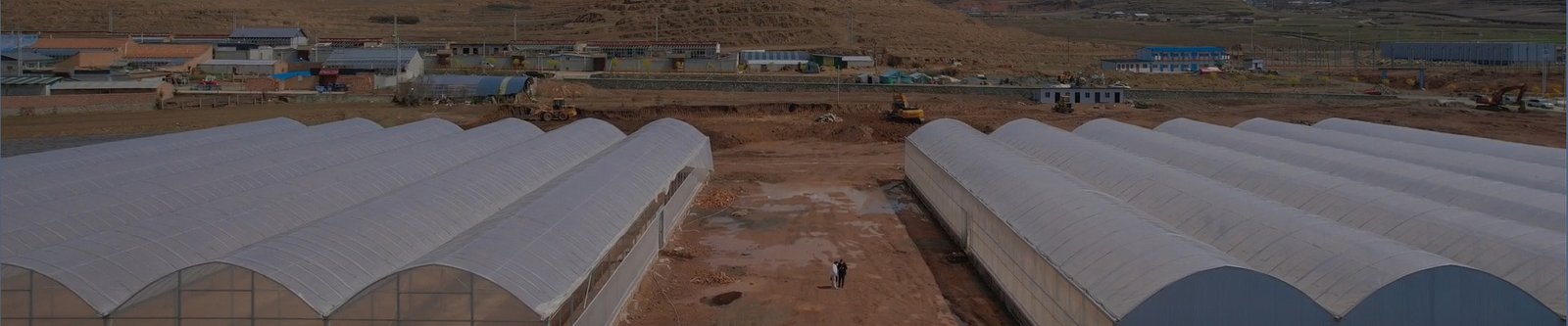
Short answer: a sawtooth greenhouse uses repeated high-level roof openings to release warm air. It can reduce mechanical ventilation demand in suitable climates, but its performance depends on wind direction, inlet area, span depth, insect screen resistance and nearby obstructions. The roof shape alone does not guarantee good cooling.
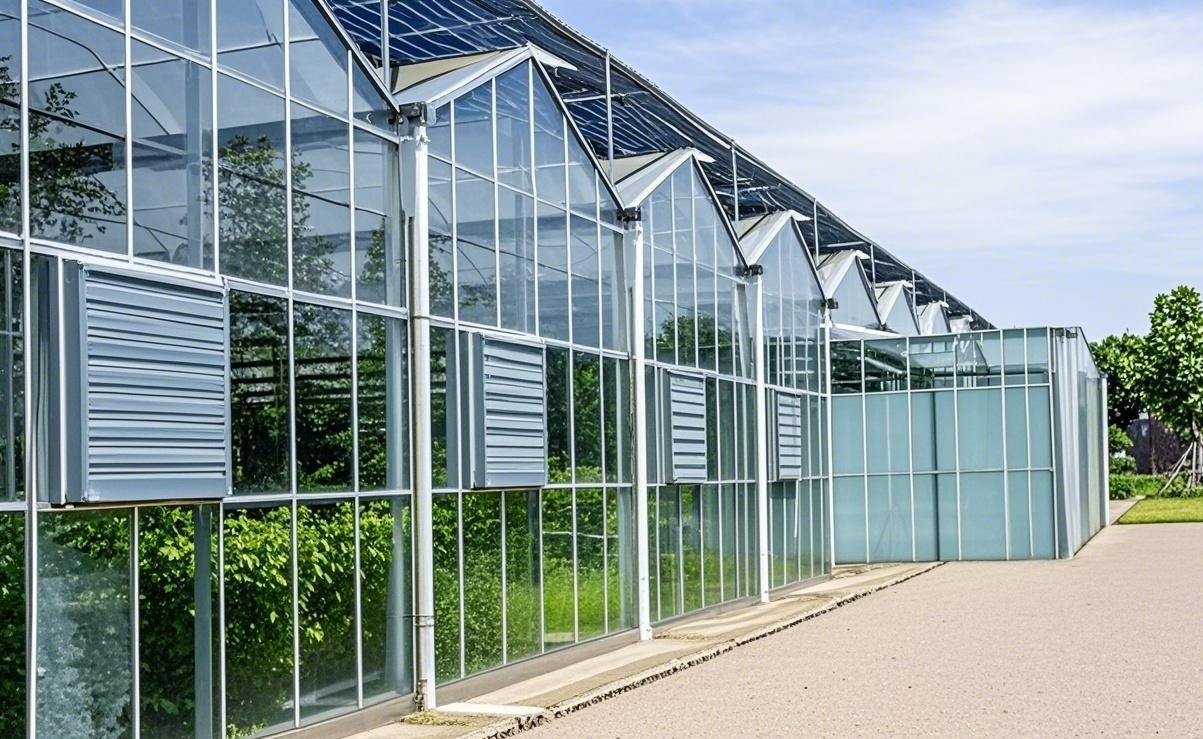
How a sawtooth greenhouse moves air
Each roof bay has a raised edge or opening near its high point. Buoyancy can carry warmer indoor air upward and out. Wind pressure can strengthen or weaken that flow depending on the opening's orientation. Replacement air must enter through side or end openings, then travel through the occupied crop zone before leaving at the roof.
That last point matters. A large outlet with restricted side inlets can pull air from the nearest opening and leave weak movement deeper in the house. Insect screens, crops, internal curtains and adjoining spans all add resistance. An ASABE study of naturally ventilated multi-span greenhouses found that combined side and roof openings performed better than roof openings without side ventilation in the tested configurations.
Common roof forms
| Form | Practical characteristic | Check before selection |
|---|---|---|
| Straight or triangular sawtooth | Simple repeated roof planes with a high vertical or angled vent face | Drainage, vent weather sealing and orientation to prevailing winds |
| Single curved sawtooth | One curved roof side leads to the high vent opening | Film tension, gutter detail, opening mechanism and local wind pressure |
| Double curved or asymmetric arch | Uses unequal curved roof segments around the opening | Structural load path, usable vent area and maintenance access |
Where the design tends to fit
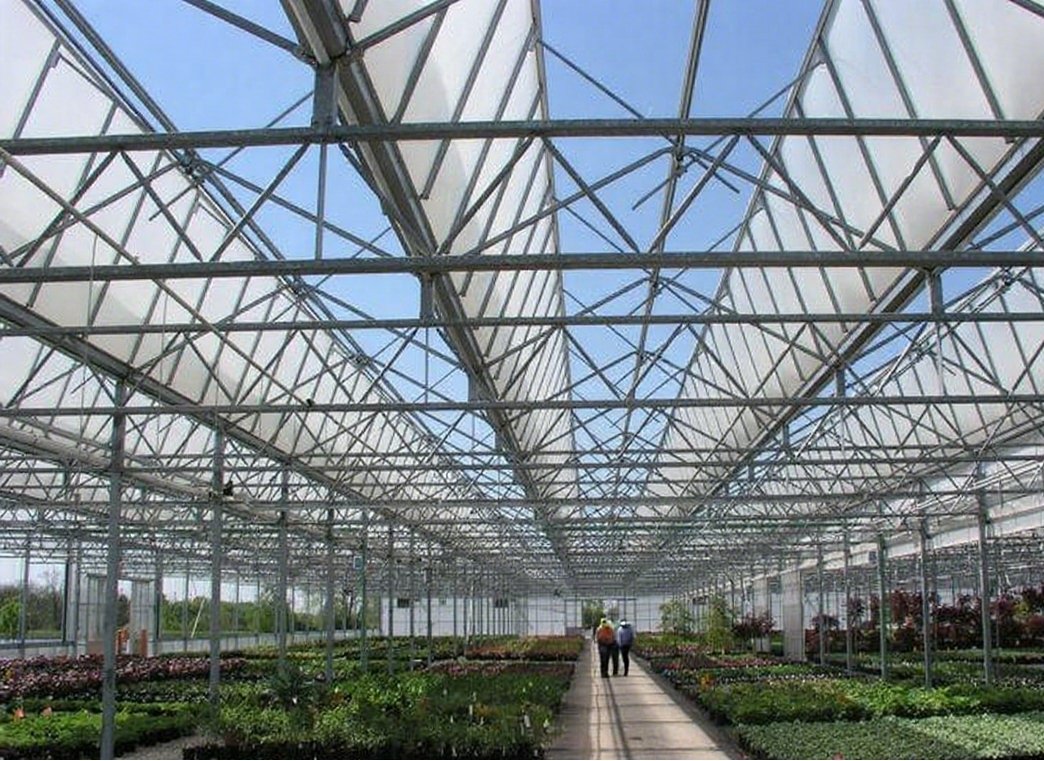
Sawtooth ventilation is often considered for warm production regions where outdoor conditions allow substantial natural ventilation. It can suit crops that benefit from high air exchange and projects where reliable electricity or mechanical cooling capacity is limited. The decision still needs a hot-period weather analysis and a plan for calm days.
It may be a weaker fit on a sheltered site, behind a tall windbreak, beside a large building or where very fine insect screens are mandatory. Research published in the Journal of Agricultural Engineering shows that surrounding obstacles can reduce natural ventilation. A deep multi-span block may also need a different inlet strategy from a narrow house.
Questions for a supplier
- What is the net vent opening area after frames, actuators and screens?
- Which direction should the high openings face for the site wind data?
- How is rain entry limited while ventilation remains available?
- What happens to ventilation when shade or thermal screens are closed?
- How are vent motors, gear racks and screens reached for maintenance?
- Which wind and snow loads were used for the frame and open-vent condition?
Compare the complete system
A sawtooth house should be compared with a conventional roof-vented house, fan-ventilated film house or pad-and-fan system against the same crop and weather brief. Compare indoor targets, installed power, maintenance, insect exclusion and the hours when each option can hold the target. For system interactions, read the climate-controlled greenhouse planning guide. The project planning guide lists the site inputs needed before quotation.
Ask for a roof section, vent schedule and plan showing each inlet and outlet. The drawings should identify actuator travel, screen type, rain detail and the clear path above the crop. If a ventilation simulation or calculation is supplied, record its outdoor temperature, wind speed, wind direction, screen resistance and crop assumptions. A result based on an empty greenhouse with no insect screen cannot be applied directly to a mature crop behind a fine mesh.
Operations also belong in the comparison. Confirm the high-wind closing logic, manual override, emergency position during a power loss and spare actuator strategy. Natural ventilation saves fan energy only during hours when outdoor conditions and opening controls allow it to do the required job.
Technical references
- ASABE: Natural Ventilation of Multi-Span Greenhouses
- Journal of Agricultural Engineering: Effects of Surrounding Obstacles on Greenhouse Ventilation
- Results in Engineering: aerodynamic and structural behavior of sawtooth greenhouse forms
Comparing natural-ventilation structures? Send the site plan, prevailing wind information, crop layout and screening requirement to info@cfgreenhouse.com.