
The short answer
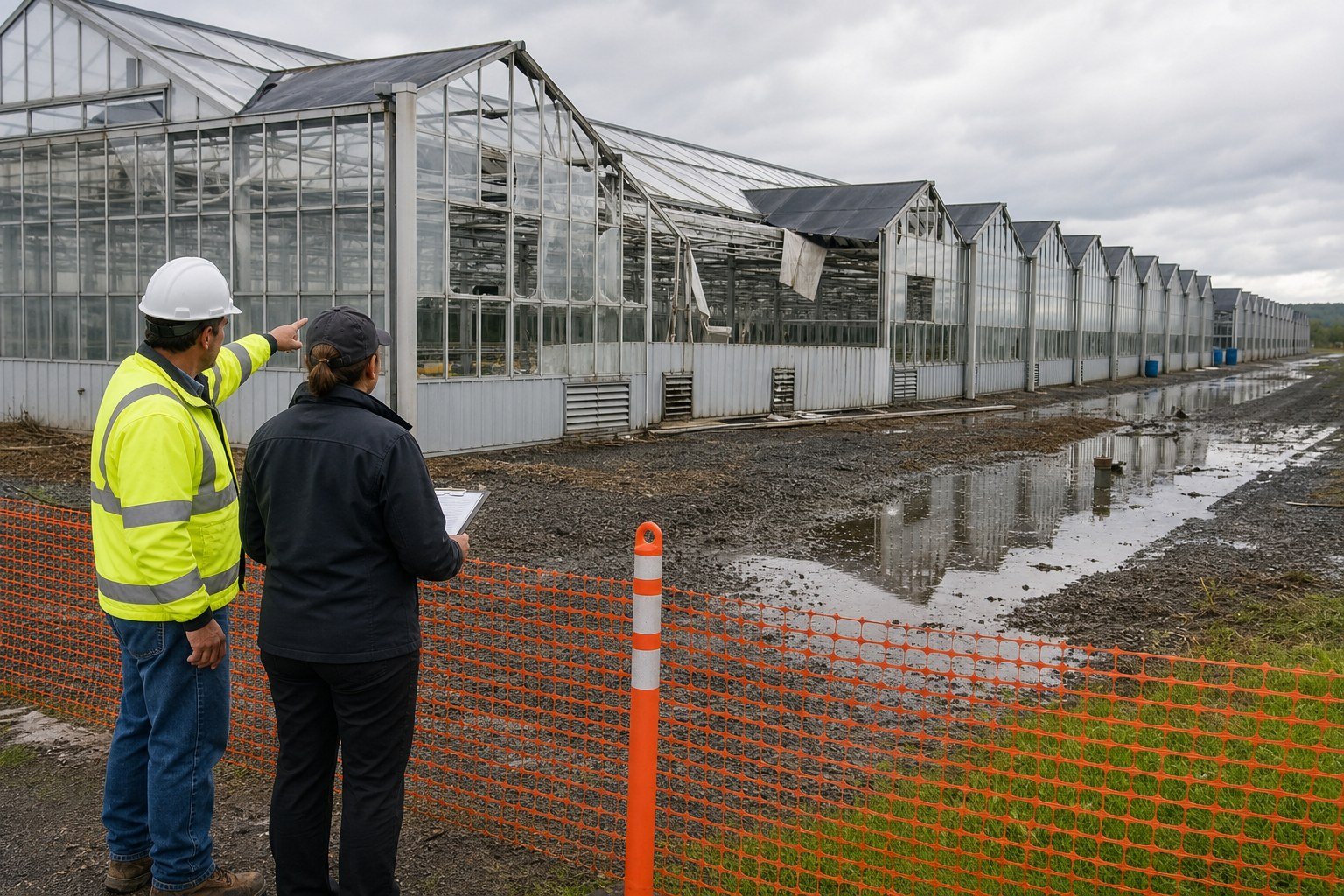
Establish an exclusion zone and begin from outside. Check official warnings, overhead lines, utility damage, fuel odor, moving water, unstable ground, leaning frames, broken glazing, loose covering, trapped snow or water, falling objects and blocked access. Do not enter because the structure still looks upright. Assign qualified structural, electrical, gas or fuel, water, environmental, equipment and plant-health inspections according to the damage. Photograph conditions before disturbance when safe, preserve controller and alarm records, and notify the insurer under its required process. Create separate releases for access, structure, each utility, equipment, water or hygiene status and crops. Restart only the areas and services whose inspection, repair and functional tests are complete.
Greenhouse damage can be deceptive. A frame may rack, foundations or anchors may move, glass may remain suspended, poly may tear around a fastener, gutters may deform and water may undermine a service route. Floodwater can affect electrical components, controls, pumps, stored inputs and crop hygiene even after surfaces appear dry. Wind may also carry debris or contamination into vents and water storage.
The recovery team needs two timelines. The first records the event, warnings, alarms, access decisions and immediate controls. The second records inspection, repair, testing and reopening by area. Keeping them separate makes it easier to preserve evidence while still moving safe work forward. It also prevents a repaired pump or panel from being treated as proof that the building and crops are ready.
This guide is an operating-control framework. The approved design, crop plan, product labels, manufacturer instructions, site safety procedures, local law and directions from competent local professionals govern the actual work.
What the buyer should control
| Control point | Required record or action | Release evidence |
|---|---|---|
| Access control | Record official restrictions, exclusion boundary, sign-in, assembly point, lighting, communications, weather change and authority to admit each specialist. | Incident lead's access status and site map are current before any inspection begins. |
| External hazard survey | Observe lines, poles, gas or fuel odor, water movement, ground, foundations, frame alignment, glazing, covering, snow or debris loads and neighboring hazards from safety. | Photographic survey and hazard list identify areas that remain prohibited. |
| Structure and envelope | Have a qualified person assess foundations, columns, hoops, trusses, bracing, gutters, vents, doors, glazing, screens and anchors before entry or repair loading. | Written structural access or repair instruction states limits, shoring responsibility and reinspection. |
| Utilities and equipment | Isolate and inspect electrical, generator, fuel, gas, heating, cooling, controls, pumps, pressure systems, communications and fire protection according to competence. | Separate utility release and functional-test record for every restored service. |
| Water and contamination | Identify flood, sewage, chemical, sediment, broken-container, irrigation, storage and drainage exposure; control runoff and waste under local requirements. | Sampling, cleanup, disposal, sanitation and water-release evidence is accepted by the responsible specialist. |
| Crop and inventory | Map affected batches, direct water contact, loss of climate control, broken glass or debris, treatment exposure, temperature history and food-safety or plant-health restrictions. | Grower and relevant compliance lead record hold, salvage, treatment, disposal or release by batch. |
| Repair and reopening | Prioritize temporary weather protection, drainage, utilities and crop movement without concealing damage; test alarms, interlocks and controls before automatic operation. | Area release lists completed repairs, open limits, photographs, test results and next inspection. |
Every open item needs an owner, due date, status and effect on safety, production, cost and recovery time. A note that something was discussed or is being handled does not prove closure.
A practical workflow
1. Stop uncontrolled entry
Use barriers and one access authority. Account for employees, contractors and visitors. Keep people away from damaged lines, standing or moving water, unstable glazing, fuel odor, damaged frames and areas under snow, water or debris load. Call emergency services or utilities as the site plan requires.
2. Capture the undisturbed condition
When it can be done safely from an approved location, photograph the exterior, water marks, debris, anchors, glazing, utilities and equipment status. Export remote alarm, weather and control records. Follow insurer instructions before moving damaged items except where life safety or further-loss control requires action.
3. Bring in the right disciplines
A general walk-through cannot release every hazard. Assign structural, electrical, fuel or gas, water, environmental, equipment and crop assessments. Define where each specialist may enter and which upstream release is needed first.
4. Stabilize without hiding evidence
Temporary weather protection, drainage or isolation may be urgent, but record condition before and after. Use an engineered method for shoring or structural support. Do not energize wet equipment or use unapproved temporary wiring to speed recovery.
5. Test repaired systems by boundary
Inspect and test one released utility or greenhouse zone at a time. Confirm protective devices, alarms, sensors, interlocks, direction of motors, valves, drainage and control schedules. Hold automatic operation until the responsible people understand temporary limitations.
6. Release crops and production separately
Map batches against water contact, temperature or humidity exposure, debris and sanitation status. Apply food-safety, plant-health, customer and legal requirements. Preserve uncertain material on hold rather than mixing it with unaffected production.
7. Turn the event into mitigation
After recovery, compare actual damage with the site assessment and design assumptions. Update drainage, protected utility locations, bracing, covering details, spare material, alarms, contracts, insurance records and the emergency plan. Track each improvement to a verified completion date.
Preserve the event sequence and earlier versions of records. The team should be able to reconstruct what was observed, which condition applied, who decided, what changed, how the result was tested and which limitation remained.
Who owns each decision
Incident and access lead
Maintains the exclusion zone, follows official orders, controls entry, coordinates emergency services and records who is working in each released area.
Structural and utility specialists
Provide discipline-specific inspection, isolation, repair instruction and release. One specialist does not sign for hazards outside that person's competence.
Grower and plant-health or food-safety lead
Maps crop exposure, controls holds, decides salvage or disposal and preserves traceability to affected water, climate and zones.
Recovery records and insurer contact
Keeps photographs, notices, estimates, purchase approvals, labor and material records, damaged inventory, repair tests and insurer communication together.
Release evidence before the next step
Use a release matrix, not one verbal permission. The site may be safe for an engineer to inspect while still closed to production staff. Structure may be accepted while electrical equipment remains isolated. Irrigation may operate while crops remain on contamination hold. Each release should name the area or asset, responsible professional, evidence, restrictions, date and next review. Remove the exclusion only when every applicable condition is complete.
Common failure modes
| Failure | Buyer response |
|---|---|
| People enter because no collapse is visible | Keep the exclusion until a competent structural and hazard assessment grants the required level of access. |
| Wet electrical equipment is allowed to dry and restarted | Keep it isolated and obtain qualified inspection, manufacturer guidance, testing, reconditioning or replacement as applicable. |
| Cleanup erases the damage record | Capture safe photographic and written evidence and follow insurer requirements before disturbance, while still controlling immediate hazards. |
| One repair order is used as the all-clear | Release structure, utilities, water or hygiene, equipment and crops through separate evidence and authority. |
| Flood-exposed crops are mixed with unaffected stock | Identify batches and zones immediately and apply the relevant plant-health, food-safety and customer-disposition rules. |
| Temporary wiring or bracing becomes permanent | Give every temporary control an engineered or qualified basis, owner, inspection interval and removal or replacement date. |
Buyer decision questions
Who currently controls access? Are official orders still active? Can the exterior be observed without power-line, water, glazing or structural exposure? Which discipline must inspect first so others can enter? What equipment was wet, moved or contaminated? Which alarms and controller records survived? Which crops had direct water, debris, chemical or temperature exposure? What photographs and insurer notices are required? Which release applies to this exact area, service and task? Which temporary measure still needs permanent repair?
Keep these decisions connected to the commercial greenhouse site assessment, the greenhouse commissioning checklist, the greenhouse defect and service log. The emergency plan, equipment evidence and crop plan should describe the same operating reality.
Frequently asked questions
Can staff enter to photograph damage?
Only after the access authority and relevant qualified professionals permit that level of entry. Remote or exterior photographs are preferable while hazards remain uncertain.
Can a flooded motor or panel be restarted after drying?
Do not energize it based on appearance. Qualified electrical professionals and manufacturer guidance must determine testing, reconditioning or replacement.
Should torn covering be repaired immediately?
Control further weather damage, but only through a safe access and structural plan. Wind, loose material, broken glazing and unstable frames can make a quick repair dangerous.
When can irrigation restart?
After the source, storage, treatment, distribution, power and affected crop or hygiene controls have been inspected and released. Flood contact may require sampling, cleanup and sanitation.
What evidence helps an insurance claim?
Follow the policy and insurer instructions. Common records include dated photographs, event timeline, damaged asset and inventory lists, protective actions, estimates, invoices, labor, disposal and repair-test evidence.
How should partial reopening work?
Use physical boundaries and written restrictions. Release only the inspected zone and required service, communicate what remains prohibited, and prevent automatic systems from affecting closed areas.
Turn the requirement into a controlled deliverable
Share the site plan, drainage and utility layout, structural drawings, equipment inventory, crop-zone map, insurance requirements, emergency contacts and available event records. Chengfei Greenhouse can help identify supplied-system interfaces while qualified local authorities and specialists control access, inspection and release.
Contact Chengfei Greenhouse