
The short answer
Use one numbered service log for all defects, whether or not coverage is accepted. Record discovery time, exact asset and location, model or serial identity, software and settings where relevant, observed behavior, normal expected behavior, crop and safety impact, alarms and trend window, photographs or video, recent maintenance, operating conditions, temporary action and current status. Send notice through the contractual route within the required time. Keep diagnosis, supplier questions, parts, site access, costs, repair, retest and acceptance in the same record. Close only after physical operation and affected protections are verified.
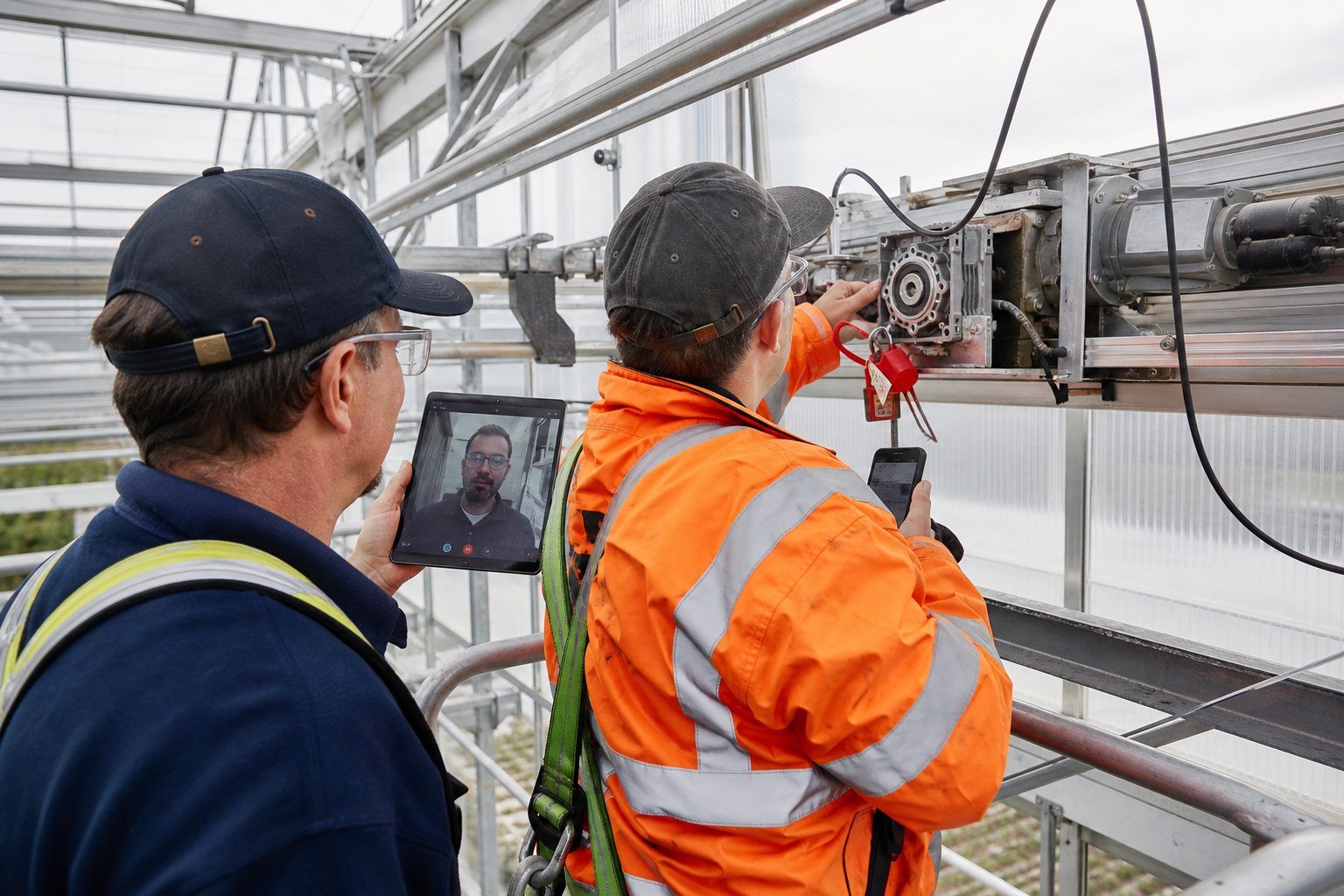
Remote support becomes slow when the service team must ask which motor, which bay, what command was active and whether the limit switch changed. A structured first report reduces repeated questions and helps distinguish installation, configuration, maintenance, power, communications, environmental and component causes. It also gives the next shift one reliable version of the event instead of several informal messages.
Do not make coverage the first operational decision. Protect people, crops and connected equipment under authorized procedures, preserve evidence and notify the responsible parties. The commercial decision can follow the contract. Unauthorized dismantling, missing maintenance records or unapproved settings may complicate diagnosis and warranty, so record every intervention.
This guide is an operating-control framework, not a substitute for the approved design, crop protection plan, product labels, manufacturer instructions, employment and safety procedures, local law, or advice from qualified growers, engineers, water-treatment specialists, plant-health advisers, and safety professionals.
What the buyer should control
| Control point | Required record or action | Release evidence |
|---|---|---|
| Identity and notice | Assign case number; record owner, supplier, contract or purchase reference, asset, location, model, serial, commissioning and warranty dates, discovery and formal notice. | Acknowledged notice with traceable date and correct contractual recipient. |
| Observed condition | Describe what happened without assuming cause; include command, feedback, physical condition, noise, leakage, damage, alarm, trend and weather or crop context. | Time-stamped evidence and a reproducible symptom where safe. |
| Impact and priority | State safety restriction, crop exposure, lost function, affected zones, backup capacity, production impact and time before consequences increase. | Agreed service priority and interim operating limit. |
| Immediate control | Record isolation, manual mode, backup equipment, monitoring, access restriction, temporary protection and person authorizing each action. | Safe current state with shift teams informed and expiry or review time set. |
| Diagnostic history | Include recent changes, maintenance, cleaning, settings, software, power events, tests, readings, supplier questions and each attempted action. | Chronological record prevents repeated or conflicting troubleshooting. |
| Repair and logistics | Track technical disposition, parts, freight, customs, labor, tools, access, outage, supplier attendance, owner costs and replaced-item preservation. | Approved repair method and complete work record tied to the asset. |
| Retest and closure | Repeat the failed function and affected alarms, interlocks, modes and adjacent checks; update drawings, spares, settings and recurring maintenance. | Authorized closure records result, residual risk, coverage decision and recurrence watch. |
Give every open item an owner, due date, status, related drawing or package, and effect on cost, time, quality, safety, and performance. “Discussed,” “in progress,” or “by others” is not a closure record.
A practical workflow
1. Make the equipment safe and preserve evidence
Use site isolation and crop-protection procedures. Photograph condition before changing it, save relevant trends and do not discard the failed part.
2. Write observation before diagnosis
State that a vent command reached 100 percent while feedback remained at 20 percent, for example, rather than declaring the gearbox defective without checking power, linkage and limits.
3. Send a complete first service package
Provide the case summary, asset identity, impact, evidence, recent history, current safe state and times when staff and remote access are available.
4. Control every troubleshooting change
Record who changed a parameter, moved equipment, swapped a part or reset a trip, and the result. Restore or formally accept the final configuration.
5. Retest beyond the repaired component
Confirm the original function plus protection, alarms, neighboring equipment, automation and crop condition. Update preventive tasks if the failure mechanism could recur.
Use one controlled register and preserve superseded records. The team should be able to reconstruct which instruction, setting, role and asset condition applied when an event was observed, adjusted, maintained, tested, restored and accepted.
Roles at the operating interfaces
Owner and operations manager
Set the crop, safety, production and business priorities; assign authority; approve operating limits; and make sure urgent decisions can be made outside normal hours.
Grower and plant-health lead
Define crop-sensitive conditions, hygiene zones, scouting evidence, water-quality needs, permitted treatments, release criteria and the response to suspected pests or disease.
Maintenance and controls team
Keep assets, sensors, software, backups, alarms, isolations, spares and work records usable. Report degraded functions before they turn into crop or safety events.
Suppliers and local specialists
Provide scope-specific instructions, competent service, replacement parts and technical evidence. Local professionals must control regulated electrical, pressure, chemical, fire and environmental work.
Use evidence before releasing the next step
Before people, water, chemicals, crops or equipment enter a released area, confirm that the approved method is current, the responsible person has checked the work, exceptions are controlled, affected teams have been informed, and the record can be retrieved. If a condition is not met, state what may continue, what remains on hold, who owns the action, and when it will be checked again. This is more useful than a general statement that the greenhouse is ready.
Common failure modes
| Failure | Buyer response |
|---|---|
| The report contains only a photograph | Add asset identity, time, expected operation, actual behavior, context, impact and current status. |
| Several staff contact the supplier separately | Use one case owner and log so instructions and evidence remain consistent. |
| The failed item is discarded after replacement | Preserve it until contractual, technical and disposal decisions are documented. |
| The case closes when a part is installed | Perform functional and protection tests, review recurrence and obtain authorized acceptance. |
Buyer decision questions
What exactly failed, where and when? What was commanded and what happened physically? Which crop, person or connected asset is exposed? What safe temporary action is authorized? Which contract route and notice deadline apply? What evidence can be collected before condition changes? What tests prove repair, and who may close the case?
Link the answer to the greenhouse punch list and warranty closeout, the greenhouse spare parts handover list, the greenhouse preventive maintenance plan, so operating decisions remain connected across the crop, equipment, maintenance and evidence.
Frequently asked questions
Should every defect be called a warranty claim?
Record every defect in the service log, but use the contract and evidence to determine coverage. Avoid promising or rejecting coverage in an informal first response.
Can the owner repair urgent equipment before supplier approval?
Safety and crop protection may require action, but follow the contract and site authority. Notify promptly, preserve evidence and document why, by whom and how work was done.
What evidence is most useful for remote diagnosis?
Exact asset identity, time-stamped symptoms, commands and feedback, physical observations, alarms, trends, settings, recent work and clear photos of condition and connections.
How should recurring defects be handled?
Link cases, compare conditions, investigate common cause and review design, installation, operation, maintenance, environment and parts. Do not close repeated symptoms one by one without a recurrence plan.
Turn the requirement into a controlled deliverable
Share the asset list, warranty register, service contacts, maintenance history and a sample of recent defect reports. Chengfei Greenhouse can help structure evidence for its supplied systems while the owner controls contractual notice, safe operation and site-wide case closure.
Contact Chengfei Greenhouse