
The short answer
Plan the work as a measured retrofit, not a repeat material order. Confirm the failure pattern, frame condition, covering dimensions, attachment system, vents and penetrations, crop constraints, access, weather window, removal method, waste route, installation responsibility, and acceptance checks. If the proposed cover changes weight, stiffness, connections, or wind behavior, obtain a project-specific structural review.
The quickest quotation is rarely the safest one. A panel may look similar but not fit the existing glazing bar. Repeated film tears may come from sharp steel or poor tension. Water inside polycarbonate cells may point to failed closures rather than the panel sheet alone.
This article is a coordination guide. Product installation, structural adequacy, work at height, lifting, fire safety, waste handling, and local permits must follow the selected manufacturer's instructions and qualified local professionals.
Choose the right level of intervention
Repair a limited area
A local repair can work when damage is isolated, compatible repair materials are available, and the surrounding attachment remains sound. Check that the repair will not create a stress point, trap water, block a drainage path, or conflict with the warranty. Repeated failures across several bays usually justify a wider survey.
Replace like for like
Like for like means more than the same generic material name. Confirm dimensions, profile, optical and thermal properties, UV orientation, fixing method, edge details, safety requirements, and compatibility with the existing frame. Ask for the exact product reference, data sheet, warranty terms, storage rules, and approved installation method.
Convert to another covering system
Changing from film to rigid panels, from glass to polycarbonate, or between panel systems can alter dead load, wind response, connection forces, drainage, condensation, vent operation, and shading. Review the frame, purlins, glazing bars, fasteners, bracing, foundations, vents, and gutters. The greenhouse wind and snow load specification explains why this cannot be approved from a material brochure.
Survey the greenhouse bay by bay
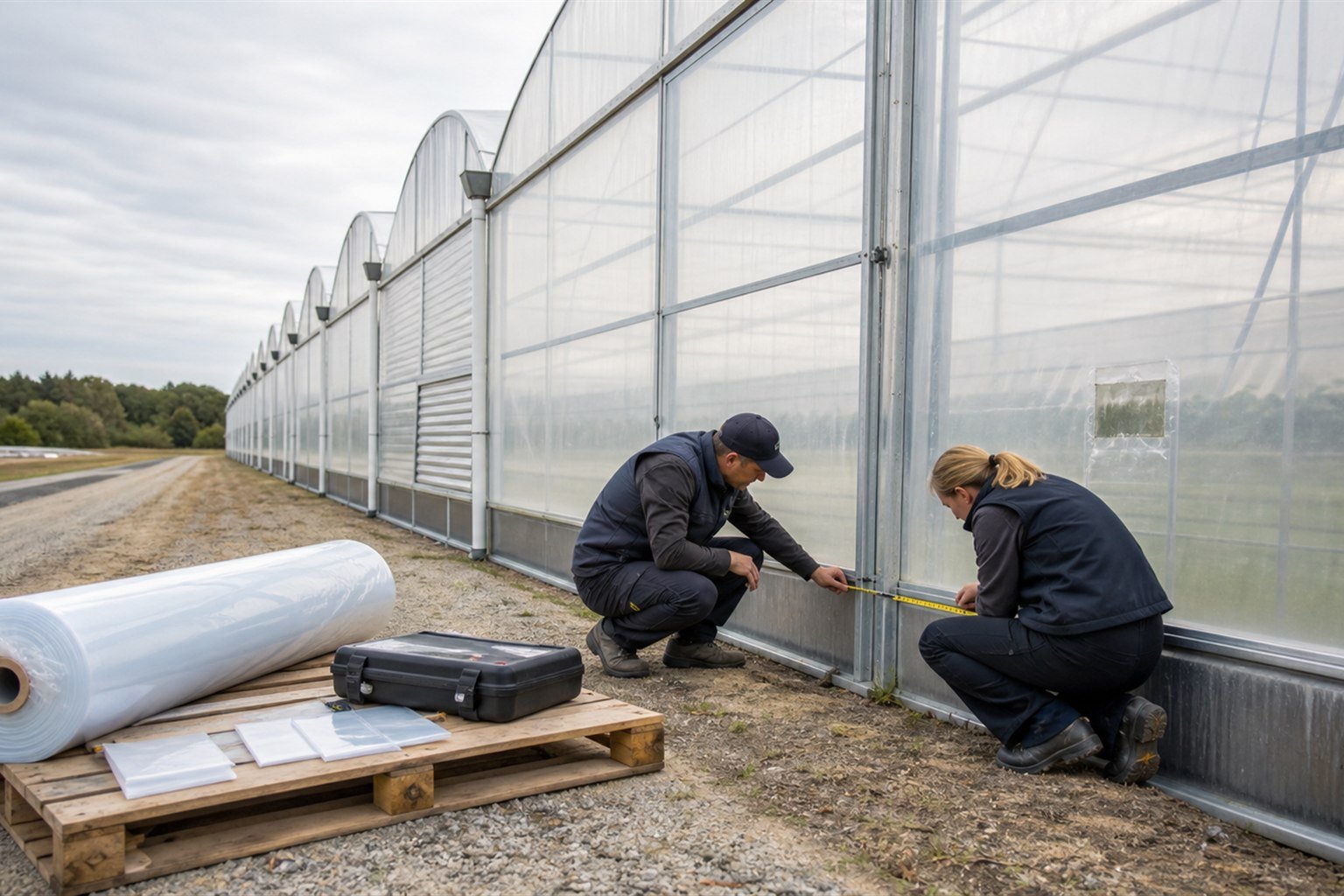
Record the structure type, span, bay spacing, gutter height, total length, roof and wall covering, attachment profiles, lock channels, spring wire, gaskets, caps, clips, tapes, fasteners, vents, fans, pads, doors, gutters, screens, and service penetrations. Mark each photograph with a bay or grid reference and include a scale in close views.
Separate symptoms from causes. Film tearing beside the same hoop suggests a contact or tension problem. Slipped glass can indicate a glazing or frame issue. Cracked panels near fasteners can involve movement allowance or support. Loose, bent, corroded, or sharp structural parts should be recorded before they disappear behind the new covering.
Verify archived drawings in the field. Extensions, repaired end walls, mixed profiles, and altered vents are common in older facilities. A supplier can price a defined scope, but should not be asked to infer dimensions from distant photographs.
Record the information that changes with each material
| Covering | Record | Common interface risk |
|---|---|---|
| Flexible film | Developed width, length, layers, thickness, required properties, orientation, roll format, overlap, lock channel, wire, inflation equipment, and seals. | Sharp contact points, weak lock channel, incorrect film face, poor tension, or an incomplete double-layer air system. |
| Polycarbonate | Panel thickness, wall structure or profile, width, length, UV face, cell direction, supports, joining profiles, closures, fasteners, and movement allowance. | A near-match profile that does not seat correctly, blocked cell drainage, mixed panel types, or restrained thermal movement. |
| Glass | Pane modules, glass type and thickness, glazing bars, clips, gaskets, overlaps, seals, lifting access, breakage control, and temporary weather protection. | Ordering from a nominal bay dimension, reusing failed seals, frame movement, unsafe handling, or an unplanned open bay. |
University of Florida guidance notes that a double film system depends on inflation and suitable locking. This is a useful reminder: the cover, its attachment, and its operating support system form one assembly.
Issue one measured quotation schedule
Give every bidder the same quantities and ask them to identify assumptions. Separate removal, frame preparation, new covering, attachment parts, vent and door interfaces, access equipment, crop protection, installation, waste, testing, and handover. A low material price is not comparable with a complete installed scope.
Removal
Define material, area, sequence, weather protection, handling, and lawful disposal.
Frame preparation
List cleaning, repairs, sharp-edge protection, corrosion treatment, and excluded structural work.
New assembly
Name the product, exact dimensions, accessories, manufacturer instructions, warranty, and spare material.
Completion
Require inspection photos, product records, functional tests, defect list, and responsibility for closeout.
Set the work window around weather, crops, and safety
Cover replacement temporarily removes the greenhouse envelope. Agree on acceptable wind, rain, temperature, and solar conditions; how much area may be open; temporary securing and weather protection; and who can stop work. Large film sheets must not be improvised in high wind. Glass removal needs controlled access and a breakage plan.
If crops remain inside, agree on temperature exposure, dust, debris, water, hygiene, pest exclusion, irrigation, screens, lights, and moving equipment. Define shutdowns and safe isolation. A lower installation price may not offset crop loss or contamination.
Confirm roads, doors, floor capacity, lift and scaffold access, crane positions, panel or roll storage, and waste containers. The greenhouse site assessment checklist can help organize access and drainage evidence.
Inspect the finished work before access equipment leaves
Use the same grid as the survey. Check film tension, contact points, double-layer inflation, panel or film orientation, profiles, caps, wires, gaskets, clips, fasteners, drainage, closures, vent movement, door seals, gutters, and service penetrations. Return fans, screens, lighting, alarms, and climate controls to service and test them.
Remove glass fragments, cut wire, screws, offcuts, and packaging. Collect product labels, batches, warranties, cleaning instructions, marked drawings, inspection photographs, spare pieces, and the defect list. The commercial greenhouse commissioning checklist provides a useful structure for functional records.
Put responsibility in writing
Name who verifies dimensions and condition, approves structural changes, selects the covering, confirms product rules, removes waste, repairs the frame, supplies access equipment, protects crops, installs the cover, tests interfaces, and accepts the work. International projects often divide these duties among the owner, greenhouse supplier, local contractor, manufacturer, and specialist installer. Blank interfaces become delays.
Practical questions before ordering
When should a full cover replacement be considered?
Use condition, performance, recurring repairs, warranty terms, and crop consequence. Widespread brittleness, cracking, slipping, failed attachment, leakage, or reduced useful light should trigger a measured survey. There is no responsible universal replacement age because product grade, climate, installation, cleaning, and chemical exposure differ.
Can an occupied greenhouse remain in production?
Sometimes, but only with an agreed work sequence and crop protection plan. Evaluate temperature exposure, contamination, falling material, broken glass, pest exclusion, blocked aisles, and interruption to irrigation or climate control. Clearing one controlled zone can be safer and less disruptive than trying to work above a valuable crop.
Who should confirm the dimensions?
The contract should name the party. A joint site measurement by the owner, installer, and supplier is often useful for older structures. The covering manufacturer should confirm ordering tolerances and compatible accessories for its product.
What records should the owner keep?
Retain the measured scope, approved product data, manufacturer instructions, batch records, delivery inspection, installation photographs, defects, repairs, and acceptance signatures. Link photographs to the greenhouse grid so later failures can be traced to the product, frame, installation, weather, or operations.
Prepare a useful replacement request
Send a marked plan, field measurements, photo survey, product references or samples, defect map, crop constraints, access information, and preferred work window. Chengfei Greenhouse can use that evidence to review covering options and define a supply scope.
Contact Chengfei GreenhouseReferences
- Rutgers Cooperative Extension. Greenhouse Glazing Replacement.
- University of Florida IFAS Extension. Physical Greenhouse Design Considerations.
- Oklahoma State University Extension. Greenhouse Structures and Coverings.