
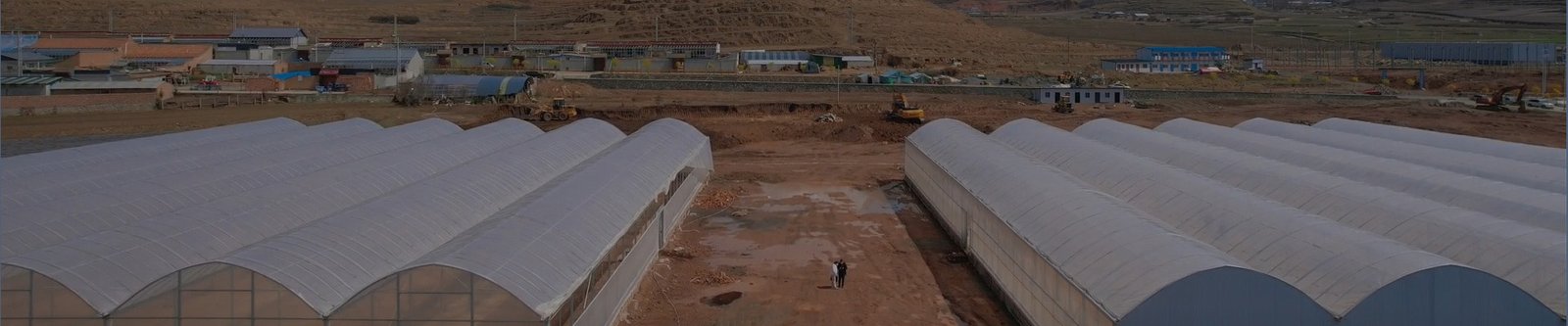
Short answer: the best greenhouse for cold weather is a site-engineered system, not one covering material. Start with a frame rated for local snow and wind, then reduce heat loss through the covering, air sealing, perimeter detail and thermal screens. Size heating and backup systems against the required crop temperature and local design weather.
Choose the structure before comparing coverings
A covering with good insulation cannot correct an under-designed frame. Give the supplier the code-required ground snow, roof snow, wind and seismic criteria, plus the site's elevation and exposure. Ask whether the stated load assumes snow stays on the roof, slides off, is melted by heat or is removed by an operating procedure. Those are different design conditions.
Gutter height, bay width, arch shape and bracing affect how the structure carries snow and how workers reach the roof, screens and heating equipment. Doors, vents and gutters also need details that remain operable during freezing weather.
Compare covering systems by installed performance
| System | Useful characteristics | Procurement questions |
|---|---|---|
| Inflated double polyethylene film | Lower initial cost and an insulating air layer; suitable for many production houses | Film life, inflation blower backup, fastening detail, air leaks and replacement access |
| Multiwall polycarbonate | Rigid panels with internal air spaces and better impact resistance than glass | Panel thickness, U-value test method, light transmission, UV side, condensation control and joint system |
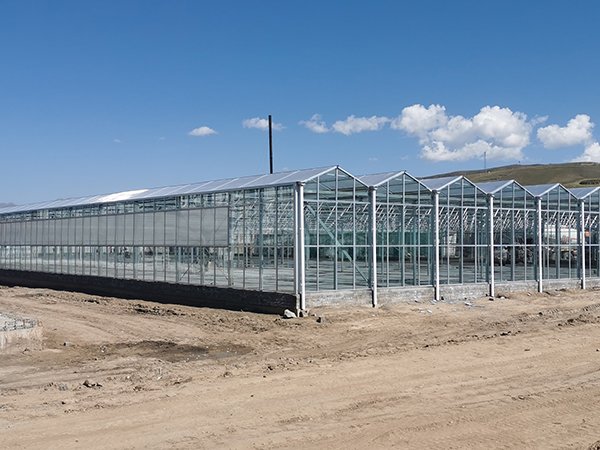
| Double glazing or insulated glass | Long service life and high light quality in a suitable framing system | Installed U-value, edge seals, glass safety specification, frame thermal bridges and snow-load rating |
| Single glass or single film | High light or low first cost in some applications | Whether the heating penalty and condensation risk are acceptable for the crop and energy price |
Reduce the load before increasing heater size
Air leakage around doors, vents, gutters and panel joints can dominate winter heat loss. Specify seals and commissioning checks. A correctly installed thermal screen can reduce the heated volume and nighttime radiation loss, but gaps at the perimeter or a wet screen reduce its value. The screen also changes humidity and must be included in the control sequence.
Perimeter insulation may help where the foundation and local moisture conditions allow it. Protect water lines, valves, drains and pad systems from freezing. Separate production zones can avoid heating empty space to the same setpoint as an active crop area.
Plan for snow, condensation and failure
- Define who monitors snow depth and which action is allowed by the structural engineer.
- Keep emergency generators, spare fan belts, pump parts and safe temporary heat available where the risk justifies them.
- Use alarms for low temperature, power loss, boiler failure and abnormal pipe temperature.
- Provide condensate paths that do not drip on crops or freeze at doors and gutters.
- Check that combustion appliances have approved ventilation, fuel storage and carbon-monoxide safeguards.
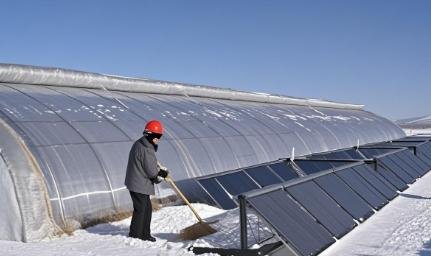
Snow management must not rely on an improvised instruction to heat the house harder. That may be part of an engineered operating plan, but it affects fuel supply, meltwater, gutters and the crop. If manual removal is permitted, define safe access and methods that do not puncture the covering or create an unbalanced roof load.
Condensation control also needs a winter sequence. Warm, moist crop air can condense on cold glazing and framing. Internal air movement, irrigation timing, controlled ventilation and heat work together. Closing every opening to save fuel can raise humidity and disease pressure, so the energy model and crop-climate strategy must be reviewed together.
RFQ information for a cold-weather greenhouse
Send the location, crop setpoints, production months, greenhouse dimensions, snow and wind criteria, available fuel, electricity reliability, expected light requirement and preferred covering life. Ask the supplier to state the indoor and outdoor temperatures used for the heating calculation, all exclusions, and the assumed thermal properties of the installed assembly.
The climate-controlled greenhouse guide shows how heating interacts with ventilation and humidity. The commercial greenhouse foundation guide covers frost, soil and load inputs below the structure.
Technical references
- Oklahoma State University Extension: Greenhouse Structures and Coverings
- Washington State University: Winter Production and Greenhouse Covering Considerations
- University of Georgia: Greenhouse Heating, Cooling and Ventilation
Planning for snow and low winter temperatures? Send the site, crop setpoints, design loads, utilities and production period to info@cfgreenhouse.com for a defined technical quotation scope.