
Short answer: NFT means nutrient film technique, DFT usually means deep flow technique, DWC means deep water culture, and drip hydroponics applies solution to a substrate or root zone through emitters. Choose among them by crop, root support, water quality, disease strategy, failure tolerance, labor flow and market plan. No system is best for every commercial greenhouse.
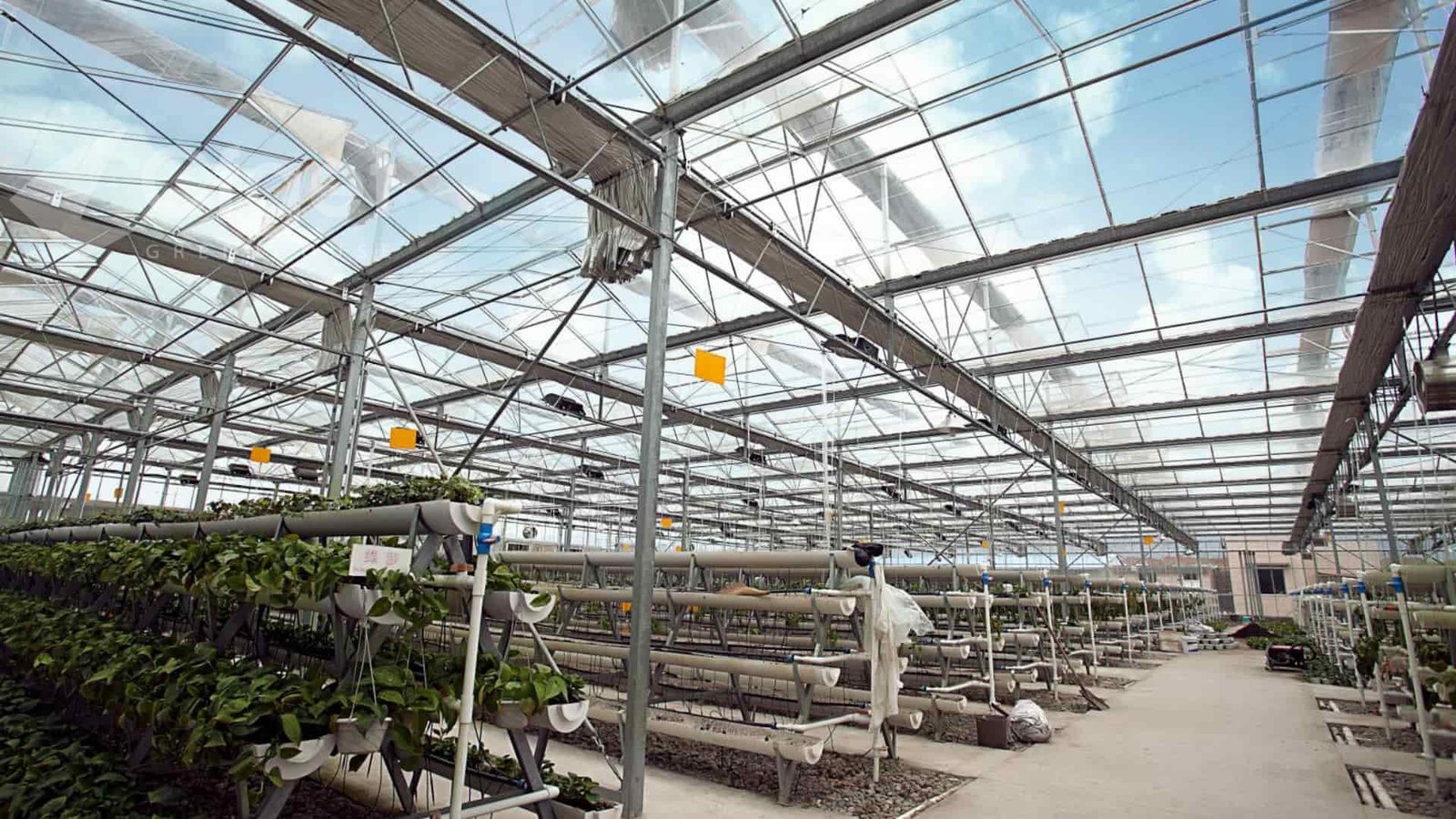
Compare the root zone, not only the acronym
| System | Root-zone arrangement | Project strengths | Failure and operating checks |
|---|---|---|---|
| NFT | A shallow, moving film of nutrient solution passes through sloped channels and returns to a reservoir. | Central solution management and organized crop spacing can suit short-cycle crops. | Pump interruption, uneven channel flow, blocked returns, slope, solution temperature and root disease spread. |
| DFT | Roots contact a deeper moving layer of solution in channels or beds. Definitions vary by supplier. | The larger solution depth can provide more root contact and hydraulic buffer than a thin film. | Aeration, water depth, temperature, drain-down, cleaning and the supplier's exact flow design. |
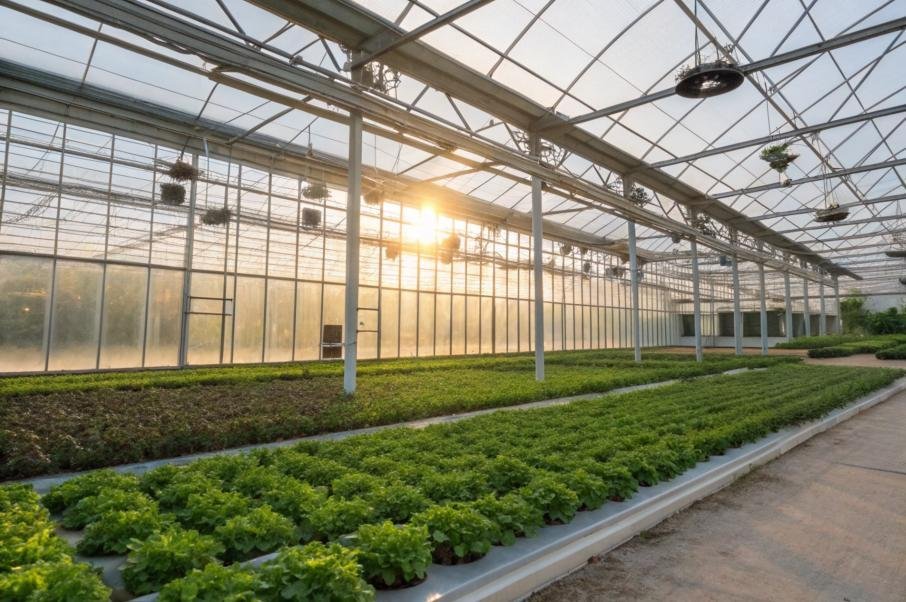
| DWC or raft | Plants sit above a deeper solution volume, often on floating rafts, with root-zone aeration. | Large water volume can buffer short chemical changes and fits dense leafy-green layouts. | Dissolved oxygen, water temperature, raft handling, tank cleaning, structural water load and backup aeration. |
| Drip with substrate | Emitters deliver solution to containers, bags or slabs filled with a selected substrate. | Zoning and separate root volumes can suit longer-cycle fruiting crops. | Emitter uniformity, filtration, drainage fraction, salt distribution, substrate handling and runoff or recirculation. |
Ask each supplier to define DFT in drawings because the label is not always used consistently. The drawing should show water depth, channel section, flow direction, reservoir, aeration, supply and return lines, overflow and drain-down route.
Start with the crop and saleable product
Leafy greens, herbs, transplants, tomatoes, cucumbers and berries place different demands on root volume, support, crop duration and harvest access. Define cultivar, planting density, crop cycle, packed product, weekly output plan and accepted defects before choosing a system. Biological yield alone does not define a commercial layout.
Oklahoma State University separates hydroponic systems into liquid or aggregate systems and open or closed nutrient handling. That distinction is useful in procurement because it reveals what must be filtered, captured, treated, adjusted and discharged. The University of Minnesota describes NFT, DWC and drip as different hydraulic arrangements, not interchangeable equipment packages.
Map the water and nutrient circuit
Draw the source-water inlet, storage, treatment, fertilizer stock, dosing point, irrigation zones, root zone, return, disinfection, drain-down and legal discharge route. Add sampling points and isolation valves. The diagram should show which water is reused and which leaves the production system.
Provide a current water analysis. The crop specialist may need alkalinity, electrical conductivity, pH, major ions, suspended solids and microbiological information. Equipment selection also needs peak and average flow, pressure, storage volume and the time available during a supply interruption.
Compare failure tolerance
- Record how long the crop can tolerate loss of flow, aeration, cooling or power under the design weather.
- Divide production into practical hydraulic zones so one fault does not stop the whole house.
- Specify alarms for reservoir level, pump state, pressure or flow, pH, EC and temperature where they are required by the crop plan.
- Define backup power, spare pumps, manual bypass and the operator response for each alarm.
- Commission blocked-line, low-level, sensor-fault and power-loss scenarios before accepting the system.
Sanitation and labor belong in the design
Closed systems can move a root-zone problem between plants through shared solution. Define how channels, rafts, tanks, pipes and tools are emptied, cleaned, disinfected and returned to service. Provide a location for dirty equipment and a separate route for clean planting material.
Measure the work. Channel height, raft width, harvest carts, crop-support wires, pipe crossings and drain locations affect labor and safety. A compact layout can lose its advantage if workers cannot inspect roots, replace emitters or remove crop waste without crossing clean areas.
Information to send with a hydroponic RFQ
- Crop, cultivar, crop duration, plant density, weekly packed-output target and harvest method.
- Project location, production months and crop-zone environmental limits.
- Source-water laboratory report, available flow, storage and discharge constraints.
- Preferred open or closed nutrient circuit and the required treatment boundary.
- System zones, reservoir concept, pump duty, filtration, dosing, aeration and backup strategy.
- Channel, bed or substrate layout with aisles, crop support, drainage and cleaning access.
- Control points, alarms, data records, spare parts, training and acceptance tests.
Related CFGET planning pages
Review the hydroponic greenhouse options, the commercial lettuce system guide and the greenhouse flooring and drainage guide before fixing the system layout.
Technical references
- Oklahoma State University Extension: Hydroponic system categories and operation
- University of Minnesota Extension: NFT, DWC and drip system descriptions
- Virginia Cooperative Extension: Hydroponic production of edible crops
Comparing NFT, DFT, DWC and drip proposals? Send the crop plan, water report, layout, utilities and failure-response requirements. CFGET can map the greenhouse and root-zone interfaces into one quotation scope.