
Short answer: a commercial greenhouse lettuce project should be specified as a complete crop system. The structure, light, heating and cooling, root-zone method, water treatment, sanitation, labor flow and cold chain must all support the chosen cultivar and sales schedule. A winter temperature tip alone cannot define the facility.
Start with the product and weekly delivery plan
Define head, leaf, baby-leaf or living lettuce, then record cultivar, target weight, pack format, harvest frequency and accepted defects. The greenhouse cannot correct a mismatch between the production plan and the buyer's grade. A weekly delivery target also determines propagation area, crop turns, reserve capacity and cold-room flow.
Use trials or production records from a comparable climate to confirm cultivar behavior. Heat tolerance, tipburn risk, bolting, head shape and disease resistance vary. Keep crop recipes under the crop adviser's responsibility and give the greenhouse supplier the resulting environmental ranges and alarm limits.
Compare root-zone systems by operating requirement
| System | Project advantages | Interfaces and failure checks | RFQ evidence |
|---|---|---|---|
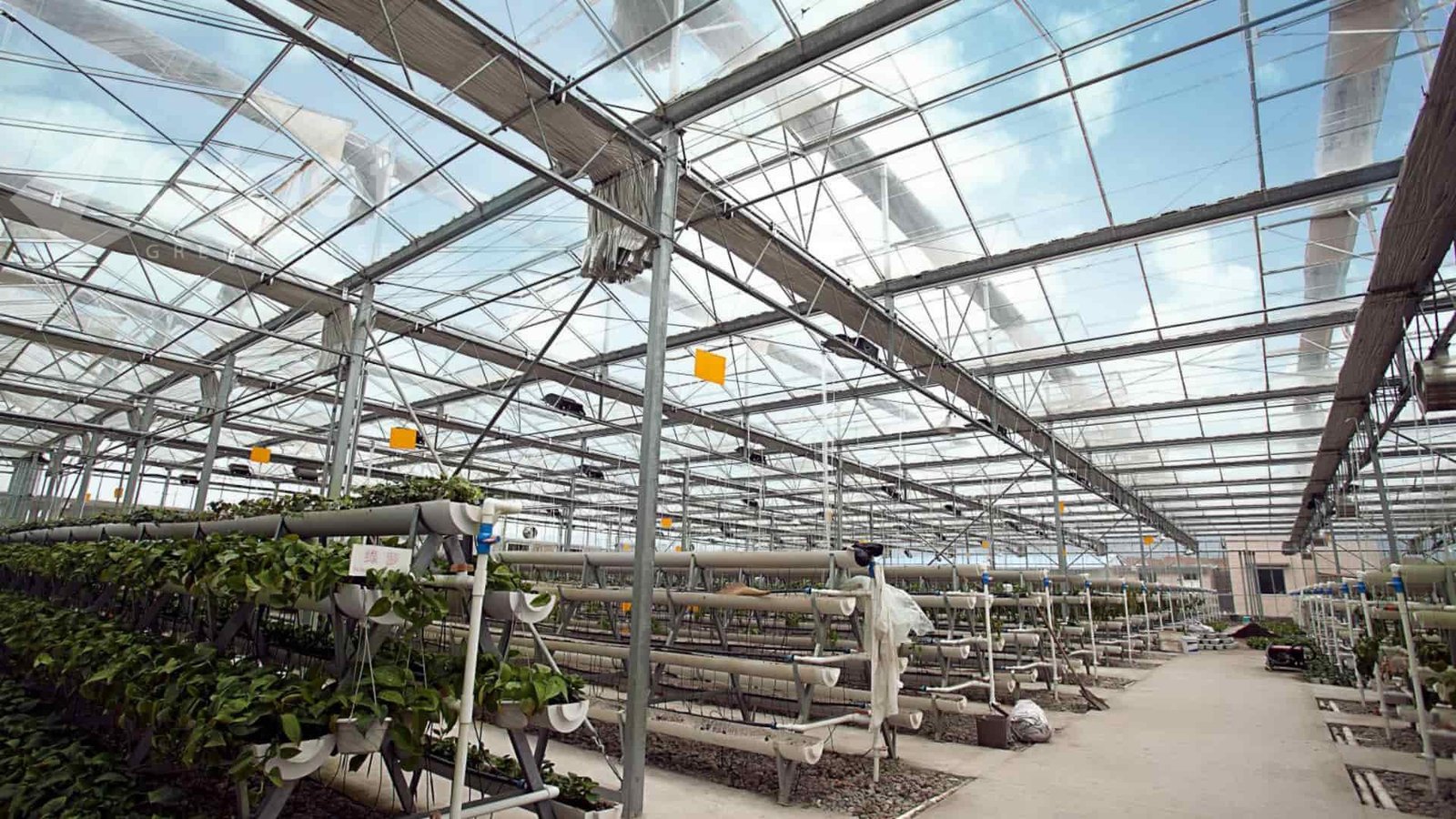
| NFT channels | Organized plant spacing and a recirculating flow path | Pump interruption, channel slope, flow distribution, solution temperature, cleaning and root disease spread | Channel layout, hydraulic zones, return route, alarms, sanitation and backup method |
| Deep-water or raft | Large solution volume can buffer short changes | Aeration, water temperature, raft handling, tank cleaning and worker access | Tank construction, oxygen strategy, circulation, sanitation and harvest workflow |
| Substrate or container | Separate root zones and familiar drip components | Emitter uniformity, drainage fraction, media handling and disposal | Media, container, irrigation zones, drain collection and replacement plan |
| Soil bed | Lower process-equipment burden where soil is suitable | Drainage, salinity, compaction, soilborne disease and bed access | Soil test, bed section, irrigation uniformity, rotation and sanitation plan |
Design the climate around crop limits and local weather
Lettuce is a cool-season crop, but the required air and root-zone conditions depend on cultivar and stage. Ask the crop adviser for day, night, root-zone, humidity and light ranges. Use those limits with hourly outside temperature, humidity, radiation and wind to size the enclosure and systems.
Winter design is not only a heater calculation. Air leakage, covering insulation, thermal screens, condensation, ventilation and root-zone temperature influence energy and disease risk. On bright days the house may still need ventilation or shade. A control sequence should prevent heating and cooling from fighting each other.
Water quality and sanitation are design inputs
Test source water before choosing filtration, nutrient dosing or recirculation. The responsible crop specialist may need pH, electrical conductivity, alkalinity, major ions, suspended solids and microbiological information. Water described only as clean does not support equipment selection.
Separate clean and dirty movement. Provide a place to receive seedlings, wash hands and tools, remove crop waste, clean channels or rafts and isolate a suspect zone. For recirculating systems, define sampling points, treatment boundary, drain-down route and the response to a suspected root pathogen. Food-safety rules and discharge requirements vary by market and location.
Protect the crop from single-point failures
Lettuce can lose market quality quickly after a pump, cooling or power failure. Divide the project into practical zones, put alarms on critical equipment and document the time available for response. Backup power should cover the loads that actually protect the crop, not a generic percentage of the facility.
Commissioning should include low-flow, sensor-fault, power-loss and high-temperature tests. Record who receives each alarm, how they confirm the fault and what manual action is possible. Keep critical spares that match local service time.
Lettuce greenhouse RFQ inputs
- Project location, greenhouse area, crop type, cultivar and weekly saleable-output plan.
- Propagation method, plant density, cycle calendar, harvest method and pack format.
- Crop-adviser limits for air, root-zone, humidity, light and carbon dioxide where used.
- Source-water laboratory report, available flow, storage and legal discharge route.
- Root-zone system, hydraulic zones, recirculation boundary, filtration, dosing and sanitation.
- Covering, shade, screens, heating, ventilation, cooling, sensors, alarms and backup power.
- Floor, drainage, cold room, receiving, packing, waste and worker routes.
- Training, commissioning, spare parts, service response and acceptance tests.
Engineering boundary: this page does not promise yield, cycle time, water saving, energy cost or payback. Those outputs need a defined cultivar, climate, system, operator, market and financial model. Use extension guidance for production principles, then validate the project with local crop and engineering specialists.
Related CFGET planning pages
Review the hydroponic greenhouse, vegetable greenhouse, smart irrigation guide and commercial greenhouse flooring guide. Send the completed crop and site brief through the CFGET contact page.
Technical references
- Alabama Cooperative Extension: Greenhouse Lettuce Production
- Virginia Cooperative Extension: Hydroponic Production of Edible Crops
- University of Minnesota Extension: Hydroponic system operation and sanitation
- University of Florida IFAS Extension: Small-scale hydroponic lettuce production
Planning a commercial lettuce greenhouse? Send the sales schedule, cultivar, site weather, water analysis, utilities and root-zone concept. A useful quotation should show the interfaces, exclusions and commissioning tests.