
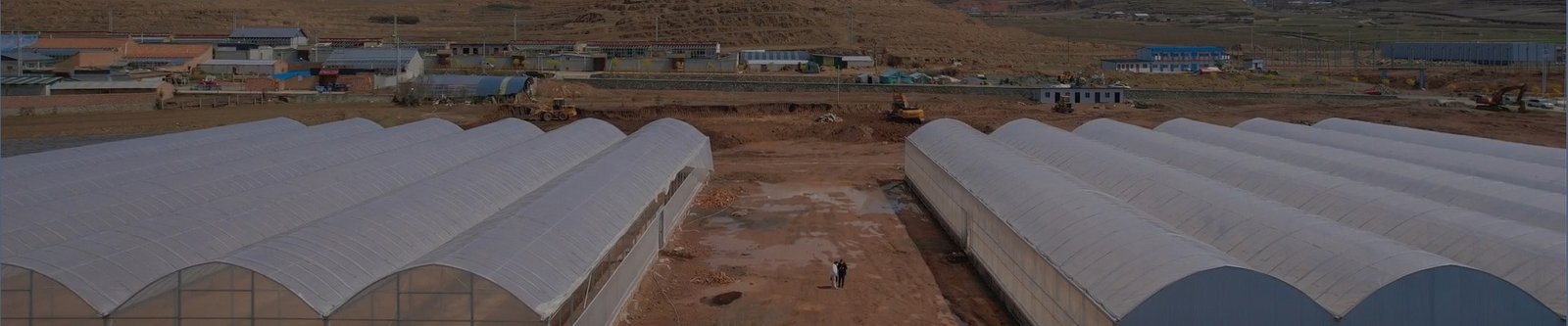
“Handles our tray size” is a useful start to a transplanter discussion. It is not enough to place an order. The machine must pick up the actual plug from its actual donor tray and place it into the actual receiving container using the configuration you are buying.
Approve compatibility pair by pair. Identify every donor-tray and receiving-container combination, the plant condition it represents, and the tooling needed. A successful empty-tray fit check leaves the plant-handling question open.
Which combinations must the purchase cover?
List the combinations used in production before comparing machines. A tray maker's name and nominal cell count do not identify the whole interface. Record the exact tray model or drawing revision, cell arrangement, indexing features and bottom access. Keep used or revised trays distinguishable from the sample the supplier inspected.
Next identify the receiving pack, pot or shuttle. Include the holder and container-filling arrangement if these form part of the proposed system. When one donor tray feeds two receiving formats, make two register entries. When two donor trays feed the same pot, keep those entries separate too.
UMass Extension's equipment guide explains that transplanters differ in their tray requirements and adjustment methods. Some formats need a particular relationship between donor and receiving cells. This 2017 guide provides useful selection questions, but its old prices and production capacities should not become current purchasing assumptions.
Ask where the machine touches the system
Have the manufacturer trace the offered configuration through three interfaces: donor presentation, plug removal and transfer, then placement into the receiver. The order drawing and written response should identify what supports, indexes, lifts, grips or releases the material at each stage. You do not need to design those mechanisms yourself. You do need to know which purchased parts make your combination possible.
The TTA-ISO PackPlanter page, for example, describes trays, packs and pots in shuttle trays as receiving formats and identifies an optional donor infeed belt. That is a reason to ask which receiver arrangement and accessories are included in a particular offer, rather than assuming every pictured format comes with the base machine.
Different designs also use different removal methods. Viscon's Multi Planter description presents a gripper approach and a specific potting-machine interface. Those are manufacturer claims about that configuration. They do not establish that another machine, every plug condition or every tray will work without additional equipment.
Read dimensions as the manufacturer defines them
Do not turn one attractive dimension into a compatibility verdict. Gripper installation spacing, tray-cell pitch, working width and container clearance describe different things. Ask for each measurement's definition, reference points and applicable configuration.
On the Urbinati RW16 public page checked in October 2026, the description and technical table present different working-width figures. The page also labels a minimum gripper installation interaxis. A buyer should request the order-specific drawing and clarification of those terms. The interaxis entry should not be re-labelled as an assured minimum tray-cell pitch.
If the seller's response changes a holder, pickup station, gripper set or software configuration, update the combination record. “Available as an option” and “included in this quotation” are different answers. Keep both the technical need and the commercial inclusion visible.
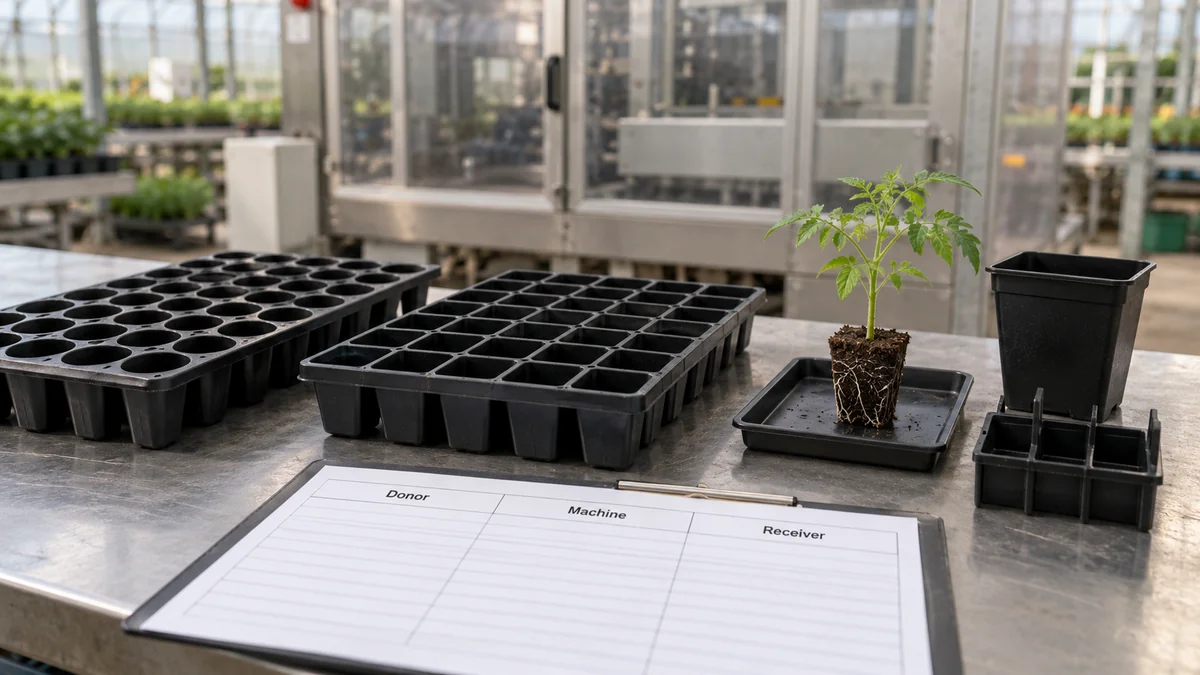
Build a donor-machine-receiver register
Use the blank compatibility register for the combinations that the order must cover. A separate evidence card for each pair keeps wide tray and machine details readable. The following fields determine what remains unresolved:
| Evidence group | What to identify |
|---|---|
| Donor | Maker, model, revision, geometry, cell arrangement, indexing and bottom access, with sample or drawing reference. |
| Plant sample | Crop and stage, plug dimensions and condition, canopy condition, root-ball cohesion and the batch represented. |
| Machine | Exact model, pickup and transfer configuration, tooling identifiers and documented setup reference. |
| Receiver | Container and holder identity, receiving layout, media and prepared-hole condition represented in the demonstration. |
| Offer | Written coverage, included tooling, optional tooling, exclusions and unresolved technical questions. |
| Demonstration | Samples used, configuration shown, observed mechanical defects, supplier response and remaining conditions. |
Use documented, conditional or hold as evidence states. “Documented” means the stated combination and conditions have supporting records; it is not a promise about every future batch. A conditional entry must say precisely what is missing. Avoid a general green tick that hides an untested tray or an accessory absent from the quote.
Test the uncertainty that an empty tray cannot answer
A hypothetical example shows the distinction. Two donor trays share a nominal cell count and both travel through the feed arrangement. Tray A holds cohesive plugs with a compact canopy. Tray B carries a different crop stage, with a more spreading canopy and less cohesive root balls. An empty-tray check says nothing about whether either plant sample can be removed and placed as required.
UMass identifies plant uniformity and overgrown or root-bound plugs as selection concerns. Ask the OEM to demonstrate the exact unresolved pair under its controlled, guarded procedure. Agree in advance which mechanical observations matter for that pair, such as a plug left behind, root-ball breakup, contact with foliage, a misplaced plant or a container that does not index correctly. Record what happened without inventing a universal acceptable defect percentage.
Keep the sample description with the result. If the supplier demonstrates another crop, tray revision or receiving medium, that may be useful information, but it does not close the original entry. Do not reproduce an unguarded promotional demonstration or adjust a moving machine to explore a fit problem.
Close the compatibility list before signing
Ask the OEM to reconcile the final register with the quotation and configuration drawing. Any pair still on hold needs a named response or an explicit exclusion. Have a competent machinery specialist review unresolved interfaces and the safe demonstration arrangements.
Carry the approved records into the broader commissioning and unresolved-findings process. Keep later labor and commercial-performance evaluations separate. Physical compatibility is one necessary purchasing gate; it does not by itself establish whole-job output, crop establishment or a return on the investment.