
The short answer
Prepare the response around the coldest occupied zone and a crop-specific time-temperature limit approved by the grower. Map heaters, boilers, pumps, valves, fans, fuel, power, controls and alarms. Define what constitutes loss of heat, how the operator confirms it safely, who diagnoses the equipment, when backup heat starts, which crop zones receive priority, and when the site moves to evacuation, crop relocation or controlled loss. Use independent sensors at representative crop height and known cold spots. Include fuel and backup-power dependencies. During recovery, raise conditions through an approved sequence, inspect for leaks, combustion or condensate problems, check root-zone and canopy conditions, and record the duration and spatial extent of the exposure before deciding crop disposition.
A heating alarm can describe very different faults: no fuel, loss of electrical control power, failed circulation pump, closed valve, burner lockout, broken distribution fan, frozen condensate, sensor error, communications failure or insufficient capacity during unusual weather. The operator should not guess inside electrical or fuel equipment. The response card should separate safe observations from work reserved for trained service people.
Average greenhouse temperature can hide the first crop loss. Perimeter benches, doors, end walls, low points, uninsulated pipes and zones with weak air movement may cool faster. Plants on a bench can also respond differently from crops in the soil. Place independent checks where the real risk exists and confirm that the alarm continues to work if the primary controller or network fails.
This guide is an operating-control framework. The approved design, crop plan, product labels, manufacturer instructions, site safety procedures, local law and directions from competent local professionals govern the actual work.
What the buyer should control
| Control point | Required record or action | Release evidence |
|---|---|---|
| Crop exposure limit | Define warning, action and stop decisions by crop, stage, zone, root condition and exposure time. Include who may change the limit. | Grower-approved table with source, review date and the sensor location used for decisions. |
| Detection and verification | Use heater, pump, supply-temperature, room-temperature, fuel, power and controller alarms plus an independent crop-zone check. | Alarm test and calibrated or verified sensor record for cold spots and representative zones. |
| Heating dependencies | Trace fuel, electricity, combustion air, exhaust, pumps, valves, fans, controls, network, condensate path and make-up water where applicable. | Current system schematic and winter-ready inspection with outstanding defects. |
| Backup method | Define approved backup heater or secondary system, capacity basis, safe location, fuel, electrical supply, ventilation, guarding and supervision. | Qualified design or acceptance, operating instructions and witnessed functional test. |
| Crop-zone priority | Rank propagation, sensitive varieties, high-value batches, exposed perimeters and zones that can be consolidated, covered, moved or allowed to cool. | Map and action list showing resources, time, access and the responsible grower. |
| Escalation and safe limits | Set call order, access restrictions, failed-restart rule, evacuation triggers and the point at which crop-saving work stops. | Response card agreed with safety, service and growing leads and tested after hours. |
| Recovery and crop decision | Restore heat gradually under the approved procedure, inspect systems, review zone history, scout injury and disease risk, and quarantine uncertain stock if needed. | Event record links climate data, work orders, crop inspection and release or disposal decision. |
Every open item needs an owner, due date, status and effect on safety, production, cost and recovery time. A note that something was discussed or is being handled does not prove closure.
A practical workflow
1. Define what the crop can tolerate
The grower should state acceptable conditions for each occupied zone and season, including duration. Avoid copying a single temperature from another operation. Consider crop stage, canopy, roots, substrate moisture, hardening and the difference between air and tissue exposure.
2. Find the cold spots before winter
Use a mapped sensor survey and observations during normal cold weather. Check perimeters, doors, gutter lines, lower benches, pipe ends and areas with poor circulation. Correct distribution problems or make them visible in the response priority.
3. Trace failure paths
Walk through loss of fuel, loss of power, pump or fan failure, stuck valve, burner lockout, controller failure and broken alarm communication. For each, state the safe operator check and the call to the qualified service person.
4. Prove the backup under control
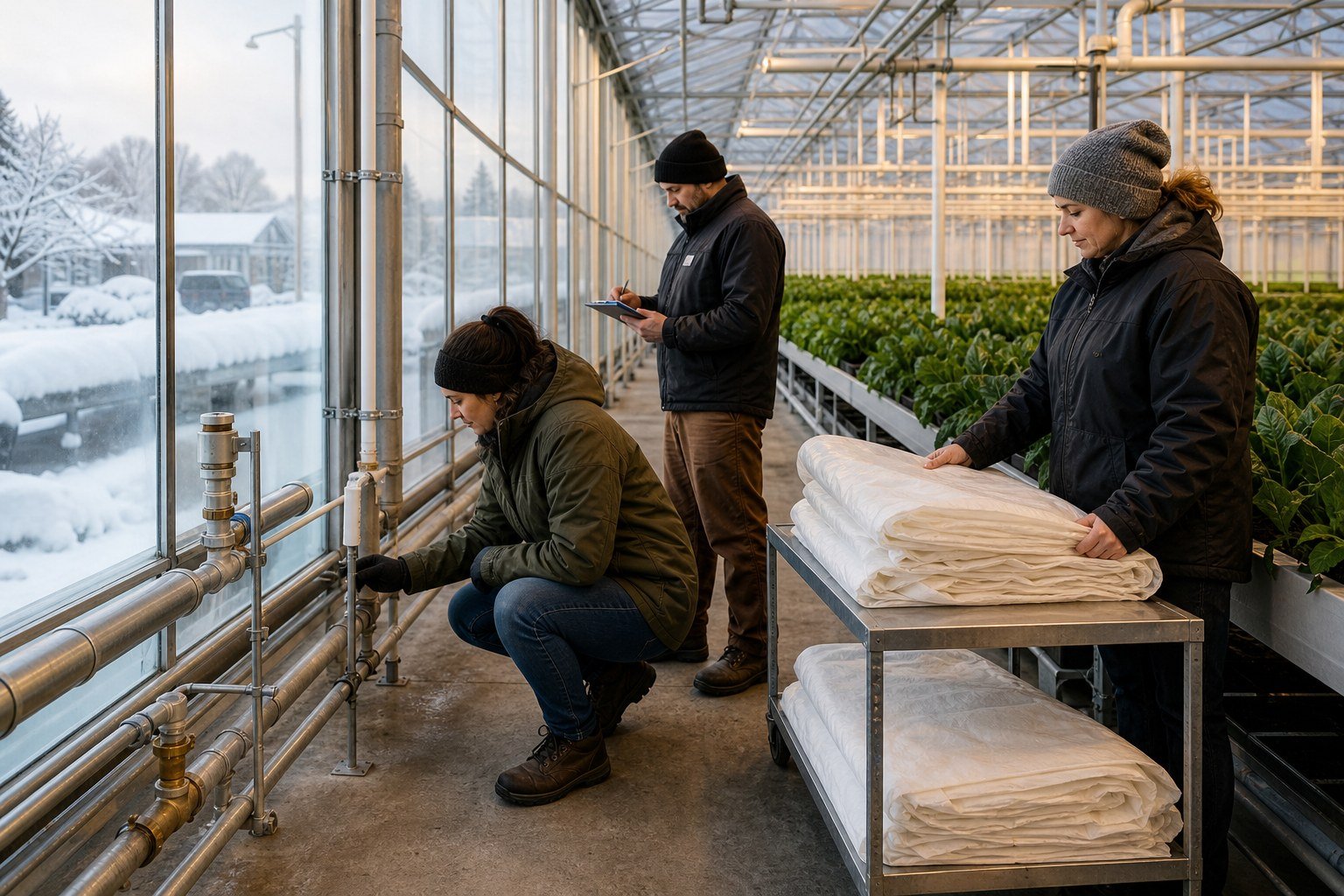
Test secondary heaters, generator-supported heating loads, fuel changeover and alarms without improvising. Confirm combustion air, exhaust clearance, guarding, fire controls and the practical time needed to bring the selected zone under protection.
5. Prepare crop actions in advance
List material, labor, carts, temporary covers, alternate zones and the order of movement. Check that covers do not contact unsafe heat sources or block exits. State what will not be attempted if roads, structure or staffing are unsafe.
6. Review the exposure before release
Export the climate and alarm record, note sensor reliability, inspect heating equipment and assess crops over the period appropriate to the crop. Mark affected batches so later symptoms and customer decisions remain traceable.
Preserve the event sequence and earlier versions of records. The team should be able to reconstruct what was observed, which condition applied, who decided, what changed, how the result was tested and which limitation remained.
Who owns each decision
Head grower
Owns crop-specific exposure limits, zone priorities, relocation or covering decisions, scouting and final crop disposition. Safety restrictions remain outside this role's discretion.
Qualified heating service team
Diagnoses and repairs burners, boilers, fuel trains, electrical controls, pumps, exhaust and related safety devices under the approved system instructions.
Night or duty operator
Verifies remote information from safe observation points, starts only approved backup actions, calls the escalation list and records time, zone and status.
Safety and continuity lead
Controls access, temporary-heater acceptance, fire and exhaust precautions, staffing, communications and the decision to stop crop-protection work.
Release evidence before the next step
Restore the greenhouse zone only after the heating specialist accepts the repaired system, safety devices and fuel or electrical condition. Confirm air distribution and independent sensors rather than relying solely on the heater run indication. The grower should review the actual exposure before releasing crops. Keep temporary heat, manual control or extra patrols on a time-limited permit with a named owner and end condition.
Common failure modes
| Failure | Buyer response |
|---|---|
| The controller average stays acceptable | Review mapped cold-zone and crop-height readings. One warm sensor cannot release the whole greenhouse. |
| Staff repeatedly reset a burner lockout | Stop and call the qualified service route. Protective lockouts need diagnosis, not repeated attempts. |
| A portable heater is brought in without review | Use only approved equipment with accepted fuel, power, combustion, exhaust, clearance, fire and supervision controls. |
| Backup fuel exists but cannot reach the heater | Test valves, pumps, regulators, changeover, access and the complete delivery path before winter. |
| Crops are sold immediately after temperature recovery | Trace affected batches and inspect them over the crop-appropriate period before making quality commitments. |
Buyer decision questions
Where does this greenhouse cool first? Which independent sensor will confirm the event? How long can each crop zone remain below its approved condition? Does the backup heat depend on the same power, fuel or controls as the failed system? How quickly can trained people reach the site? Which crops can be consolidated or moved? What action is prohibited without a heating, electrical or safety specialist? What evidence releases the equipment and the crop separately?
Keep these decisions connected to the greenhouse climate data review, the greenhouse controls alarm matrix, the greenhouse preventive maintenance plan. The emergency plan, equipment evidence and crop plan should describe the same operating reality.
Frequently asked questions
What temperature should trigger the alarm?
Use crop, stage, zone, sensor accuracy, expected cooling rate and response time. The grower and controls team should set a site-specific warning early enough to act.
Can irrigation be used for freeze protection?
Some systems use water in specific crop and design contexts, but it can create disease, flooding, ice, load and water-supply risks. Use it only under a proven crop-specific method.
Should thermal screens close during a failure?
The approved sequence depends on heat distribution, condensation, snow conditions, equipment position and the design. Put the correct scenario in the operating procedure and test it.
How often should backup heat be tested?
Follow manufacturer, insurer and local requirements, then increase frequency where seasonal risk, equipment condition or past failure justifies it. Record a meaningful load and alarm test.
Can an operator repair a heater at night?
Only within documented competence and authorization. Fuel, combustion and electrical faults normally require qualified service, while the operator manages safe escalation and approved crop actions.
Turn the requirement into a controlled deliverable
Share the heating schematic, crop-zone map, winter design conditions, alarm list, fuel arrangement, backup system, cold-zone survey and service history. Chengfei Greenhouse can help identify dependencies in supplied systems while the grower and qualified local specialists set the response limits and repair procedures.
Contact Chengfei GreenhouseReferences
- Michigan State University Winter Maintenance for Greenhouse Equipment.
- UF/IFAS Cold Protection of Foliage Plants in Shadehouses and Greenhouses.
- University of Alaska Fairbanks Controlling the Greenhouse Environment.
- UF/IFAS Maintenance Guide for Greenhouse Ventilation, Evaporative Cooling and Heating Systems.