
The short answer
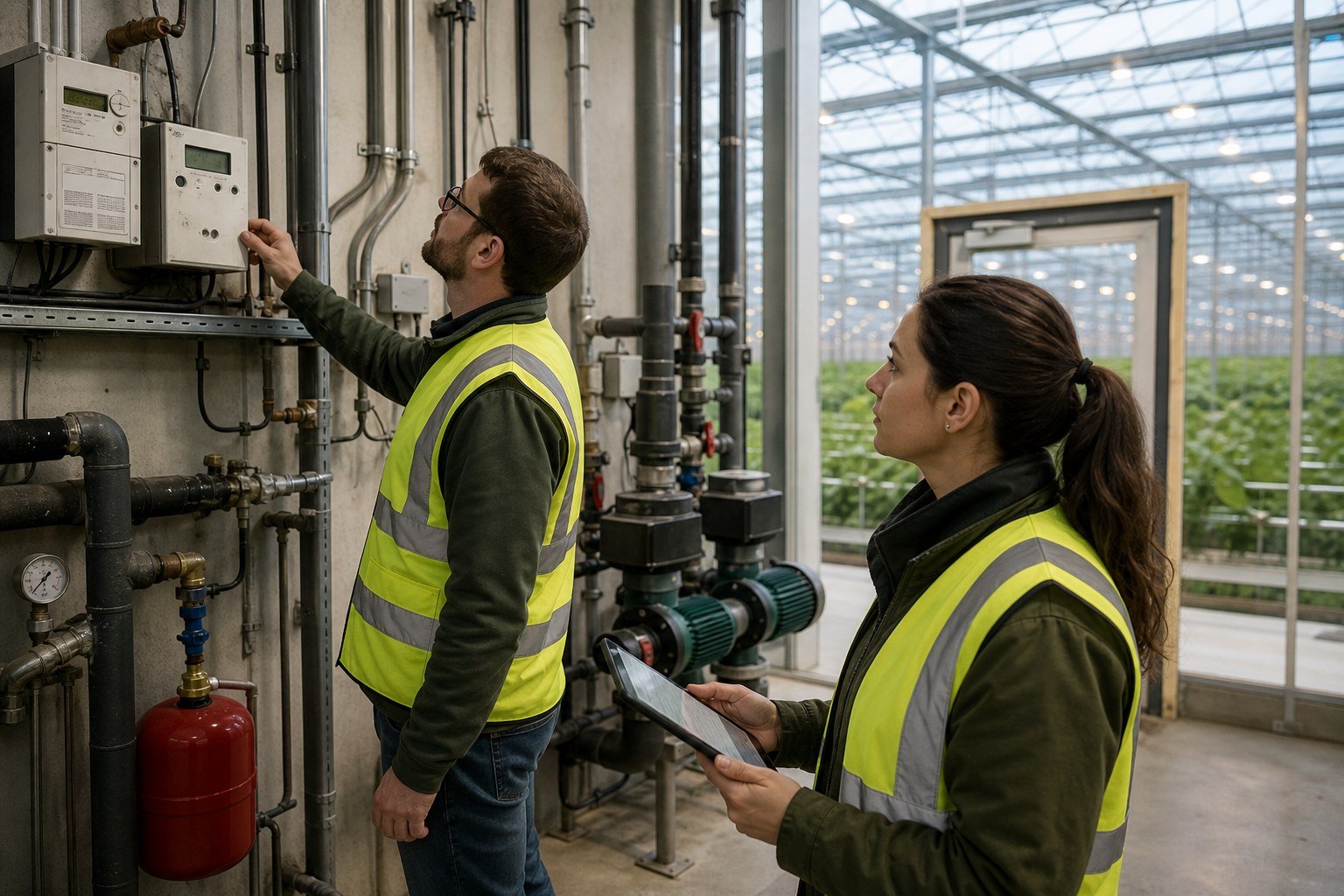
Start by reconciling utility bills, main meters and fuel deliveries for one complete period. Map which greenhouse bays and shared loads each meter includes. Verify units, multipliers, clock, interval and meter condition. Record outside temperature, solar conditions, crop area and stage, operating hours, lighting, carbon dioxide, setpoints, manual overrides, maintenance and production changes. Choose a stable reference period and create separate indicators for consumption, peak demand and cost. Compare like conditions or normalize with competent engineering. Investigate material deviations through the physical system before claiming a saving or fault.
Heating often dominates in a cold climate, while lighting, cooling, pumps or dehumidification may control another site. One site total cannot show whether a repaired curtain reduced heat loss or a new crop schedule simply occupied more area. Submeter at a level where the operator can take action, but do not install more points than the team can maintain and review.
Keep an unadjusted record beside any normalized result. Weather correction can make different seasons comparable, yet it can also hide changes in crop temperature, ventilation, solar gain or production. State the method, assumptions and excluded periods so management knows what the comparison can and cannot prove. Add a simple data-quality status for every reporting period. A missing interval, estimated fuel delivery or changed meter multiplier should be visible beside the indicator, because a precise-looking chart built from incomplete readings can send maintenance toward the wrong equipment.
This guide is an operating-control framework, not a substitute for the approved design, crop protection plan, product labels, manufacturer instructions, employment and safety procedures, local law, or advice from qualified growers, engineers, water-treatment specialists, plant-health advisers, and safety professionals.
What the buyer should control
| Control point | Required record or action | Release evidence |
|---|---|---|
| Meter and boundary | List electricity, fuel, heat and on-site generation meters; location, served loads, units, multiplier, interval, clock, communications, owner and calibration or verification status. | Meter map reconciles with bills and no major load is counted twice or omitted. |
| Operating context | Record occupied area, crop, stage, production schedule, setpoints, lighting hours, carbon dioxide, irrigation, door use, shutdowns and manual overrides. | Monthly or daily context log explains material changes in energy demand. |
| Weather and time | Capture outside temperature, solar radiation where useful, wind, humidity, degree-day method, tariff periods, holidays and missing-data rules. | Consistent weather source and documented comparison method. |
| Baseline period | Select a representative period; identify construction, commissioning, abnormal failures and vacancies; preserve raw data and state exclusions. | Approved baseline includes data-quality score and limitations. |
| Performance indicators | Track consumption, peak demand, cost, energy per occupied area-time, unit of saleable production or another decision-relevant driver. | Indicators can be traced back to meter readings and production records. |
| Deviation and investigation | Set review thresholds, compare equipment runtime and command, inspect leaks and envelopes, verify sensors, test controls and identify rate changes. | Cause, action, owner, expected effect and verification date are recorded. |
| Savings verification | Define precondition, change, baseline adjustment, measurement period, persistence check and non-energy effects on crop or maintenance. | Claim states uncertainty and separates measured change from estimated contribution. |
Give every open item an owner, due date, status, related drawing or package, and effect on cost, time, quality, safety, and performance. “Discussed,” “in progress,” or “by others” is not a closure record.
A practical workflow
1. Draw the energy boundary before calculating
Mark every incoming supply, shared plant, tenant or non-greenhouse load, backup generator, export and meter. Confirm what the bill and each submeter actually cover.
2. Clean the data without erasing inconvenient periods
Flag gaps, resets, estimated bills, meter replacement, outages and daylight-saving or clock errors. Keep raw values and document every correction.
3. Pair consumption with operating conditions
Review energy beside weather, crop area, setpoints and runtime. Ask the grower before labeling a change inefficient because crop protection may explain it.
4. Investigate from field condition to control logic
Check sensor accuracy, valves, vents, screens, fans, pumps, boiler or heater condition, simultaneous heating and cooling, leaks, and manual overrides.
5. Confirm persistence after action
Measure the next comparable period and watch crop quality, reliability, humidity and labor. A lower bill that transfers risk elsewhere is not an operating improvement.
Use one controlled register and preserve superseded records. The team should be able to reconstruct which instruction, setting, role and asset condition applied when an event was observed, adjusted, maintained, tested, restored and accepted.
Roles at the operating interfaces
Owner and operations manager
Set the crop, safety, production and business priorities; assign authority; approve operating limits; and make sure urgent decisions can be made outside normal hours.
Grower and plant-health lead
Define crop-sensitive conditions, hygiene zones, scouting evidence, water-quality needs, permitted treatments, release criteria and the response to suspected pests or disease.
Maintenance and controls team
Keep assets, sensors, software, backups, alarms, isolations, spares and work records usable. Report degraded functions before they turn into crop or safety events.
Suppliers and local specialists
Provide scope-specific instructions, competent service, replacement parts and technical evidence. Local professionals must control regulated electrical, pressure, chemical, fire and environmental work.
Use evidence before releasing the next step
Before people, water, chemicals, crops or equipment enter a released area, confirm that the approved method is current, the responsible person has checked the work, exceptions are controlled, affected teams have been informed, and the record can be retrieved. If a condition is not met, state what may continue, what remains on hold, who owns the action, and when it will be checked again. This is more useful than a general statement that the greenhouse is ready.
Common failure modes
| Failure | Buyer response |
|---|---|
| Only cost is compared month to month | Tariff and tax changes can hide consumption. Track quantity, demand and cost separately. |
| Different crop and weather periods are compared directly | Add operating context and a documented normalization method. |
| A submeter is installed but never verified | Reconcile with upstream meters and inspect units, multiplier, clock and served loads. |
| Savings are declared immediately after a change | Use a defined measurement period and confirm crop, weather and production conditions. |
Buyer decision questions
What loads does each meter include? Can the total be reconciled with the utility bill or fuel delivery? Which physical driver best explains use? Is the reference period representative? How much of the change comes from weather, crop area, tariff, setpoint, maintenance or equipment? What action can the operator take if the indicator crosses its threshold?
Link the answer to the greenhouse heating system guide, the greenhouse preventive maintenance plan, the greenhouse climate control system guide, so operating decisions remain connected across the crop, equipment, maintenance and evidence.
Frequently asked questions
Is energy per square metre enough?
It is a useful start, but occupied area-time, crop stage, weather and production may be needed to explain performance.
How much submetering is necessary?
Meter at boundaries that support a decision, such as shared heating plant, lighting block or greenhouse zone. Include maintenance and data-review capacity in the choice.
Can controller runtime replace an energy meter?
Runtime helps diagnosis but may not represent delivered energy when load, valve position, efficiency or staging changes.
Should poor weather days be deleted?
No. Keep them in the operating record. Exclude or normalize them only under a stated comparison method.
Turn the requirement into a controlled deliverable
Share utility bills, meter list, tariffs, crop and occupancy calendar, setpoints, equipment and recent changes. Chengfei Greenhouse can help map energy drivers for its supplied systems while qualified specialists approve metering and normalization.
Contact Chengfei Greenhouse