
The short answer
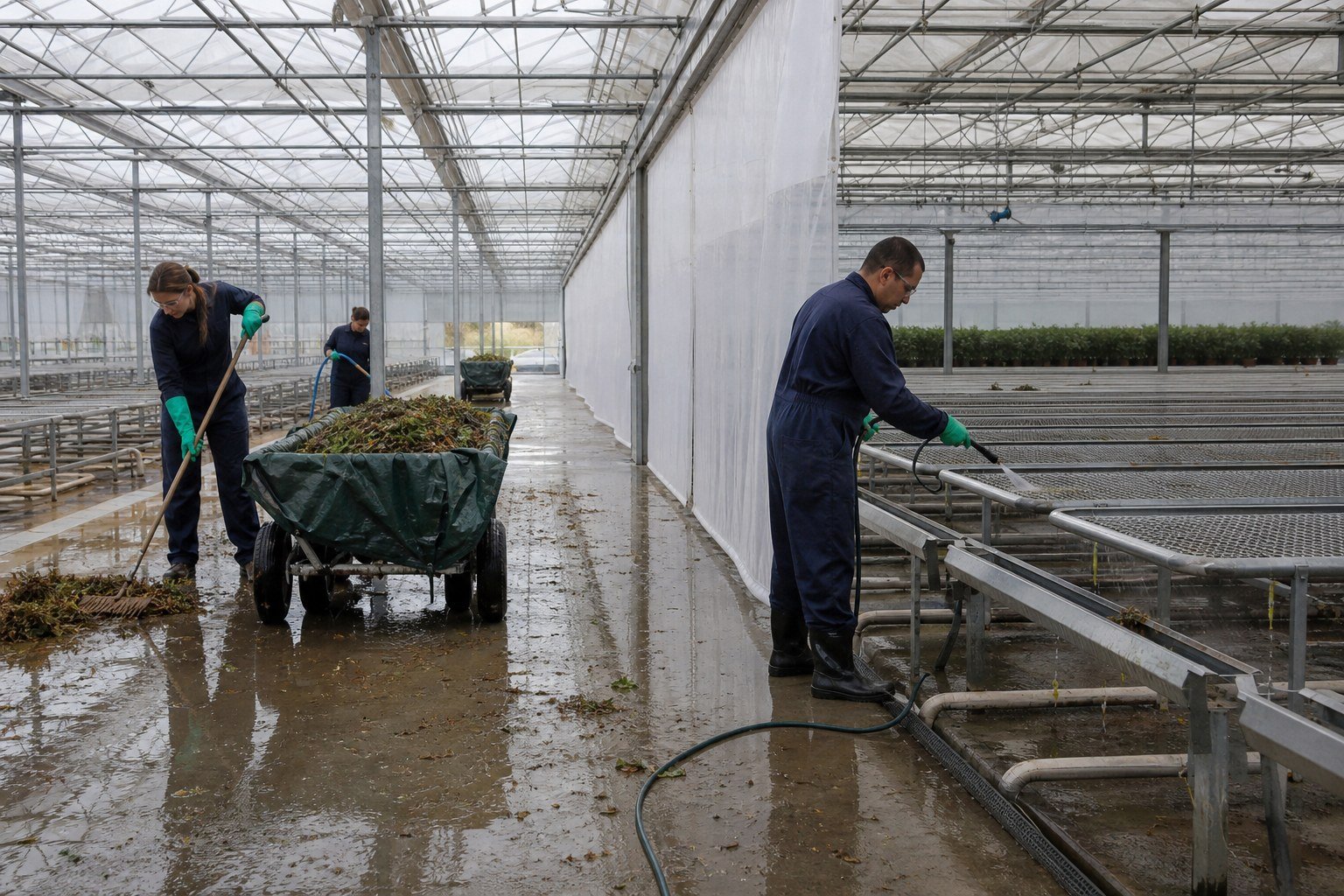
Plan changeover backward from the crop-release date, but do not allow the calendar to reverse the safe sequence. Confirm crop and waste disposition, isolate utilities, remove all plant material and growing-media debris, clean from high surfaces toward floors and from cleaner zones toward the exit, open and inspect hidden areas, repair drainage and equipment, clean the irrigation system under an approved method, and only then apply a compatible labeled disinfectant where required. Respect contact, rinsing, ventilation and re-entry instructions. Verify the dry, clean condition and close pest, maintenance and chemical records before new plants enter.
Disinfection cannot reliably compensate for soil, algae, plant sap and organic matter left on surfaces. These residues can shelter pests or pathogens and reduce the activity of some products. Physical removal and cleaning are separate tasks and should be inspected before the disinfection stage is released.
Coordinate production, plant health, sanitation, maintenance and irrigation teams. The empty bay allows access to vents, screens, fans, gutters, drains, benches, pipe ends and floor edges. If one team brings dirty tools through an already released area, the sequence has failed even though each task was completed.
This guide is an operating-control framework, not a substitute for the approved design, crop protection plan, product labels, manufacturer instructions, employment and safety procedures, local law, or advice from qualified growers, engineers, water-treatment specialists, plant-health advisers, and safety professionals.
What the buyer should control
| Control point | Required record or action | Release evidence |
|---|---|---|
| Scope and shutdown | Define bays, dates, remaining live material, utilities, chemical restrictions, crop history, known pests, waste route, responsible supervisor and release authority. | Approved method and area map before removal starts. |
| Crop and debris removal | Remove plants, roots, strings, clips, media, weeds, packaging and loose residue; contain waste and prevent movement through clean areas. | Visual inspection of empty surfaces, drains, edges and hidden spaces. |
| Physical cleaning | Work high to low; wash or vacuum appropriate surfaces; remove algae, scale, sap and soil; clean tools and equipment; protect electrical and sensitive components. | Cleaning inspection confirms no material remains that would defeat the next step. |
| Maintenance and pest closure | Repair leaks, drains, screens, seals, benches, hoses, nozzles and access; review sticky cards, disease records and problem locations; remove external weeds where approved. | Closed work orders or controlled exceptions before crop release. |
| Irrigation and water systems | Clean tanks, filters, mains, laterals, drains and return systems; choose treatment by target, materials and water chemistry; flush and verify representative endpoints. | Documented method, measurements, samples where required and accepted hydraulic condition. |
| Disinfection | Use only an approved labeled product and method; verify surface preparation, compatibility, dilution or concentration, contact, coverage, PPE, ventilation, rinse, re-entry and disposal. | Treatment record tied to product label and competent authorization. |
| Final release | Inspect dryness and cleanliness, remove chemicals and waste, restore guards and utilities, confirm entry controls, verify water and environment, and record remaining restrictions. | Plant-health and operations sign-off before new crop or clean trays enter. |
Give every open item an owner, due date, status, related drawing or package, and effect on cost, time, quality, safety, and performance. “Discussed,” “in progress,” or “by others” is not a closure record.
A practical workflow
1. Review the previous crop before removing evidence
Map disease, pests, algae, drainage, uneven irrigation and equipment failures. Photograph locations and collect authorized samples before the area is stripped.
2. Create dirty and released routes
Mark waste movement, clean-tool storage and the direction of work. Keep cleaned carts, hoses and staff from re-entering dirty zones without the required reset.
3. Inspect after cleaning and before disinfecting
This hold point catches residue, blocked drains, inaccessible corners and damaged surfaces. Do not let disinfectant hide poor cleaning.
4. Apply the selected method exactly
Use the current label, measured preparation, compatible equipment and required protection. Never mix products or assume that a stronger solution is more effective or safer.
5. Release with a short operational trial
Restore systems, check leaks, drains, ventilation, irrigation and controls, then confirm the area remains clean and dry enough for the planned crop.
Use one controlled register and preserve superseded records. The team should be able to reconstruct which instruction, setting, role and asset condition applied when an event was observed, adjusted, maintained, tested, restored and accepted.
Roles at the operating interfaces
Owner and operations manager
Set the crop, safety, production and business priorities; assign authority; approve operating limits; and make sure urgent decisions can be made outside normal hours.
Grower and plant-health lead
Define crop-sensitive conditions, hygiene zones, scouting evidence, water-quality needs, permitted treatments, release criteria and the response to suspected pests or disease.
Maintenance and controls team
Keep assets, sensors, software, backups, alarms, isolations, spares and work records usable. Report degraded functions before they turn into crop or safety events.
Suppliers and local specialists
Provide scope-specific instructions, competent service, replacement parts and technical evidence. Local professionals must control regulated electrical, pressure, chemical, fire and environmental work.
Use evidence before releasing the next step
Before people, water, chemicals, crops or equipment enter a released area, confirm that the approved method is current, the responsible person has checked the work, exceptions are controlled, affected teams have been informed, and the record can be retrieved. If a condition is not met, state what may continue, what remains on hold, who owns the action, and when it will be checked again. This is more useful than a general statement that the greenhouse is ready.
Common failure modes
| Failure | Buyer response |
|---|---|
| New crop trays arrive before the area is released | They obstruct work and can be contaminated. Keep clean material in a separate controlled holding area. |
| Organic debris remains under benches | Inspect edges, drains, channels, rollers and service penetrations after physical cleaning. |
| Products are mixed or used off label | Stop work and use a competent, product-specific method. More chemical does not correct poor preparation. |
| Maintenance recontaminates a cleaned bay | Schedule repairs before final disinfection or require a defined local reclean and release. |
Buyer decision questions
What did the previous crop reveal about disease, pests, water and equipment? Which material must be sampled before removal? Can waste leave without crossing a clean route? Are all surfaces compatible with the selected method? How will concentration, coverage, contact and re-entry be controlled? Who confirms the area and irrigation system are ready for clean plants?
Link the answer to the greenhouse pest management guide, the greenhouse irrigation system guide, the preventive maintenance plan, so operating decisions remain connected across the crop, equipment, maintenance and evidence.
Frequently asked questions
Is cleaning the same as disinfecting?
No. Cleaning removes soil, debris, algae and organic residue. Disinfection uses an approved method to reduce target organisms on a prepared surface.
Can crops remain in the bay during full changeover treatment?
Many methods require an empty area and may be phytotoxic. Follow the label, plant-health plan and site risk assessment.
Should pressure washing be used everywhere?
No. It can aerosolize contamination, drive water into electrical equipment or spread debris. Choose tools and pressure for each surface and pathway.
How is the area released?
Use documented cleaning and maintenance checks, product and re-entry compliance, irrigation verification, final inspection and authorized plant-health or operations approval.
Turn the requirement into a controlled deliverable
Share the crop calendar, bay layout, previous pest and disease findings, surfaces, irrigation arrangement, waste route and available empty period. Chengfei Greenhouse can help identify equipment access and cleaning interfaces while qualified local advisers approve treatments and crop release.
Contact Chengfei Greenhouse