
The short answer
A useful corrosion specification identifies exposure zones, base materials, fabrication sequence, surface preparation, galvanizing or paint system, stainless or coated fasteners, dissimilar-metal interfaces, cut edges and weld repairs, drainage details, handling damage, inspection method, acceptance records, and maintenance. It also names who approves repairs and who owns each interface.
Do not accept a single phrase such as hot-dip galvanized as the whole specification. The greenhouse has external weather exposure, a humid crop zone, gutters, wet walls, irrigation rooms, chemical storage, heating equipment, buried or splash zones, and sheltered crevices. These areas may not present the same corrosion risk.
Material standards, coating classes, preparation grades, thicknesses, repair methods, and inspection must be selected by qualified project professionals for the actual environment and local requirements.
Map the exposure before choosing a system
Divide the project into practical zones. Record condensation frequency, leaf wetness, washdown, fertilizer aerosols, water treatment chemicals, pesticides, cleaning agents, coastal salt, industrial pollution, soil contact, and temperature. Ask operations staff how the greenhouse will actually be cleaned and treated.
| Zone | Ask | Details often missed |
|---|---|---|
| Exterior frame and roof | Rain, humidity, salt, pollution, trapped debris, and drainage? | Roof clips, ridge joints, gutter supports, sheltered faces, and damaged transport points. |
| Crop zone | Condensation, misting, spray, fertilizer, and cleaning frequency? | Inside hollow sections, overlapping plates, cable supports, screen wires, and shaded wet areas. |
| Water and fertilizer room | Leaks, acid or alkali dosing, chlorine, brine, and spill controls? | Skid frames, floor contact, pipe clamps, bolts, drains, and chemical segregation. |
| Foundation and splash zone | Standing water, soil contact, capillary moisture, and concrete interface? | Base plates, cut post ends, anchors, grout gaps, and drainage away from columns. |
The greenhouse water quality equipment selection guide helps define water-treatment equipment, but corrosion exposure also depends on leaks, chemical handling, and maintenance.
Specify a complete protective system
State the steel grade and product form, whether fabrication occurs before or after galvanizing, the applicable standard, required documentation, vent and drain holes for hollow sections, treatment of threads, and any appearance limits that affect function. For paint systems, define surface preparation, primer, intermediate and finish coats, nominal dry film thickness, color where relevant, curing, environmental limits, and inspection.
ISO 12944-4 addresses surface types and surface preparation for protective paint systems. The wider ISO 12944 series provides a framework for protective paint systems, but the project designer must select the applicable parts and environment. Oklahoma State University Extension notes that greenhouse steel should be painted or galvanized because of the humid environment.
Powder coating, liquid paint, zinc coating, stainless steel, aluminum, and polymer parts each behave differently. Do not assume that combining premium materials always improves durability. Dissimilar metals can require isolation, and some chemicals attack polymers or coatings.
Design out water traps and unprotected edges
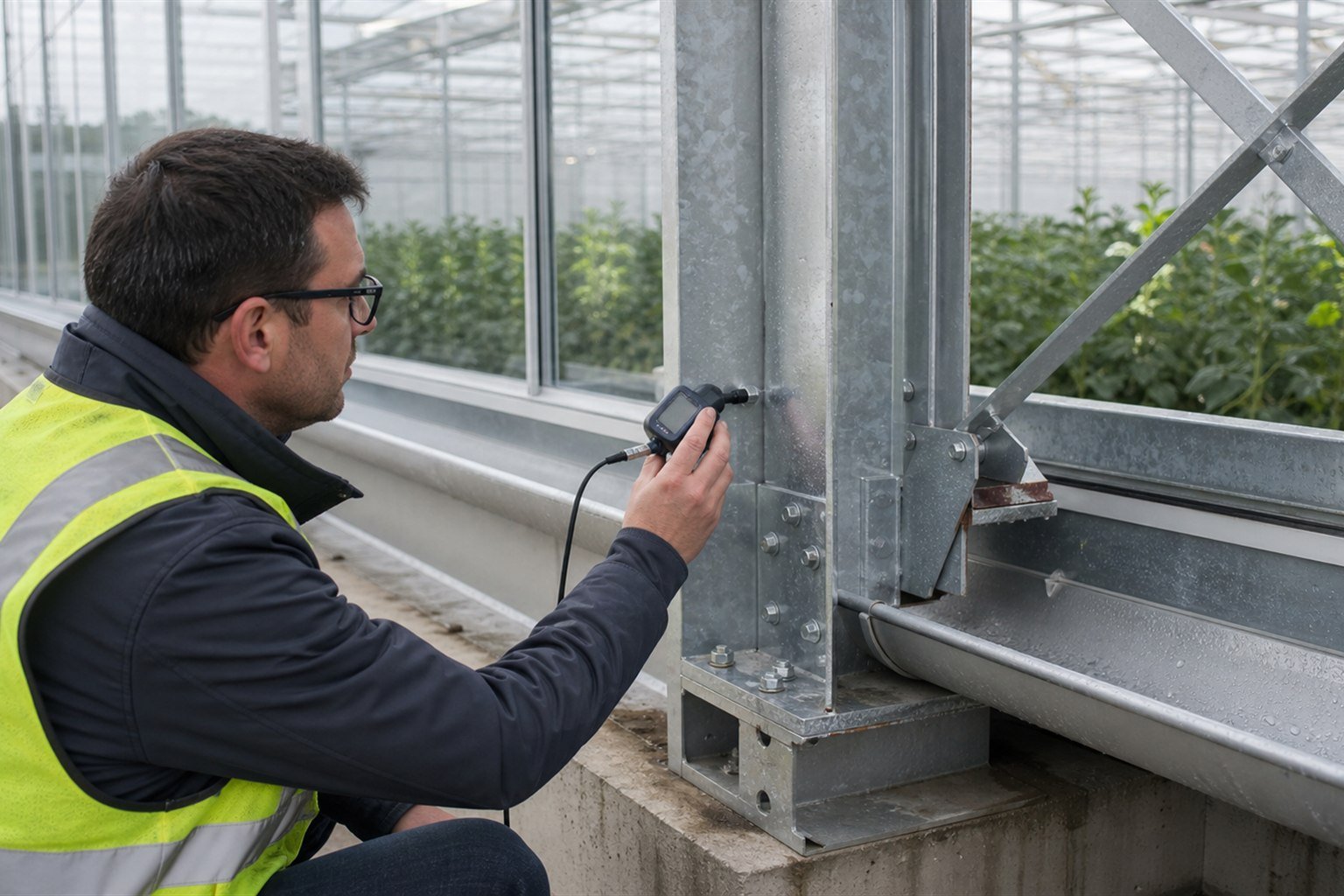
Provide drainage and ventilation for hollow or enclosed details as required by the selected process. Avoid upward-facing ledges that collect nutrient solution or cleaning water. Seal or drain crevices where the design requires it, while preserving necessary movement and ventilation.
List every field activity that breaks protection: cutting, drilling, welding, grinding, threaded adjustment, transport abrasion, and forced assembly. State the approved preparation and repair product, maximum repair extent, overlap, curing, and inspection. Large damaged areas may require more than touch-up.
Use compatible fasteners, washers, brackets, and clips. Check coating damage under tightened connections and at moving vent mechanisms. Isolate incompatible materials when required. Keep gutter overflow and condensate away from structural pockets and bases.
Make supplier quotations comparable
Base metal
Grade, thickness, fabrication route, welds, edges, holes, and traceability.
Protection
Named process and standard, preparation, coating build, application sequence, and exclusions.
Interfaces
Fasteners, aluminum profiles, stainless parts, concrete, soil, chemicals, and moving assemblies.
Evidence
Certificates, batch records, thickness readings, repair log, photographs, and maintenance instructions.
Ask bidders to identify which parts are protected before fabrication, after fabrication, or in the field. A quotation that excludes clips, bolts, motor brackets, weld repairs, or equipment frames may look cheaper without offering the same scope.
Inspect at fabrication, delivery, and installation
Agree on hold points. Before coating or galvanizing, inspect fabrication, sharp edges, weld quality, cleanliness, and process features. At delivery, record wet storage staining, abrasion, deformation, missing protection, and packaging condition. Store materials off the ground with ventilation and drainage.
During installation, inspect cut ends, drilled holes, welds, bolted joints, base connections, gutters, moving parts, and concealed interfaces before access is closed. Measure coating where the specification requires it with calibrated equipment and an agreed sampling plan. Appearance alone does not establish thickness or adhesion.
At handover, collect certificates, inspection reports, nonconformance and repair records, photographs, approved touch-up materials, safe-use information, and a maintenance schedule. Add the relevant spares to the greenhouse spare parts handover list.
Maintain the environment as well as the coating
Inspect gutters, bases, water rooms, doors, vents, brackets, and treated field damage on a defined schedule. Clean deposits using methods compatible with the protective system. Repair leaks and blocked drainage instead of repeatedly repainting the wet area.
Record location, date, photograph, cause, preparation, repair material, batch, and inspector. Trends can reveal a design or operations issue. The greenhouse commissioning checklist can capture the first condition baseline.
Service-life predictions require the actual system, preparation, thickness, exposure, detailing, workmanship, and maintenance. Avoid universal year claims that ignore those variables.
Corrosion specification questions
Is all galvanized steel equivalent?
No. The process, applicable standard, coating mass or thickness, steel chemistry, fabrication sequence, part geometry, drainage and venting, threads, repairs, and inspection can differ. Ask suppliers to state the system and evidence, not only the word galvanized.
Can field-cut galvanized steel simply be painted?
Use the approved repair method for the specified system and extent of damage. Preparation, repair material, application thickness, overlap, curing, and maximum permitted repair area should be defined. A large burned or abraded area may require formal disposition rather than informal touch-up.
Does stainless steel remove all corrosion risk?
No. Grade selection, crevices, chlorides, contamination, surface finish, chemical contact, and connection to other metals affect performance. It may be appropriate in selected zones, but it still needs correct detailing, fabrication, cleaning, and maintenance.
How should buyers compare durability claims?
Compare the stated exposure, complete protective system, preparation, minimum acceptance requirements, certificates, repair rules, inspection plan, exclusions, and maintenance assumptions. A claimed number of years without these conditions is not a reliable basis for procurement.
What should the pre-fabrication submittal include?
Request the material schedule, standards, process route, preparation, coating build, fastener and isolation details, repair procedure, inspection plan, certificate examples, packaging, storage, and maintenance requirements. Include secondary brackets and equipment supports, not only the main frame.
Define corrosion protection before requesting steel prices
Send the project climate, distance from coast or industrial exposure, operating chemicals, water and fertilizer plan, structure and equipment scope, required standards, expected inspections, and maintenance capability. Chengfei Greenhouse can use this information to clarify material and interface requirements for the greenhouse package.
Contact Chengfei GreenhouseReferences
- International Organization for Standardization. ISO 12944-4:2017, Surface Types and Surface Preparation.
- Oklahoma State University Extension. Greenhouse Structures and Coverings.
- Michigan State University Extension. Inspect Greenhouses to Mitigate Heat Loss.