
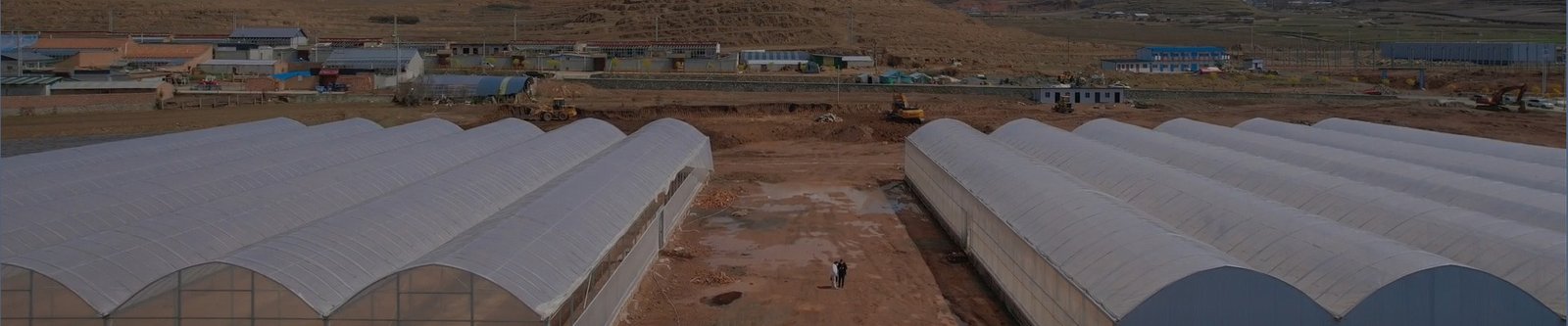
Keep fixed strawberry gutters on the shortlist unless a specific lifting arrangement solves a crop-work problem across all required positions. A hoistable layout may create a useful picking position and still leave unanswered questions about growing light, fruit contact, drainage or access. Compare those states before deciding how many rows to install.
Begin by naming the production purpose. Fruiting strawberries with alternate rows raised for harvest and strawberry propagation with gutters moved for seasonal tasks are different systems. A suspended gutter can also remain fixed. The word “hanging” does not tell you whether it moves.
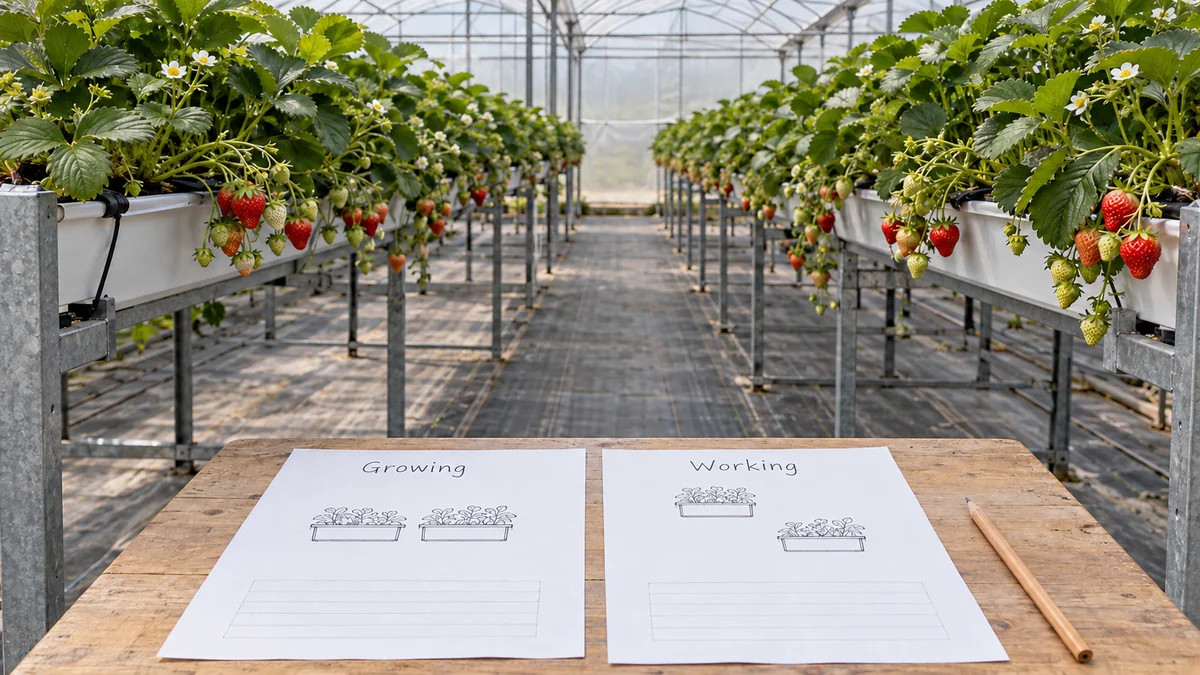
Start with the fixed layout
Draw a credible fixed-gutter option for the same greenhouse, crop and work requirements. Show the crop at its occupied size, with leaves, fruiting trusses or runners extending beyond the gutter. Place the actual worker and cart access alongside it. This is the baseline against which a moving option must earn its place.
The comparison should begin with a task that is difficult in that baseline. Perhaps the proposed picking route cannot reach both sides of the crop comfortably. Perhaps seasonal propagation work needs a different height. Write down that requirement rather than beginning with a claim that movable rows always use space better.
Fixed gutters still need suitable support, access and water-system coordination. Their advantage in this comparison is that the operating layout is easier to describe: the gutter stays at its specified height while tasks change around it. If that arrangement satisfies the crop and work brief, additional movement needs a clear reason.
Two real configurations answer different questions
Meteor Systems describes a fruit-production installation at Dutch Berries in which adjacent gutters move to alternating heights for harvesting and return to a common resting height. The account also identifies compact crop growth as important to preventing trusses from becoming entangled. These are useful configuration details, not a prediction of the performance of your greenhouse.
For a proposed fruiting layout, ask how long each group of rows will remain in its working position during the crop calendar. Show what happens to neighboring leaves and fruit in that state. A drawing of empty gutters cannot establish crop clearance, and the convenient picking position may have a different shading pattern from the normal growing position.
Metazet describes a propagation application at Neessen with low positions for placing containers and crop work, higher positions as plants develop, and later lowering for cutting work. The positions serve different stages of plant production. That example helps a propagation buyer ask about seasonal access; it does not establish light distribution or picking capacity in a fruiting house.
Neither manufacturer account proves a universal yield increase, labor saving or payback. Use the examples to identify which arrangement the supplier is actually offering, then request drawings for your crop and tasks.
Compare each position with the crop present
Ask the supplier to mark every required operating state on the same layout. For each state, note its purpose, expected duration and occupied crop envelope. Use consistent drawing references so the grower, irrigation designer and equipment supplier are discussing the same position.
| State | Fixed option | Specified lifting option |
|---|---|---|
| Normal growth | Can the crop occupy the proposed spacing throughout the relevant stage? | Where do all rows rest, and which crop parts approach neighboring rows? |
| Picking or cutting | Can workers reach the intended crop faces and move harvested material? | Which rows change position, what access results, and how long does that state last? |
| Other crop work | Which tasks need additional access arrangements? | Does the offered movement serve those tasks with the developed crop present? |
| Crop removal and cleaning | What remains in the route after crop removal? | Which supplier-approved positions and isolation conditions apply? |
| Stopped or fault condition | What access restrictions remain? | What position and access restrictions does the supplier specify when movement is unavailable? |
Carry irrigation supply and drainage through the same comparison. Ask the supplier to document the intended connection arrangement in each position and during movement, including whether flow is permitted then. Do not assume that a connection shown in the growing position remains suitable throughout travel. Hydroponic Systems' commercial strawberry system overview likewise treats support, spacing, substrate and drainage as coordinated design choices.
Keep movement and crop work separate in the review. Require supplier-defined controls, guarding, isolation and access restrictions, with competent mechanical and safety acceptance. This comparison is not an instruction to work beneath moving loads or to adjust a hoist.
What would change the shortlist?
Consider an illustrative fruiting proposal. Its alternate-height drawing gives pickers access, but it omits the mature trusses and says nothing about the drainage connection in that position. The appropriate result is “hold this configuration pending crop-clearance and drainage evidence.” The drawing has identified a possible benefit; it has not yet resolved the operating requirement.
Now consider a propagation proposal whose seasonal working positions match the nursery's task calendar. That can justify taking this arrangement into detailed design. It still needs the supplied loaded states and competent acceptance. Its usefulness for cutting work gives no reason to copy it into a fruit-production plan without a separate comparison.
For each option, supply the engineer with the actual proposed loaded states, attachment information and operating arrangement. Counterweight language in a brochure does not remove the need for that review. Use the separate guide to coordinate crop equipment with structural load cases. Use the harvest-route method to test the loaded harvest-cart route once the proposed access positions are defined.
Take one comparable package back to the supplier
Download the gutter option card and position-by-task matrix. These are manual worksheets with no automatic scoring or safety calculations. Complete one option card and a copy of the matrix for each fixed or lifting configuration. Keep the same crop calendar and task list across copies. Enter “not supplied” where evidence is missing; use “not applicable” only with a reason.
Then send the marked layout and open rows to the supplier. The next decision should be specific: retain the fixed baseline, progress a named lifting arrangement to detailed design, or hold it until a stated requirement is resolved. Extra rows alone are not enough to choose.