

The best layout minimizes plant handling while keeping clean young material away from waste, returns and uncontrolled traffic.
Map the propagation process first
| Stage | Planning questions | Facility implication |
|---|---|---|
| Receiving and preparation | How do seed, cuttings, trays and media enter and get stored? | Clean storage, potting/work area and controlled material flow. |
| Germination/rooting | Which crops need close temperature, humidity or mist control? | Separate zones, propagation benches or specialized chambers. |
| Growing-on | How do spacing, irrigation and light needs change? | Flexible benches, multiple irrigation groups and movement aisles. |
| Hardening | How will plants transition toward dispatch or field conditions? | Dedicated zone, vent/shade control and crop scheduling. |
| Grading and shipping | Where are plants inspected, labeled, staged and loaded? | Doors, carts, pack area and separation from wet production traffic. |
Zone irrigation and drainage
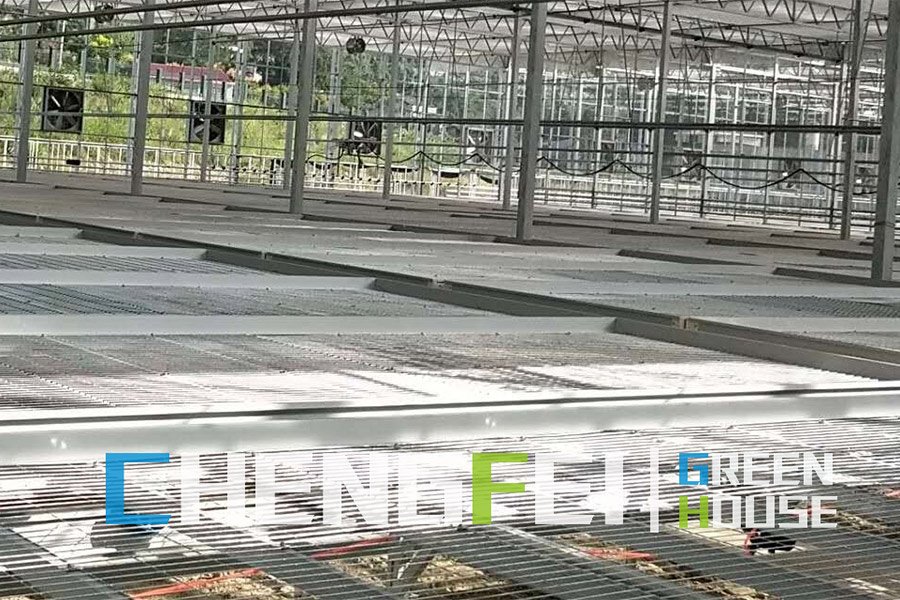
Group crops with compatible water needs and schedules. Show supply, filtration, treatment, dosing, valves, pressure control, runoff collection and drain destinations. Benches and floors should not trap standing water or block cleaning access.
Plan for hygiene and crop movement
- Define clean entry, tool storage, handwashing and visitor routes.
- Separate new propagation material from waste and returned trays.
- Provide washable work surfaces and access beneath benches.
- Use inspection space and records to isolate suspect material.
- Design cart paths and door openings around the largest operational load.
Nursery greenhouse RFQ inputs
- Plant types, tray/pot sizes, propagation stages and weekly flow.
- Bench type, width, load, aisle strategy and material handling.
- Stage-specific light, temperature, humidity and irrigation criteria.
- Water analysis, storage, treatment, drainage and recycling requirements.
- Ventilation, screens, shade, heating, cooling and control zones.
- Work areas, doors, dispatch, expansion and commissioning scope.
Turn the crop schedule into a layout brief
Send the crop stages, tray sizes, weekly flow, site climate and preferred bench/irrigation systems. We can help identify greenhouse and environmental interfaces.
Discuss a nursery greenhouseFrequently asked questions
Are rolling benches suitable for every nursery?
No. They can improve area use, but crop handling, irrigation, load, hygiene and emergency access determine the fit.
Why use separate nursery zones?
Propagation stages can have different light, moisture, temperature and airflow needs. Zoning avoids forcing one compromise on all plants.
What should be tested before operation?
Verify irrigation uniformity, drainage, sensors, alarms, vent and screen movement, bench safety, control sequences and operator procedures.
Planning references: University of Arkansas, Greenhouse Management Online: Benching Systems; Government of British Columbia, Greenhouse Checklist.


 Click to Chat