

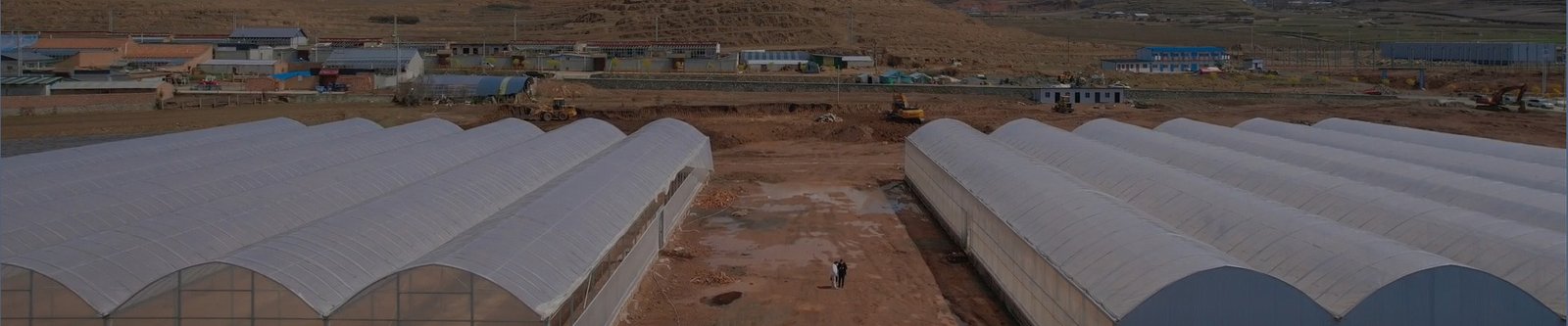
Short answer: there is no single humidity number for every commercial cannabis greenhouse. The crop team sets temperature, leaf-temperature, dew-point or VPD limits for the cultivar and stage. The climate designer then calculates canopy moisture load and sizes ventilation or dehumidification for lights-on, lights-off and worst outdoor conditions.
Define the crop limits before selecting equipment
Relative humidity changes when temperature changes, even if the amount of water in the air stays the same. Record air temperature, leaf temperature, dew point and VPD together. The crop adviser should approve targets and alert limits by cultivar, stage, lighting period and disease strategy.
Measure conditions within the canopy as well as above it. Dense flowers and weak local air movement can create a wet microclimate while a wall sensor reports an acceptable room average. Universal seedling, vegetative and flowering RH tables should not replace crop observation and site data.
| Design input | Evidence to provide | Reason |
|---|---|---|
| Crop | Cultivar, stage, canopy area, irrigation and approved limits | Sets moisture generation and plant response |
| Weather | Hourly outdoor temperature, humidity and extreme cases | Shows when ventilation can remove moisture |
| Envelope | Area, leakage, screens, curtains and cold surfaces | Defines infiltration and condensation risk |
| Operation | Lights, irrigation, occupancy, doors and outage cases | Separates normal, peak and failed modes |
Calculate the moisture load
The design should account for crop transpiration, irrigation evaporation, wet floors or drains, outside-air moisture, people and any humidification. Lights-off can be difficult because sensible heat falls while the canopy continues releasing moisture. A cooling-only unit may satisfy temperature and stop before removing enough water.
Require hourly or staged latent and sensible loads, not only equipment tonnage or room volume. State entering-air conditions, coil performance, condensate rate, reheat method and capacity at the selected design point. The load basis should identify canopy assumptions and how they will be checked after planting.
Choose open, mixed or closed operation deliberately
Ventilation can remove moisture when outside air has a lower humidity ratio after it is brought to greenhouse temperature. Outdoor RH alone is not enough for that decision. In humid or rainy conditions, more outside air may add moisture or conflict with temperature and odor control.
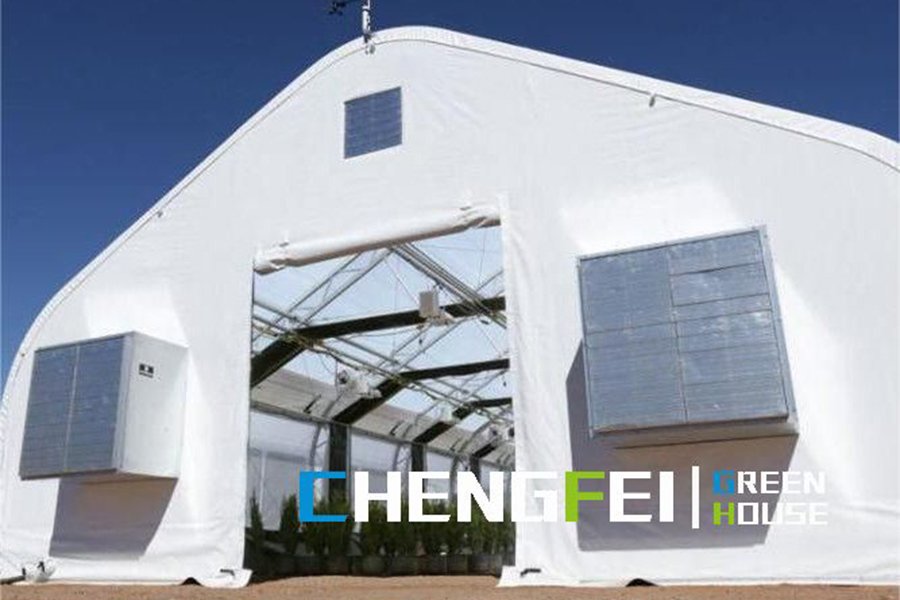
Mechanical dehumidification removes water by cooling air below its dew point. Reheat may be needed to avoid overcooling. Desiccant and energy-recovery options have different heat, maintenance and air-quality interfaces. Compare systems at the same load, weather and control cases. The commercial cannabis greenhouse page shows the separate structure and blackout-system scope that the climate equipment must coordinate with.
Keep air moving without treating fans as dehumidifiers
Horizontal airflow reduces local temperature differences and condensation risk, but circulation fans do not remove water from a closed greenhouse. Show fan locations, throw, obstructions, canopy development and service access. Verify that air reaches crop zones without damaging plants or short-circuiting between supply and return.
Coordinate blackout curtains, insect screens, benches, ducts and crop supports. Curtains can divide the air volume and trap moisture. Sensor locations and control modes should reflect each curtain position.
Design controls for condensation and failure
Monitor air temperature, RH or dew point, representative leaf or surface temperature and equipment status. Condensation begins where a surface falls below dew point. Use alarms and trends to identify cold glazing, pipework, doors and canopy zones before free water persists.
Test failed dehumidifier, stuck vent, lost sensor, blocked drain, high condensate level, power loss and controller communication failure. State remaining capacity after one credible equipment failure and the permitted response time. The greenhouse automation system guide covers the wider control architecture.
Commission the installed moisture system
Calibrate sensors, verify fan direction, measure airflow and pressure, record coil and reheat operation, and confirm condensate drains. Trend representative crop zones through lights-on, lights-off, irrigation and curtain changes. An empty-house test cannot prove performance at full canopy, so agree a planted verification stage.
Record setpoints, deadbands, alarms, overrides, maintenance, filter changes, cleaning and spare parts. Keep the load calculation, equipment data, sequence, point list, trend format and corrective actions in the handover package.
RFQ inputs for cannabis greenhouse humidity control
- Site, hourly weather, greenhouse dimensions and envelope build-up
- Cultivar, crop stages, canopy basis and approved environmental limits
- Lighting, irrigation, curtains, screens, doors and operating schedule
- Canopy transpiration and other latent-load assumptions
- Lights-on, lights-off, rain, low-load and peak design cases
- Ventilation, dehumidification, cooling, reheat and air-distribution duties
- Sensor map, calibration, dew-point or VPD logic, trends and alarms
- Condensate drainage, water quality, cleaning and sanitation interfaces
- Redundancy, backup power, safe states and operator response
- Factory data, site tests, planted verification, training and as-built records
Technical references
Coraline Liao is CEO and Greenhouse Technical Director at CFGET. Her review here is limited to greenhouse procurement and climate-system interfaces.
- UMass Extension: reducing humidity in the greenhouse
- UMass Extension: Botrytis blight of greenhouse crops
- Peer-reviewed study: fungal pathogens in commercial medical cannabis
Send the crop-approved limits, weather, envelope and operating schedule through the CFGET contact page. Compare returned load assumptions and tests before comparing equipment price.
Post time: Dec-10-2024



 Click to Chat