
Short answer: do not run a greenhouse exhaust fan for a fixed number of hours without reference to conditions. Exhaust fans should stage from measured temperature, humidity and the ventilation design. They stop when the control condition clears, subject to the required deadband and minimum run time. Air-circulation fans perform a different job and may follow a different schedule.
Distinguish air exchange from air circulation
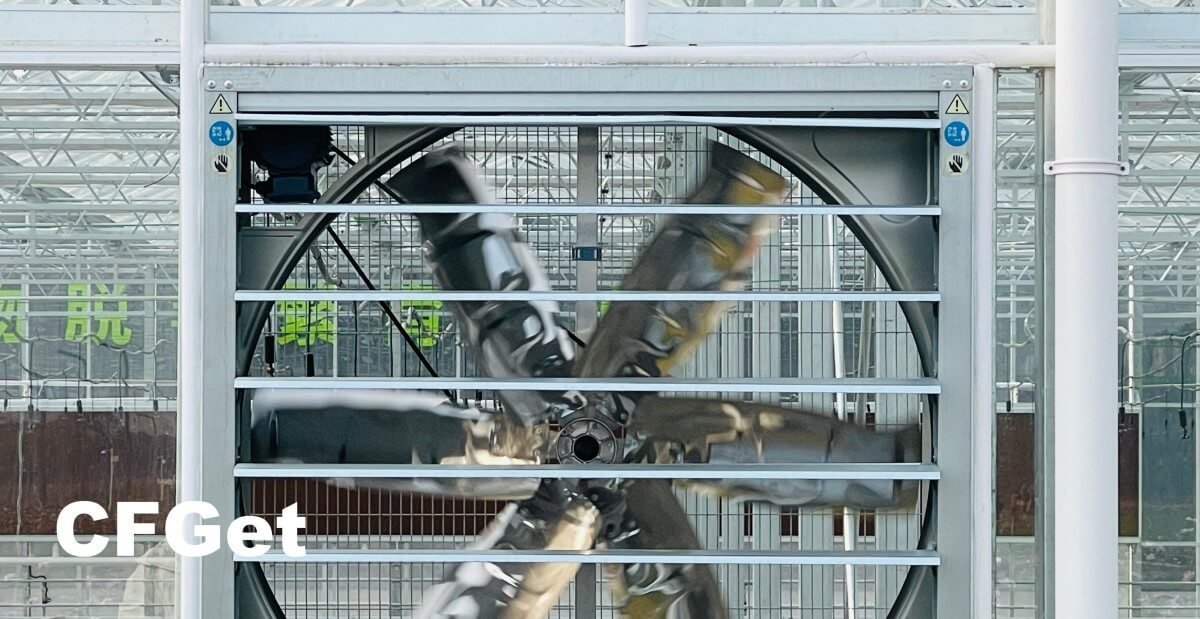
An exhaust fan removes greenhouse air and draws replacement air through planned inlets. A circulation fan moves air inside the house without providing fresh-air exchange. Confusing the two leads to poor control. A circulation fan cannot replace an undersized exhaust path, and an exhaust fan cannot distribute air properly when the inlets are restricted or badly placed.
UF/IFAS describes greenhouse ventilation as a system for temperature, humidity, air movement and gas concentration. Rutgers guidance also treats fan capacity, inlet function, static pressure and controls as connected parts. Runtime alone cannot compensate for a blocked inlet, dirty shutter, wrong fan rotation or a fan selected at free-air conditions instead of the working static pressure.
Choose the operating mode by the load
| Condition | Control approach | What to verify |
|---|---|---|
| Warm, bright weather | Stage vents, shade, exhaust fans and evaporative cooling from crop-zone temperature and outside conditions. | Fan airflow at working static pressure, inlet area, crop obstruction and temperature difference across the house. |
| Cool, humid weather | Use limited ventilation with heating or other moisture control when the crop plan requires it. | Humidity response, heat loss, condensation, combustion safety and minimum vent position. |
| Night operation | Run only the stages needed for temperature, humidity and crop requirements. | Night setpoints, heating conflict, security, noise and alarm response. |
| Equipment fault | Trigger an alarm and defined safe state when the command and measured response disagree. | Power, motor current, shutter position, fan rotation, backup stage and manual override. |
Write the sequence before programming the controller
List which vent, inlet, fan or cooling stage starts first. State the sensor setpoint, deadband, delay, minimum run time and conditions that prevent operation. The sequence should also define what closes or stops first when temperature or humidity returns to range.
Place sensors at representative crop height in an aspirated shield where direct sun, heaters, wet walls, doors and steel columns do not bias the reading. Large houses need more than one measurement location. Log the sensor value and equipment state so a grower can tell whether a long runtime reflects hot weather, an undersized system or a fault.
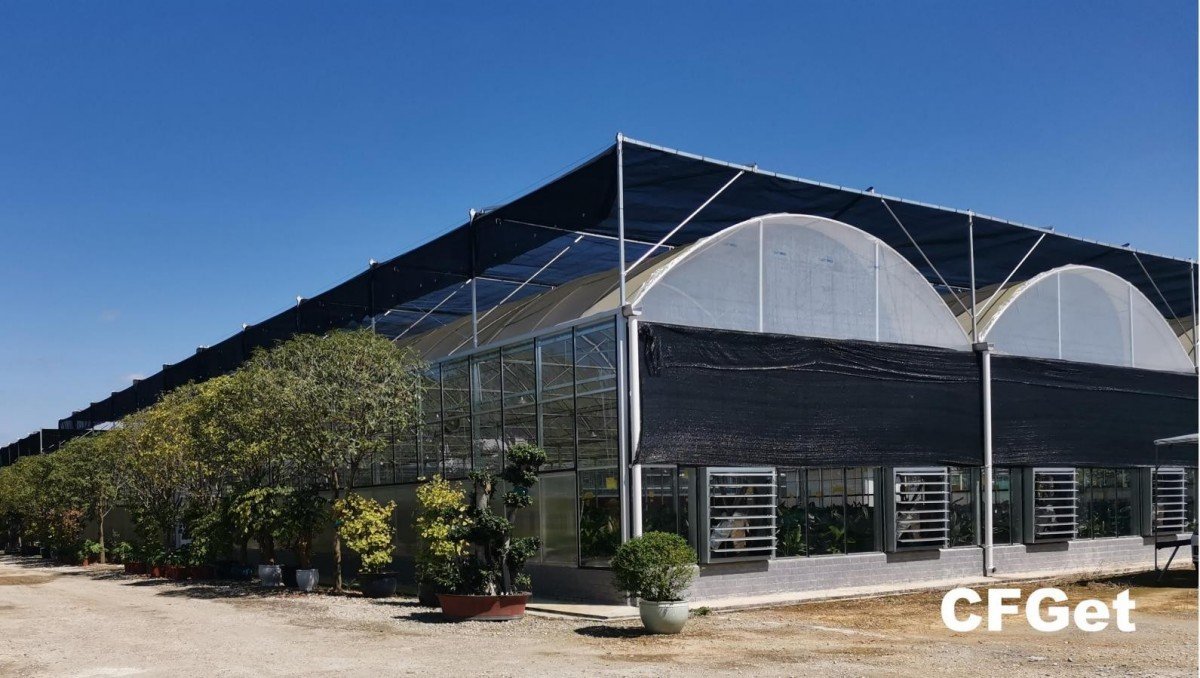
Commission the fan and inlet as one system
- Confirm fan model, motor, rotation and rated airflow at the specified static pressure.
- Open the intended inlets and verify that doors or leaks do not bypass the crop zone.
- Measure static pressure and inspect the pressure drop from screens, pads, shutters and crop.
- Map temperature and air movement at representative crop locations.
- Test each stage, deadband, delay, alarm, backup power and manual override.
- Record an accepted baseline for motor current, vibration, shutter position and airflow.
Why a fan can run too long
A long runtime may be normal during a design hot period, but it can also indicate dirty blades, slipping belts, blocked screens, closed shutters, reversed rotation, a failed cooling pump, hot air recirculating into the inlet, or a sensor in the wrong location. Compare current performance with the commissioning baseline before adding more runtime.
UF/IFAS recommends scheduled fan inspection, including bearings, belt tension, rotation and dust on blades, housings and shutters. Maintenance should follow the fan manufacturer's lockout, lubrication and electrical instructions. Motors and panels need protection suitable for greenhouse humidity and dust.
Information to send with a ventilation RFQ
- Greenhouse dimensions, crop layout, covering, shade and insect-screen specification.
- Project location and hourly hot-period temperature, humidity, wind and solar data.
- Crop-zone temperature and humidity ranges for each production stage.
- Required airflow or heat-load calculation and the assumed working static pressure.
- Fan curves, motor efficiency, shutters, guards, inlets, pads and control stages.
- Sensor locations, deadbands, delays, alarms, backup power and manual controls.
- Commissioning measurements, maintenance access, spare parts and acceptance criteria.
Related CFGET planning pages
Use the greenhouse ventilation guide for the broader airflow plan and the greenhouse heat-limit guide for crop-zone measurement. The environmental control section shows related system categories.
Technical references
- University of Florida IFAS: Greenhouse ventilation
- University of Florida IFAS: Fans for greenhouses
- Rutgers University: Evaluating greenhouse mechanical ventilation system performance
Need a fan control and acceptance scope? Send CFGET the greenhouse, crop, weather, screen, shade, inlet and utility data with the RFQ. The quotation should return a staged sequence and measurable airflow criteria, not a generic number of hours.