
Short answer: there is no universal greenhouse danger temperature. For many commercial crops, sustained canopy temperatures above the crop's target range reduce pollen viability, fruit set, leaf quality or growth before visible injury appears. Use crop-stage limits, humidity, radiation and root-zone conditions to set warning and shutdown thresholds. A single 90°F or 32°C rule is not an engineering specification.
Measure the crop zone, not the roof peak
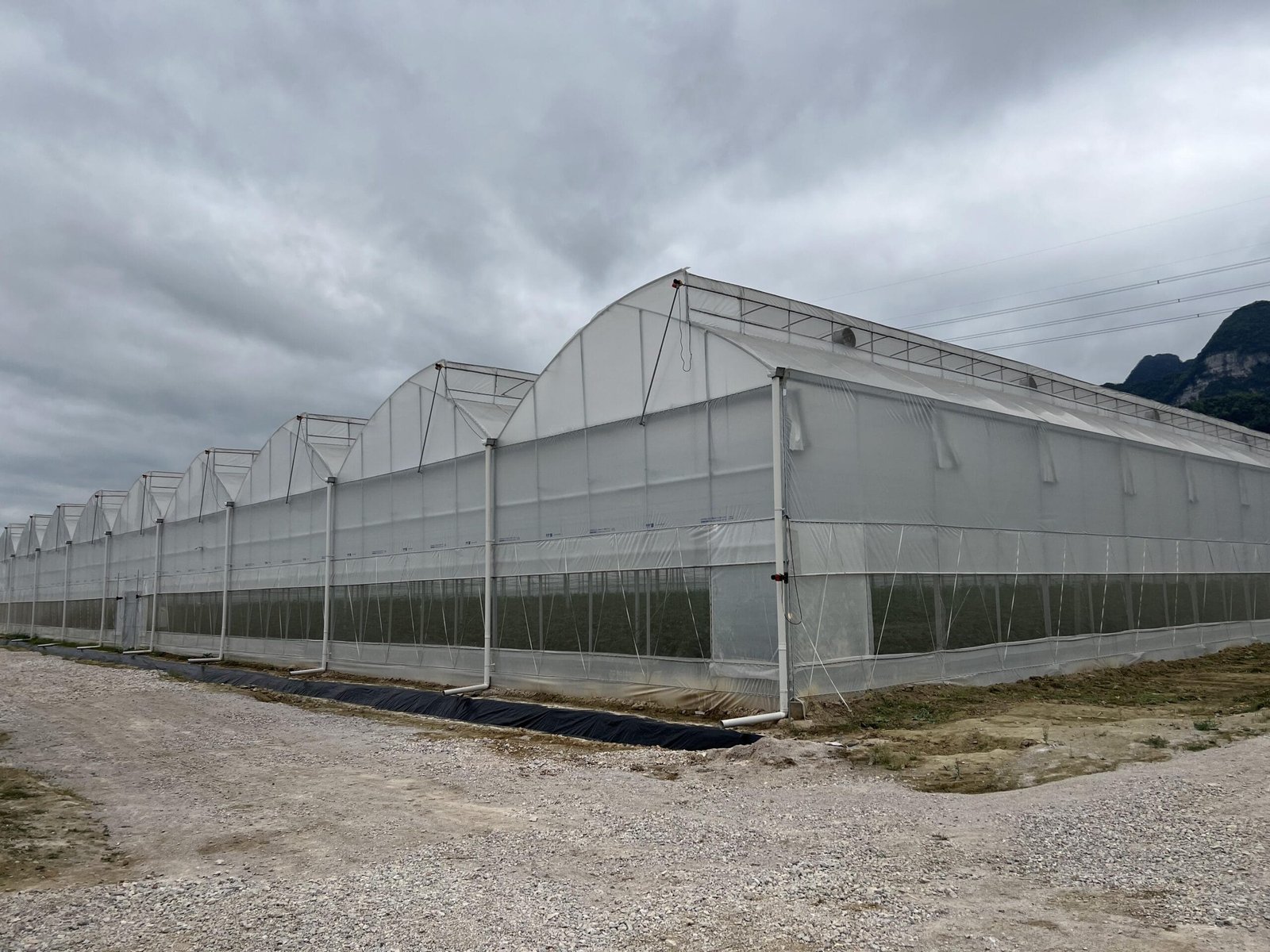
Place aspirated temperature and humidity sensors at representative canopy height. A sensor against a wall, above the crop or in direct sun can report a condition the plants do not experience. Large houses need more than one sensing point because the pad end, center and fan end can behave differently.
Review daytime maximum, duration above the crop limit, night recovery and the difference between zones. Pair those records with outside dry-bulb temperature, relative humidity or wet-bulb temperature, solar radiation, wind and equipment state. The result shows whether the problem is heat entry, insufficient exchange, weak evaporative potential, poor distribution or a failed component.
Set thresholds by crop and growth stage
| Decision input | Why it changes the limit | What to record for design |
|---|---|---|
| Crop and cultivar | Leafy greens, fruiting vegetables, flowers and propagation material respond differently to heat | Crop, cultivar, production stage and quality specification |
| Growth stage | Germination, flowering, fruit set and finishing can have different critical periods | Stage-specific day, night and root-zone targets from the responsible crop adviser |
| Humidity and wet-bulb temperature | They affect plant water demand and the cooling potential of pad-and-fan or fog systems | Hourly design weather data, not only the monthly average |
| Radiation and shading | Solar gain can raise leaf and surface temperatures even when air temperature looks acceptable | Peak radiation, covering transmission, external or internal shade and control sequence |
| Air movement | Local stagnant zones can remain hot while an average sensor appears normal | Vent opening, screen resistance, fan duty, circulation layout and crop obstruction |
Use a staged cooling sequence
Start with the least disruptive step that can meet the crop limit. A typical sequence may open ridge and side vents, deploy shade, stage exhaust fans, start evaporative cooling, and then trigger alarms or a protective operating mode. The order depends on outside humidity, wind, rain, pest exclusion and the production system.
Shade reduces solar load but also reduces crop light. Natural ventilation can be effective when outside air is cooler and openings are large enough, yet insect screens and dense crop canopies add resistance. Fan ventilation gives a defined air path, but leaks and open doors allow air to bypass the intended inlet. Evaporative cooling is constrained by the outside wet-bulb temperature and adds moisture.
Do portable air conditioners solve greenhouse heat?
A portable comfort air conditioner is usually a poor primary solution for a production greenhouse. The enclosure has high solar gain, frequent air exchange and moisture loads that are unlike a small insulated room. The unit also rejects heat somewhere, needs condensate handling and can create a small cold zone without protecting the whole crop.
Mechanical refrigeration can be appropriate for a sealed propagation room, laboratory compartment or other small controlled zone when its heat and moisture loads are calculated. For a large greenhouse, compare envelope load, required air exchange, dehumidification, electrical capacity, redundancy and operating cost before specifying refrigeration.
Diagnose a hot greenhouse before adding equipment
- Confirm calibrated canopy-level sensors and compare all zones.
- Check whether vents, screens, pads, fans, pumps, shutters and shade actually reach their commanded position.
- Inspect for blocked inlets, air leaks, clogged pads, missing baffles and recirculation of exhaust air.
- Compare entering-air temperature with outside dry-bulb and wet-bulb conditions.
- Review temperature rise from inlet to exhaust and identify where the crop blocks airflow.
- Test alarms, backup power, manual override and the response procedure before peak season.
Information to send with a cooling RFQ
- Project location, altitude and hourly design weather for the hottest production period.
- Crop, cultivar, stage, canopy height, plant density and allowable day and night ranges.
- Greenhouse dimensions, orientation, covering, shade, insect screens and adjacent buildings.
- Existing vent areas, fan curves, pad dimensions, pump duty, sensor locations and control sequence.
- Water analysis and available flow for evaporative cooling, including a bleed and disposal plan.
- Electrical supply, backup duration, alarm recipients and local maintenance capability.
- Required uniformity, measurement points and acceptance-test conditions.
Engineering boundary: temperature thresholds must come from the crop plan, and equipment capacity must come from a site heat-and-moisture balance. The figures in extension guidance illustrate design principles. They are not a substitute for local weather data, fan curves, pad data, structural checks or a commissioning test.
Related CFGET planning pages
Compare the greenhouse ventilation guide, hot-season cooling strategies and climate-controlled greenhouse overview. For a quotation, send the site and crop inputs through the CFGET contact page.
Technical references
- University of Florida IFAS Extension: Fan and Pad Greenhouse Evaporative Cooling Systems
- University of Georgia Extension: Greenhouses, Heating, Cooling and Ventilation
- University of Arizona Cooperative Extension: Evaporative Cooling in Semi-Arid Climates
Need a heat-risk review for a commercial greenhouse? Send the crop, site weather, house dimensions, covering, screen, water and utility data. The next step is a defined cooling sequence and acceptance criteria, not a generic temperature promise.