
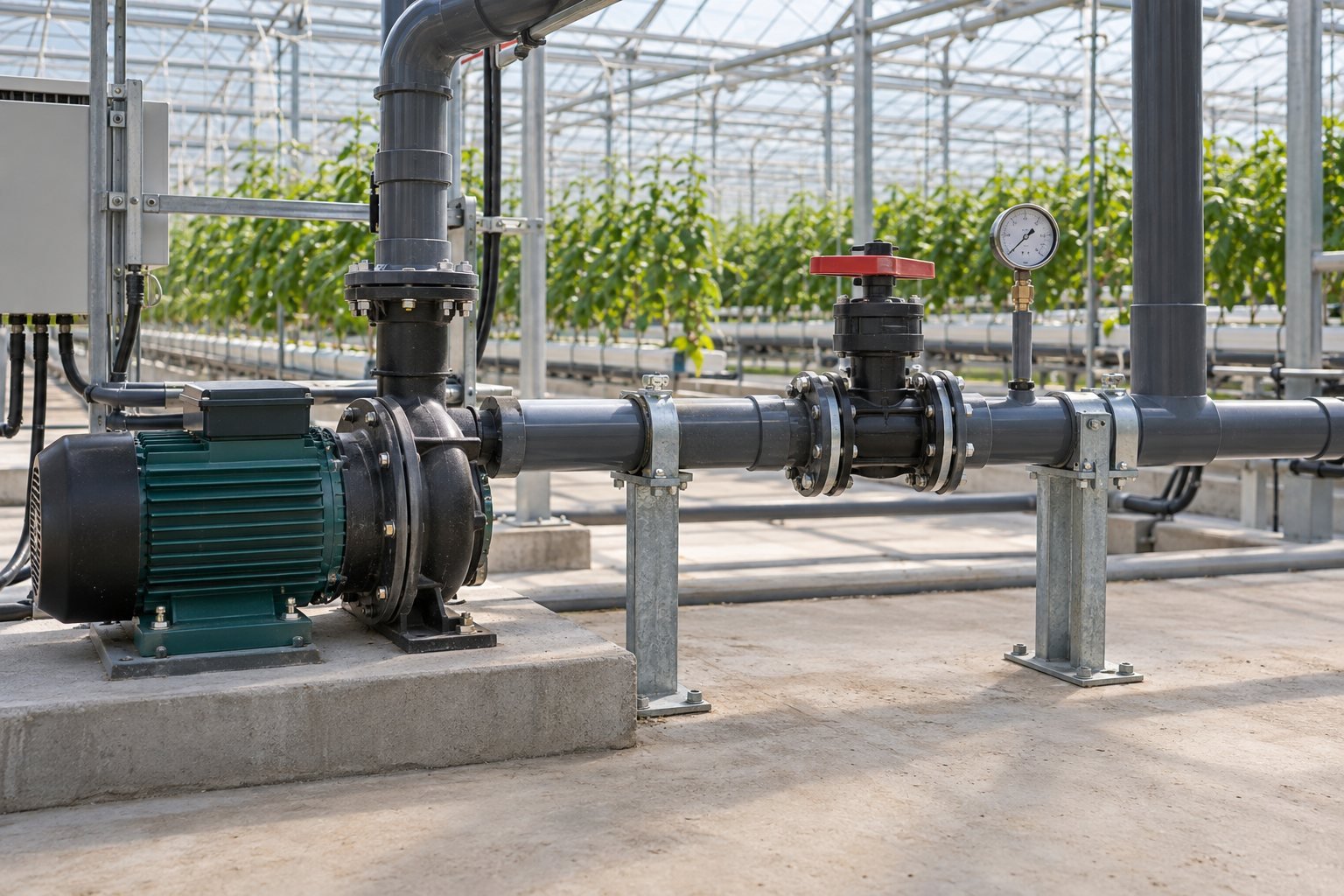
The irrigation pressure looks normal while a zone runs, yet the pipe bangs when a valve closes. Replacing that valve with a stronger one may leave the underlying transient unchanged. A steady gauge reading and a short pressure surge describe different conditions.
Water hammer is a pressure wave associated with a rapid change in water velocity. Pump stops, valve movements and other changes in the circuit can trigger transient events. Treat repeated banging, pipe movement or unexplained joint damage as a reason for a qualified hydraulic review, not an invitation to reproduce the fault repeatedly.
Record the trigger without provoking another event
From normal operating records, note the exact time, active zones, pump state and valve sequence associated with the noise. Record where movement or leakage was observed from a safe location. Do not stand beside a suspect pressurized joint or rapidly close a valve to demonstrate the problem.
University of Florida's water-hammer guide explains the relationship between changes in flow velocity and pressure transients. It also discusses system characteristics and preventive design. Its examples are not a universal valve-closing time or a substitute for assessing the actual pipe network.
Separate operating pressure from transient pressure
| Observation | What it tells you | What remains unknown |
|---|---|---|
| Normal gauge pressure during steady irrigation | The local sustained operating condition | A fast peak the gauge did not capture |
| Noise at pump shutdown | A repeatable event in the operating sequence | The transient magnitude and its path |
| Movement at an elbow or support | A location requiring inspection | Whether support, surge, air or another fault is responsible |
| Repeated fitting failure | A failure pattern needing investigation | Whether the fitting rating alone is the cause |
A suitable transient-pressure measurement needs appropriate instrumentation and sampling speed. Have the hydraulic specialist select and install it. A slow controller trend that records one value per minute cannot be assumed to capture a short event.
Give the reviewer a complete circuit
Provide pipe diameters, materials, lengths, elevations, pressure ratings, pumps, check valves, control valves and the operating sequence. Include any recent change: a faster actuator, more simultaneous zones, a new pump or altered start-stop logic can change the transient behavior.
Identify air-management devices and maintenance history, but do not assume that adding an air valve or a relief valve at an arbitrary location will solve the problem. Device selection and placement depend on the hydraulic analysis and operating states.
Compare corrections as a system
Possible engineering responses may involve operating sequences, controlled pump acceleration or deceleration, valve characteristics, pipe sizing, supports or purpose-designed surge protection. The appropriate combination depends on the cause. A measure that reduces one event must also be checked during power loss, restart and other credible states.
Require a written explanation of which event the proposed correction addresses and how success will be verified. “No noise during one run” is weaker evidence than measurements demonstrating that the relevant pressure limits are respected through the specified sequences.
Protect the crop while the fault is assessed
Use the farm's approved operating and isolation procedure if a circuit is unsafe. Any temporary irrigation arrangement must be assessed for crop supply and worker safety; do not bypass protective devices to keep the schedule running. The water-interruption contingency guide helps frame that separate operating risk.
For CFGET or the irrigation designer to assist, send the circuit drawing, equipment data and event timeline. Keep live testing and repairs with qualified personnel. The immediate action for the grower is to preserve evidence and control exposure, not to select a surge device from the sound of the bang.