
The short answer
Prepare the record system before an incident. Use one event number and one synchronized timeline for alarm receipt, observations, calls, isolations, control actions, weather, crop decisions, photographs, samples, repairs and restart approvals. Preserve original controller exports, alarm histories, trends, video and files as read-only copies where possible; record who collected each item, when, from which source and whether the clock was accurate. Photograph the wider scene before close details, but only after the responsible authority declares access safe. Keep removed parts identified and protected rather than discarding or repairing them immediately. Separate facts from interpretations. A useful entry says what the person saw, heard, measured or did. It does not turn an early guess into the official cause.
Greenhouse events develop across systems. A crop zone may overheat because a vent did not move, but the useful evidence may sit in a weather station, network log, controller command, motor protection device, maintenance ticket and shift handover. If clocks differ or a technician resets the device before exporting data, the sequence becomes uncertain. Record clock offsets and preserve each source in its original form.
Evidence is also needed for crop and business decisions. The team may need to identify affected bays, irrigation batches, harvest lots, customer shipments, labor hours, temporary equipment and insurer costs. Keep these records linked to the event without mixing confidential personnel, medical or legal material into a general operations folder. The designated owner should control access and retention under local requirements.
This guide is an operating-control framework. The approved design, crop plan, product labels, manufacturer instructions, site safety procedures, local law and directions from competent local professionals govern the actual work.
What the buyer should control
| Control point | Required record or action | Release evidence |
|---|---|---|
| Event identity | Assign event number, site, area, start time, discovery method, current status and incident lead. | Controlled event header and master timeline. |
| Safety and access | Record emergency actions, isolations, restricted zones, responder direction and who released access for documentation. | Time-stamped access authorization and hazard-control record. |
| Digital records | Export alarms, trends, setpoints, commands, audit logs, weather, network and power data without changing the source. | Original files, hashes or protected copies, source details and clock offset. |
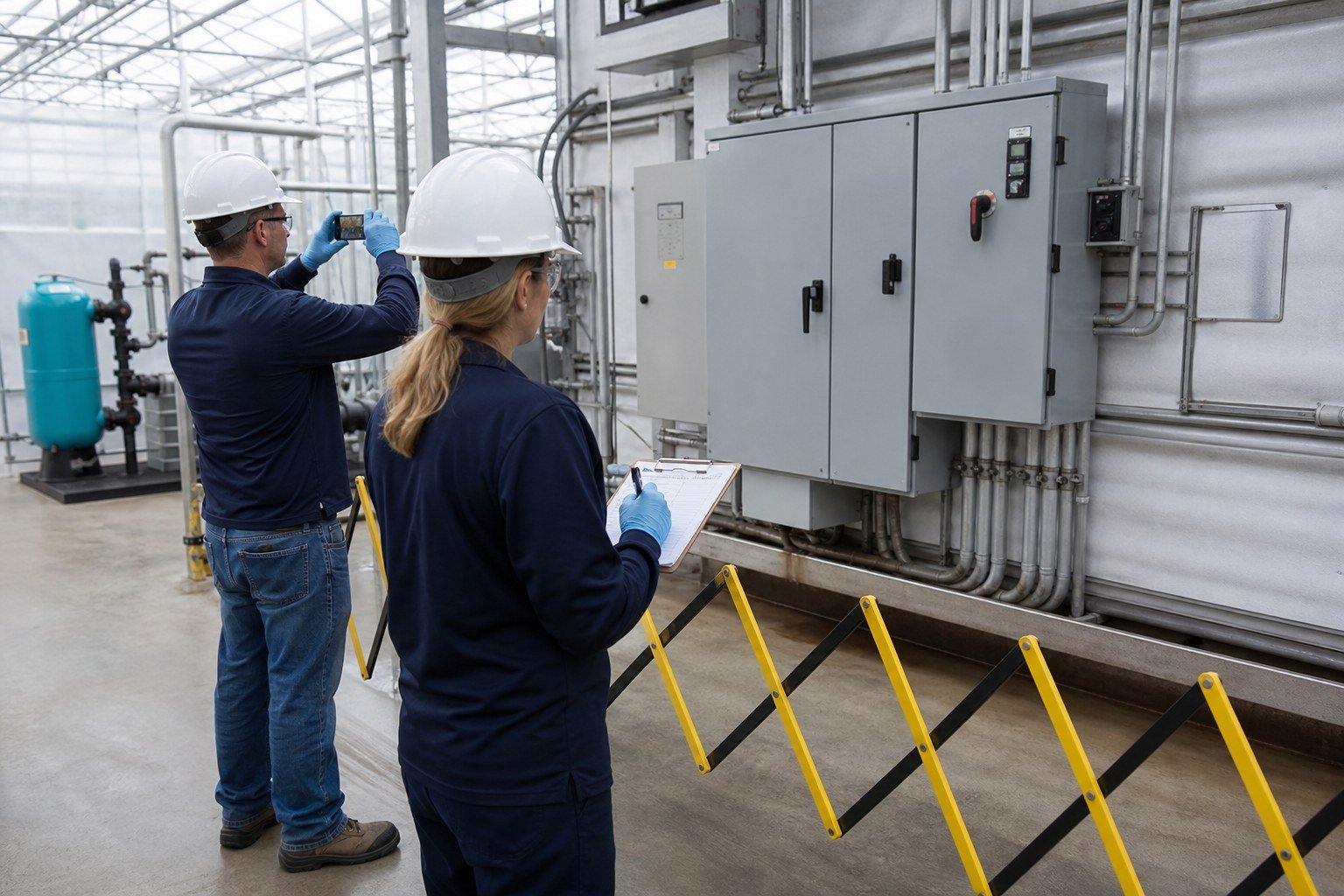
| Physical condition | Capture wide, medium and close photographs, equipment state, labels, switch positions, damage, leakage and relevant surroundings. | Image index with time, location, photographer and unedited originals. |
| Parts and samples | Identify removed components, crop or water samples, container, collection method, storage, transfer and requested analysis. | Chain-of-custody or equivalent controlled transfer record. |
| People and decisions | Record factual witness accounts, calls, instructions, decision owner, alternatives considered and reason for action. | Signed or confirmed notes kept separate from speculation. |
| Recovery and correction | Link temporary controls, repairs, costs, tests, crop disposition, reopening approval and root-cause actions. | Closure package showing implementation and effectiveness verification. |
Every open item needs an owner, due date, status and effect on safety, production, cost and recovery time. A note that something was discussed or is being handled does not prove closure.
A practical workflow
1. Make the area safe and start the log
Follow emergency and medical procedures first. The records lead opens the event and captures the first known time, current restrictions and responsible incident lead. If the exact start is unknown, mark it unknown rather than estimating it as fact.
2. Protect volatile information
Identify records that can roll over or disappear, such as controller trends, alarm buffers, camera footage, temporary messages and power-monitor data. Authorized personnel should export or preserve them promptly without changing settings or clearing faults.
3. Document before disturbing
Once access is authorized, photograph the overall scene and routes before touching equipment. Record switch, valve, guard, cable, vent and control states. If emergency work already changed the scene, document who changed what and why.
4. Build one synchronized timeline
Compare timestamps from controls, phones, cameras, weather stations and witness notes. Record timezone and clock differences. Keep original timestamps and show any corrected comparison separately so later reviewers can reconstruct the method.
5. Collect accounts without leading
Ask each person what they directly observed and did, using open questions. Capture location, time basis and uncertainty. Do not ask witnesses to agree on one story or write that carelessness caused the event before the system has been examined.
6. Control parts, samples and files
Give each item an identifier. Record source, collector, date, condition, storage, transfer and analysis. Keep unedited originals and work from copies. Coordinate with insurers, regulators or legal advisers when their requirements apply.
7. Close actions with evidence
The investigation should identify underlying design, maintenance, training, procedure or management causes, then assign corrections. Verify that each correction was installed or adopted and that it reduced the risk. Preserve interim controls until permanent action is proven.
Preserve the event sequence and earlier versions of records. The team should be able to reconstruct what was observed, which condition applied, who decided, what changed, how the result was tested and which limitation remained.
Who owns each decision
Incident lead
Controls life safety, access, emergency coordination and major decisions. This role authorizes the transition from response to investigation.
Evidence and records lead
Owns the event number, timeline, file preservation, photograph index, item transfers, access control and final package.
Technical and growing specialists
Explain system and crop evidence, perform approved tests and distinguish observations from hypotheses. They do not alter original records.
Investigation team
Includes management and worker knowledge, looks beyond immediate causes, assigns corrective actions and verifies their effectiveness.
Release evidence before the next step
Release equipment, an area or crop only through the relevant safety, technical, quality and operational decision process. Before repair or disposal changes the evidence, confirm that required photographs, exports, measurements, samples and stakeholder notices are complete. If urgent repair must proceed, document the original condition and reason for change as far as safe and lawful.
Common failure modes
| Failure | Buyer response |
|---|---|
| The alarm is reset before data export | Preserve volatile logs and screen states first when safe, then reset through the approved procedure. |
| Photographs show only the failed part | Capture the wider system, connections, surroundings, labels and operating context before close details. |
| All clocks are assumed correct | Record timezone and clock offsets, retain original times and document any reconciliation. |
| The first theory becomes the cause | Separate fact, hypothesis, test and conclusion. Seek underlying conditions rather than blame. |
| Removed parts lose identity | Tag, protect and log each part from removal through inspection, storage and disposition. |
| Actions close when a memo is issued | Verify installation, training, procedure use or performance under suitable conditions. |
Buyer decision questions
Which records disappear first? Who may enter and document the area? Are controller and camera clocks synchronized? What changed during emergency response? Which crop zones, batches and shipments may be affected? Who needs the original files? Which part or sample must be retained? What evidence shows that the correction addresses the underlying cause rather than the visible symptom?
Keep these decisions connected to the business continuity response plan, the maintenance downtime log, the storm and flood recovery checklist. The emergency plan, equipment evidence and crop plan should describe the same operating reality.
Frequently asked questions
Should staff photograph an incident immediately?
Only after emergency response and the responsible authority have made access safe. No photograph is worth exposure to electrical, structural, chemical, fire or other hazards.
Can screenshots replace controller exports?
Screenshots help show what an operator saw, but native exports usually preserve more data. Keep both when available and record the source and time.
How should witness notes be written?
Record what the person directly observed, where they were, what time basis they used and what they did. Keep interpretation and cause analysis separate.
When can a failed component be repaired?
After safety needs are met and the investigation, insurer, regulator or other responsible party has confirmed that required evidence is preserved. Document urgent changes.
Should near misses receive the same treatment?
Use a proportionate process, but preserve enough evidence to understand why harm was avoided and whether the same underlying condition exists elsewhere.
Turn the requirement into a controlled deliverable
Share available control logs, system drawings, maintenance history, crop-zone records and the event timeline. Chengfei Greenhouse can help interpret data and equipment interfaces for supplied systems while the owner and qualified local parties control safety, investigation and legal requirements.
Contact Chengfei Greenhouse