
A greenhouse heating-fluid quote needs to say what remains protected, at what temperature and in which operating state. A claim that pipework can survive an idle cold period does not establish that the fluid can circulate on restart or deliver the heat the crop needs.
Before buying, compare the proposed formulation with the fluid assumed in the heating design. Ask the designer and equipment manufacturers to confirm cold-start behavior, pump duty, heat delivery and compatibility. This is a review of a closed-loop heating proposal, not a recommendation to add glycol.
Which protection does the quote actually promise?
Dow's FLUIDFILE glossary distinguishes three questions. Freeze protection concerns avoiding ice formation above the stated freezing point. Burst protection can allow an ice-and-glycol slush in an idle system, provided the equipment accommodates expansion. Pumpability concerns whether the fluid can operate within the required low-temperature duty.
Use those distinctions to question the proposal. Which condition is being addressed: heating a growing crop, starting a cold circuit, surviving an unpowered outage, or restarting afterward? Put each in a separate row. A single label reading “protected to” leaves the acceptance condition incomplete.
Record the minimum fluid temperature used in the assessment, rather than silently substituting a weather-station minimum. Have the designer explain the assumed exposure and operating state. Do not invent a margin, an outage duration or a restart condition from a generic table.
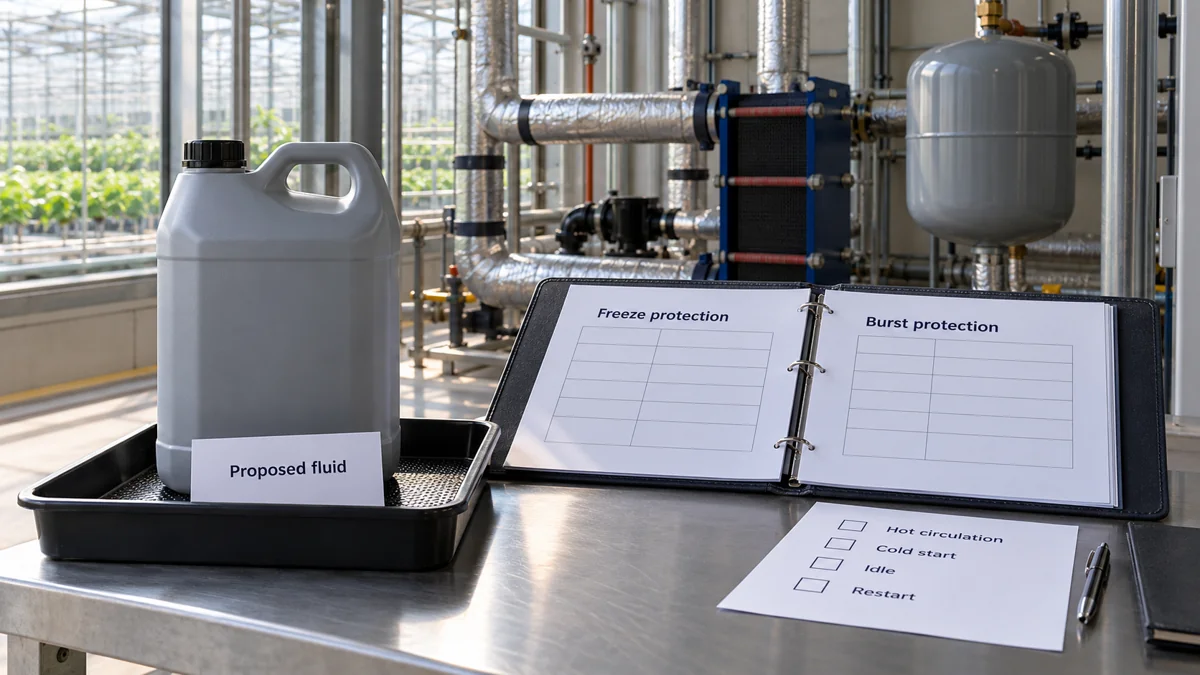
Read two protection claims from the same data sheet
The following examples interpret published data, not a fluid mixture for your greenhouse. In Dow's DOWFROST HD sheet, Form 180-01315-1019, the −18°C row lists 25.5% product by volume for burst protection and 38.3% for freeze protection. The sheet expressly identifies its figures as typical examples rather than specifications.
Reading the burst column: if a proposal relies on the first figure, enter “idle burst-protection claim” in the review. Ask whether the actual circuit can accommodate the stated condition and how restart will be managed. Leave cold circulation and crop-heating capability unresolved; the burst entry does not establish them.
Reading the freeze column: the second figure refers to a different protection objective. It still does not prove that the installed pump, heat source and emitters meet their duties with that solution at the lowest start temperature. Request the relevant operating assessment before treating the system as ready to run.
Do not use either figure to mix or fill a system. The exact product, current documents, design conditions and equipment approvals govern the decision. The point of reading the columns is to prevent one claim being substituted for another.
What does the percentage measure?
Ask whether the concentration means volume or mass, and whether it refers to commercial product or glycol itself. Write the full basis beside every percentage. A line stating only “glycol concentration” is not ready for comparison.
The same Dow sheet separates glycol and formulated-product concentration, using both mass and volume columns. It also provides density, specific heat and viscosity at stated temperatures. Keep those bases attached to any data sent to the heating designer.
Request the exact product name and formulation, current technical data sheet and safety data sheet. If the quote permits an “equivalent,” require the proposed alternative to undergo the same review. A shared base chemical does not establish identical additives, operating limits or equipment acceptance.
Compare four operating states
Download the heating-fluid duty sheet. It provides paired water-design and proposed-fluid records for each state. The four-row overview below shows the questions the records must answer.
| State | Question to resolve | Evidence required |
|---|---|---|
| Normal hot circulation | Can the system deliver its required heat with the proposed fluid? | Applicable fluid properties, heat-source and emitter review, pump-duty reference |
| Lowest cold start | Can the approved system start and circulate under the defined cold condition? | Minimum fluid temperature, pumpability basis and equipment confirmation |
| Unpowered idle or outage | What protection objective applies while the circuit is inactive? | Freeze or burst basis, exposure assumptions and compatibility of the circuit with that condition |
| Restart | What must be established before the system returns to its heating duty? | Manufacturer-approved restart conditions, responsible person and verification record |
For each state, record the product and concentration basis, relevant fluid temperature, applicable maximum bulk and film temperatures, density, specific heat and viscosity. Add the source page and property temperature. Missing data should remain an open item, not become the properties of water by default.
Attach the designer's revised pump and heat-emitter assessment. Ask which calculations used water and which now use the proposed fluid. The hot-water buffer-tank guide addresses stored-energy duty separately; changing the fluid also requires reviewing the assumptions used there.
Get equipment and exposure approval for the exact formulation
List the wetted materials and the manufacturer's fluid restrictions for the boiler or heat pump, tubing, emitters, pumps, seals and other components. Obtain written acceptance of the proposed formulation and concentration where required. Record any conditions or warranty limitations without extending them beyond the actual document.
Also identify the contamination boundary: where could a leak reach crop water, produce, workers or the environment? Dow's DOWFROST product page makes a formulation-specific claim about possible incidental food contact. That does not make every propylene-glycol product potable or authorize deliberate contact or discharge. The site's qualified review still has to address the actual exposure.
Keep automotive antifreeze and improvised open crop-area heat stores outside this procurement exercise. Ask the fluid supplier and system designer to define monitoring, maintenance and disposal responsibilities for the approved closed-loop arrangement.
When is the quote ready for acceptance?
Accept the technical basis only when the protection objective, concentration basis, operating properties and equipment approvals describe the same proposed fluid. Name the person who will confirm the delivered product and retain the records.
Return the quote for clarification if it uses burst protection to answer a circulation requirement, omits the percentage basis, leaves the cold-start assessment open or substitutes a product without approval. None of those gaps can be closed by comparing price per container.
A useful offer shows both the fluid and the heating duty it can support under the stated conditions. It gives the grower a reviewable system decision, rather than a low-temperature headline.