
A greenhouse combined heat and power plant, or CHP, needs a credible use for its outputs during the hours it runs. Before comparing engine quotations, identify who will use the heat, how much electricity the greenhouse can use itself and what electricity can be exported under confirmed terms.
The alternative also needs a clear definition: purchased electricity plus a separately costed heating service for the same crop. CHP earns an investment case through the difference between these complete arrangements.
Installed capacity does not guarantee valuable operating hours
The WUR Energy Monitor 2024, sections 4.2–4.3, provides useful historical context. These are rounded, provisional Dutch greenhouse-sector estimates, published in October 2025, rather than the performance of a particular plant.
| Measure | Reported amount |
|---|---|
| Installed CHP electrical capacity, 2024 | 2,700–2,800 MWe |
| Equivalent full-load hours, 2024 | About 3,600 hours/year |
| Equivalent full-load hours, 2021 | About 4,000 hours/year |
| Sector electricity production, 2024 | 10 billion kWh |
| Sector electricity sold, 2024 | 6.4 billion kWh |
| Sector electricity sold, 2023 | 6.6 billion kWh |
Equivalent full-load hours express energy relative to a power basis; they are not necessarily engine clock-hours. The figures cannot determine a new greenhouse’s self-consumption, efficiency or return.
The commercial question follows from that distinction: which operating periods make the proposed equipment valuable here? A nameplate rating tells you how large the plant is. It does not establish a customer for the electricity or useful demand for every unit of heat.
Follow one operating period through the business
Choose a representative period in the crop and energy calendar. Account for fuel entering the plant and allocate the electrical output between onsite use, authorized export and relevant losses. Value each electrical unit once. Electricity used onsite may avoid an import cost; exported electricity receives the applicable export value. It cannot earn both.
Next, identify useful heat that serves a real heating requirement. Value it against the cost genuinely avoided in the alternative heating arrangement. Heat rejected because the greenhouse cannot use it has no heating-saving credit. If storage is part of the proposal, require evidence for when the stored heat can be used, with its losses and costs included.
Any CO₂ service requires its own justification, including suitability and actual use. Do not give the plant a gas credit simply because CO₂ is among its possible outputs. Keep that assessment separate from the electrical and thermal balances.
This period-by-period approach makes weak assumptions visible. A plant may fit a cold, electrically demanding crop period well and have much less useful work during another part of the year. Applying one attractive hour’s economics to every running hour hides that difference.
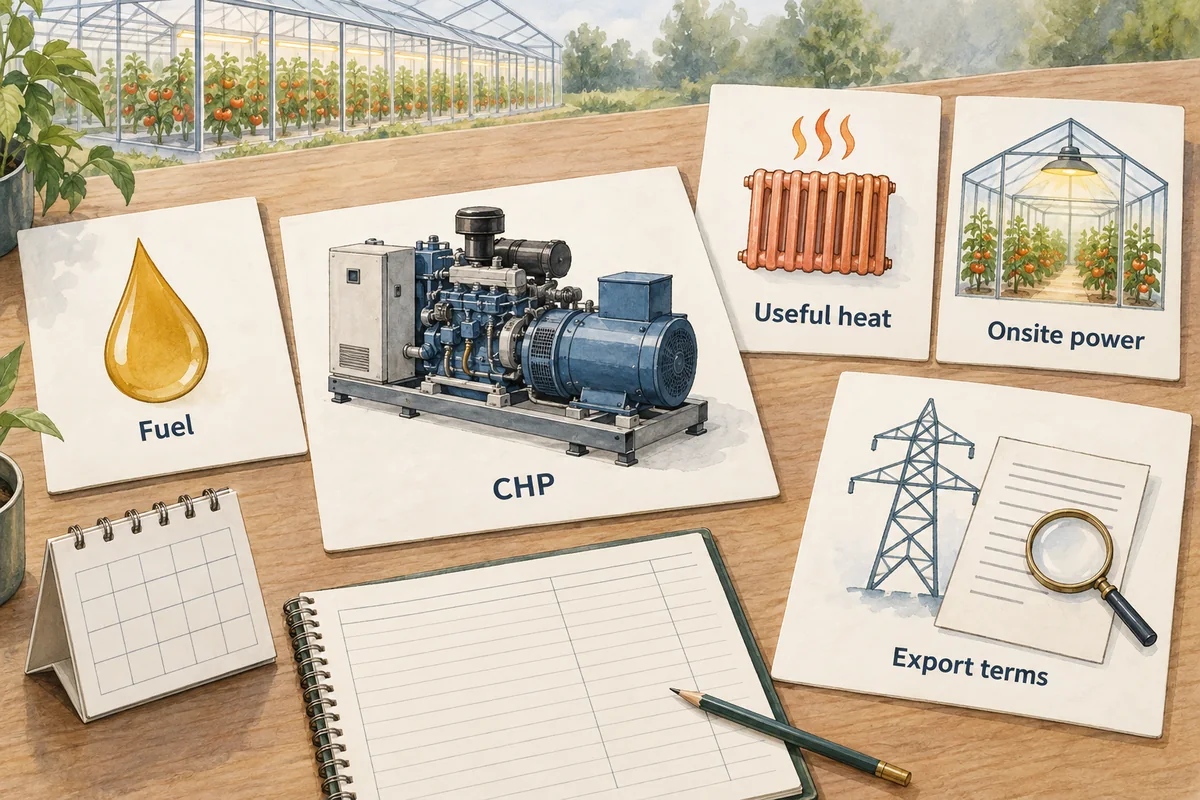
A compact operating-value ledger
For each materially different operating period, put these entries on one sheet:
- Fuel input and cost, using the same energy basis as the equipment performance data
- Electricity used onsite and the import charges actually avoided
- Authorized electricity exported and the revenue after applicable charges
- Useful heat delivered to real demand and the alternative heat cost avoided
- Separately justified CO₂-service value
- Maintenance, consumables and other costs attributable to operation
Subtract the operating costs from the justified values to find contribution before capital charges. Then include installed cost, financing, fixed service commitments and major maintenance in the investment assessment. A plant that earns a positive contribution while running can still be too expensive to own.
Test the constraints before relying on export income
Ask for a case with lower export value, fewer authorized export hours and less useful heat demand. Also examine planned maintenance and the cost of meeting crop needs when the CHP is unavailable. These cases should use local terms and equipment evidence, rather than the historical Dutch averages.
If the investment depends on electricity exports, confirmation of the connection and commercial terms is part of the decision evidence. If it depends on heat use, a time-linked crop-demand profile is essential. Resolve whichever dependency carries the value before ordering the plant.
The greenhouse energy-demand guide can help define the loads shared by the competing proposals. A defensible CHP decision starts with those loads and the available outlets, then selects equipment that fits them.