

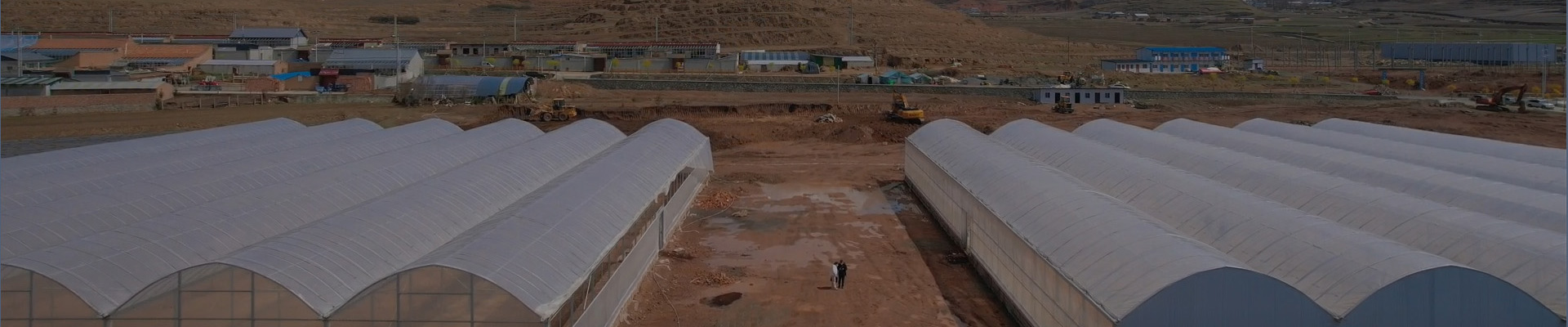
Over the past decade, China has quietly reshaped the future of agriculture—not with vast farmlands or high-yield seeds, but with precision-built, tech-driven hydroponic greenhouses. In 2025 alone, Chinese greenhouse systems generated $1.2 billion in global exports, commanding a 38% share of the world market. Leading the charge are manufacturers based in Shandong, Jiangsu, and Guangdong, with their products reaching over 130 countries across five continents.
At the center of this boom is Chengfei Greenhouse, a standout brand known for its modular, rapid-assembly designs that are especially favored in challenging environments like the Middle East and Southeast Asia. These aren't your typical glass-and-metal greenhouses—they're self-contained ecosystems designed for speed, efficiency, and resilience.
One of Chengfei’s signature innovations is its containerized hydroponic farm—a pre-assembled unit that can be shipped anywhere and set up in just two to three hours. Made from food-grade HDPE, each module is engineered with a manufacturing tolerance of less than 1 mm, ensuring quick, tool-free assembly.

Inside, a six-layer vertical rack system boosts land use efficiency by up to 40%, allowing growers to produce large quantities of vegetables in limited space. Whether you're building on a remote island, arid plateau, or an urban rooftop, the system requires minimal local infrastructure—just plug and grow.
But it’s not just about fast setup. Chinese greenhouses now integrate artificial intelligence and IoT-based environmental control systems that make them truly "smart." For instance, in the Dubai desert, Chengfei’s installations rely on AI algorithms trained to analyze weather patterns and microclimate data.
These systems can predict sandstorms hours in advance, triggering automatic closures of vents and activation of filtration systems. The result? Up to 90% reduction in crop loss, with environmental controls accurate to ±0.1 °C and ±1% relative humidity—a level of precision unheard of in traditional farming.
In colder climates, Chinese tech plays a different role. In Russia, where winters can drop to -30°C, Chengfei greenhouses use full-spectrum LED grow lights that output 3.2 μmol/J, consuming 60% less power than traditional sodium lamps. During peak winter months, the light intensity is automatically increased by 30%, reducing the tomato growth cycle by up to 30 days.
To maintain optimal temperature, these units combine double-layer inflated film insulation with ground-source heat pumps, keeping internal environments at a steady 18°C regardless of outside conditions.

From Saudi Arabia to the Maldives, Chinese hydroponic systems are solving urgent food security challenges:
- Saudi Arabia: Using double-layer ETFE film and high-pressure mist cooling, greenhouses maintain interior temperatures under 35°C—even when it’s 50°C outside—while cutting water use by 90%.
- Maldives: With limited arable land and expensive food imports, the nation has turned to Chengfei’s $120,000 off-grid container farms. These systems have raised local food self-sufficiency from 30% to 85%, powered entirely by solar panels and battery systems that eliminate electricity costs.
In a bold move for sustainability, Guangdong-based firms have built solar-powered greenhouses for the 2022 Qatar World Cup, cutting 1,200 tons of CO₂ emissions annually and earning FIFA’s official sustainability certification. Meanwhile in Shanghai, growers have adopted blockchain traceability systems: shoppers in Hong Kong can scan a QR code to trace leafy greens from seed to shelf—a level of transparency that commands a 20% price premium in urban markets.
Looking ahead, China’s greenhouse revolution is entering its next phase: automation and AI-driven farming. In Zhejiang, AI models trained on over 100,000 environmental and crop data points have been used to boost strawberry sweetness by 1.2° Brix. In Beijing, robotic arms harvest up to 1,200 plants per hour, reducing labor costs by 65% and solving workforce shortages in high-tech agriculture.
Chengfei Greenhouse is already testing fully “unmanned” hydroponic modules, integrating robotics, AI climate control, and blockchain logistics into a single plug-and-play container. A public launch is expected in 2026.
What started as a response to land scarcity and climate stress has now positioned Chinese hydroponic greenhouses as the future of sustainable agriculture—faster, smarter, and greener than anything the world has seen before.
Welcome to have a further discussion with us.
Phone: +86 15308222514
Email: Rita@cfgreenhouse.com
Post time: Aug-25-2025



 Click to Chat